


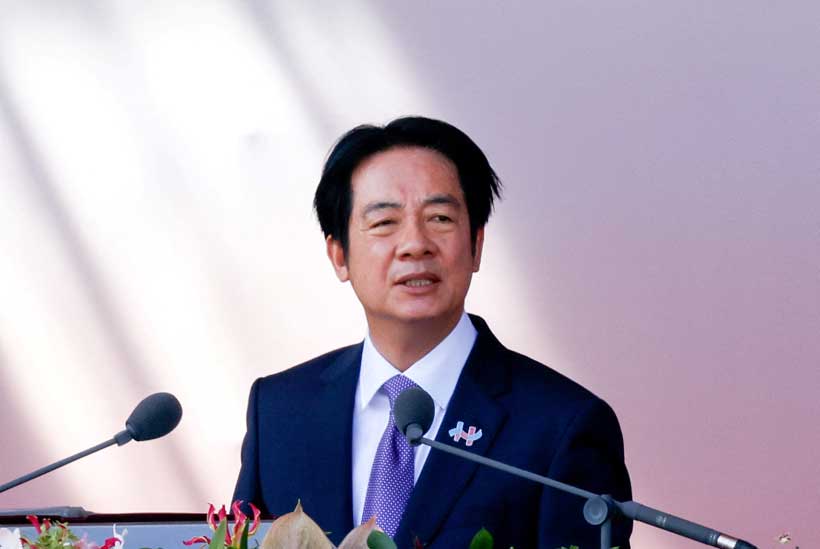
Taiwan President Lai Ching-te has pledged to continue expanding the island’s defence budget after parliament dominated by the opposition cut a major portion of a proposed $40 billion supplementary military spending package.
The government’s plan focuses on modernising Taiwan’s armed forces through asymmetric warfare capabilities, including drones, missiles, and other advanced systems designed to deter potential military pressure from China, which considers Taiwan part of its territory.
However, lawmakers only approved funding for certain U.S.-made weapons while rejecting allocations for domestically developed drone and missile programs, creating friction between the executive and legislature over defence priorities.
Defence Spending Dispute
The budget disagreement highlights a growing political divide over how Taiwan should prepare for security threats in the region.
Stay ahead of the geopolitical week.
MD Briefing delivers expert analysis across five global fronts — the Indo-Pacific, energy, geoeconomics, European security, and the Middle East — every Monday morning. Free.
President Lai has set an ambitious target to raise defence spending to 5% of GDP by 2030, up from about 3% currently. The move aligns with long-standing U.S. expectations that allies in the Indo-Pacific increase military expenditure in response to rising regional tensions.
Taiwan’s defence strategy increasingly emphasizes asymmetric warfare—focusing on mobility, surveillance, drones, and rapid-response systems rather than traditional large-scale platforms.
Why It Matters
The dispute over defence funding comes at a sensitive time for Taiwan, which faces sustained military pressure and frequent incursions in its air and maritime zones.
The island remains heavily dependent on the United States for arms sales and strategic support, even without formal diplomatic relations. Washington has repeatedly encouraged Taipei to “spend smarter,” prioritising technologies that reflect lessons from modern conflicts, including Ukraine and the Middle East.
Budget cuts could slow Taiwan’s efforts to modernise its military at a time when regional security risks are rising. At the same time, domestic political divisions over defence spending highlight the challenge of building consensus on national security strategy.
Strategic and Regional Implications
The disagreement also reflects broader geopolitical competition in the Indo-Pacific. As China increases military activity near Taiwan, Taipei is under pressure to demonstrate credible deterrence while balancing fiscal constraints and political opposition at home.
The focus on drones and asymmetric systems signals a shift toward more cost-efficient defence planning, but funding uncertainty could delay procurement cycles and affect readiness timelines.
Visits by President Lai to radar stations and surveillance facilities underline Taiwan’s emphasis on real-time monitoring and intelligence capabilities as a key pillar of its defence posture.
Analysis: Political Friction Meets Security Pressure
Taiwan’s defence debate is increasingly shaped by two competing forces: external security threats and internal political fragmentation.
While the executive branch is pushing for rapid military modernization and higher spending, parliamentary resistance reflects concerns over budget allocation, domestic priorities, and the scale of reliance on foreign arms procurement.
This tension could slow implementation of Taiwan’s long-term defence strategy, even as regional risks continue to rise. The outcome will likely depend on whether the government can secure alternative funding mechanisms or build broader political consensus around its 2030 defence goals.
For now, Taiwan’s security strategy remains firmly oriented toward deterrence but its execution is increasingly constrained by domestic political realities.
With information from Reuters.
