


Ever since the Italo-Turkish War of 1911, when aircraft were first deployed in combat, the assumption that whoever controlled the skies controlled the conflict has often held true. From unarmed UAVs conducting surveillance of the battlefield, to precision strike capabilities reaching deep into enemy territory, aircraft have proved integral to almost every battlefield for decades. Conventional wisdom advanced accordingly: establish air superiority, suppress enemy defences, project force with little pushback.
War in recent years, however, has been defined by a distinctly different phenomenon. Across Ukraine, Israel, Iran, and the Red Sea, states and non-state actors alike have demonstrated that they can project meaningful air power without having to establish air superiority. The sky is now not so much an arena to be won outright as it is a permanently contested battlespace that is saturated by low-cost, high-volume drones.
From the opening of Russia’s invasion of Ukraine in 2022, despite Moscow’s legacy air capabilities, neither nation has been able to establish complete control of the skies. Instead, the ensuing aerial battles have involved a complex web of drones, electronic warfare and air defence systems. Combat is improvisational and only loosely resembles battle plans from years past.
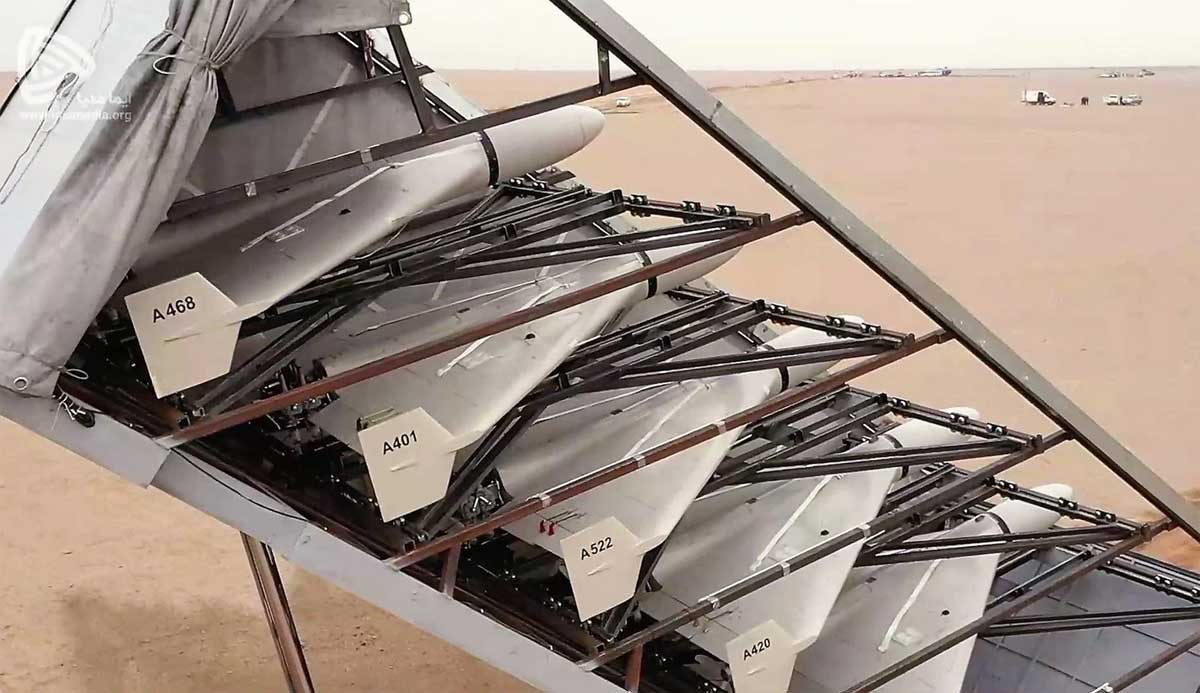
Iran’s use of Shahed drones paints a similar picture: a Shahed drone costs just $20,000 to $50,000. Mass-produced and inexpensive, these drones force any nation attempting to defend against them into an economically unfavourable position. Victory is defined as much by who can sustain the exchange rate for longer as by who owns the newest generation of fighter jets.
Stay ahead of the geopolitical week.
MD Briefing delivers expert analysis across five global fronts — the Indo-Pacific, energy, geoeconomics, European security, and the Middle East — every Monday morning. Free.
In the Red Sea, the Houthi Rebels have successfully disrupted arterial flows of trade without ever launching a jet. Drone attacks led many freight companies to reroute around the Cape of Good Hope, adding thousands of miles to cargo journeys and pushing up the price of products. They did this without ever controlling the air above the Bab el-Mandeb. Making the strait sufficiently dangerous was enough.
It is hard to imagine this phenomenon dissipating. The barrier to entry for disruption has collapsed to such a point that disorganised militia groups in Yemen and nuclear-armed states can achieve many of the same objectives. It is an asymmetry that needs to be engineered around, and air and naval capabilities must adapt to the shifting threat environment they find themselves in.
Israel’s own shift illustrates this further: conventional Tamir interceptors – a cornerstone of the Iron Dome – cost anything from $40,000 to $50,000 per missile. By contrast, the new Iron Beam system can intercept swarms of Hezbollah suicide drones and short-range missiles at $2 to $3 per shot. It is a clear acknowledgement that the old economics of defence have become outdated against an enemy that measures its costs in the tens of thousands, not millions.
Britain’s own defence procurement has learned the same lesson. The Royal Navy cancelled its order of Type 83 destroyers in favour of six Common Combat Vessels, built around drone command and control rather than conventional weaponry. Whilst many see it as a cost-cutting measure forced by the black hole in the recent Defence Investment Plan, it nonetheless shows a tacit admission that the nature of aerial and maritime threats has shifted permanently, and that future fleets must reflect this in their capabilities.
The lesson, then, is that air has become a more democratised arena of battle. Decades of wars have been fought under the correct assumption that control of the skies was one of the most influential strategic objectives a nation could achieve. In today’s world, it is increasingly difficult to achieve that superiority, leaving states and non-state actors alike vying to project their power in a space that cannot be entirely closed off. Actors will continue to develop cheaper, faster and more lethal drone technologies. The question for states attempting to defend against this is how far they will pivot from conventional to unconventional defence. The side that regards air defence as much a battle of attrition as it is a battle of altitude will be the one better defended, better positioned and, crucially, better prepared for whatever conflict comes next.
