


South Korea will revive a long-stalled railway project that could eventually reconnect Seoul with North Korea’s eastern city of Wonsan, signaling President Lee Jae Myung’s renewed commitment to inter-Korean engagement despite continued diplomatic deadlock and Pyongyang’s refusal to resume dialogue.
Rail Project Revived After a Decade
The South Korean government announced it will restart restoration of the disconnected section of the Gyeongwon Line near the Demilitarized Zone (DMZ), a project first launched in 2015 but suspended a year later following deteriorating relations between the two Koreas.
Officials said the railway could eventually reconnect Seoul with Wonsan, a strategically important city on North Korea’s eastern coast.
Economic and Strategic Objectives
Seoul says the project is intended to improve access to peace and ecological tourism sites near the DMZ while promoting economic development in border regions.
Stay ahead of the geopolitical week.
MD Briefing delivers expert analysis across five global fronts — the Indo-Pacific, energy, geoeconomics, European security, and the Middle East — every Monday morning. Free.
Although cross-border rail operations remain impossible under current conditions, the government views restoring domestic infrastructure as preparation for future cooperation should political circumstances improve.
Engagement Continues Despite North Korean Rejection
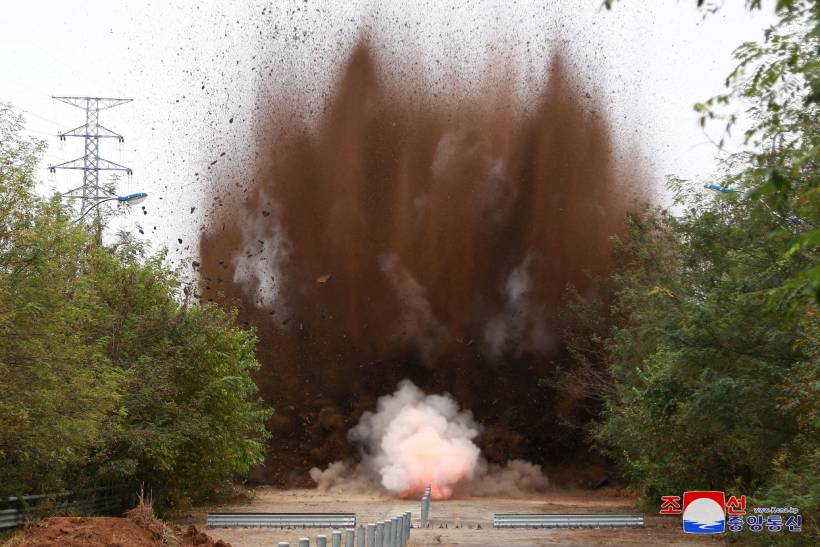
The announcement comes despite North Korea’s decision in 2024 to demolish road and rail links connecting the two countries as part of its policy redefining South Korea as a hostile state.
President Lee acknowledged the limited prospects for immediate dialogue, describing current outreach efforts as “shouting into an echoless void,” but stressed that peaceful coexistence remains a long-term strategic objective.
Inter-Korean Cooperation Fund Expanded
The government also plans to broaden the use of the Inter-Korean Cooperation Fund, which has remained largely unused since most exchange programmes were suspended in 2016.
Proposed reforms would allow the fund to finance border-region development, peace economy initiatives, reunification programmes, and academic research related to North Korea.
Diplomatic Stalemate Persists
Foreign Minister Cho Hyun said multilateral negotiations involving North Korea, the United States, and China remain unrealistic under current conditions.
He revealed that previous Indonesian efforts to facilitate dialogue between Seoul and Pyongyang failed after North Korea declined to participate, highlighting the continued absence of meaningful diplomatic engagement.
Seoul Is Preparing for Long-Term Engagement Rather Than Immediate Reconciliation
The railway revival reflects South Korea’s effort to preserve the institutional foundations for future inter-Korean cooperation even as diplomatic conditions remain unfavorable. Rather than expecting an imminent breakthrough, the Lee administration appears focused on maintaining infrastructure, funding mechanisms, and policy frameworks that could support engagement if political opportunities emerge. However, North Korea’s destruction of cross-border transport links and continued rejection of dialogue indicate that Pyongyang currently prioritizes strategic separation over reconciliation. As a result, the railway project carries greater symbolic and long-term strategic significance than immediate practical value, illustrating Seoul’s attempt to balance deterrence with a sustained commitment to eventual diplomatic re-engagement.
With information from Reuters.
