


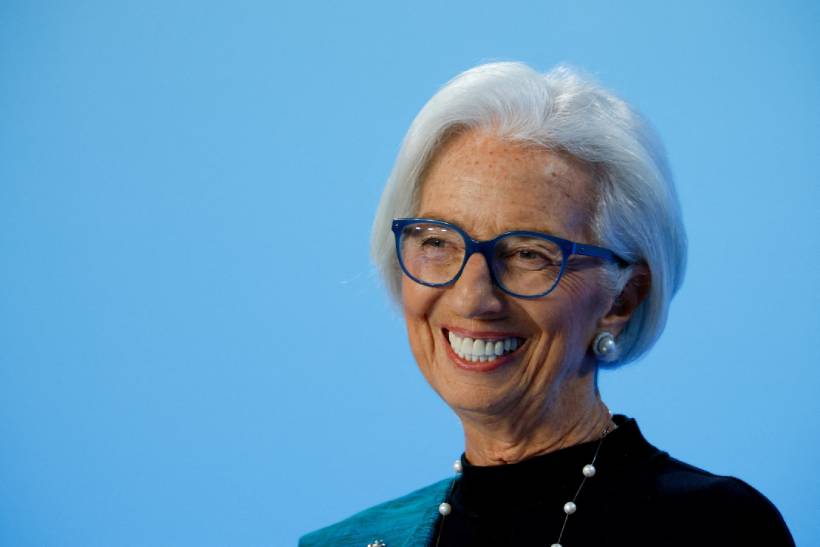
Christine Lagarde’s decision to leave the European Central Bank (ECB) before the end of her term marks the conclusion of an unconventional tenure shaped by economic crises, political diplomacy and difficult monetary policy choices.
When the former French finance minister and International Monetary Fund (IMF) chief took charge of the ECB in 2019, she became its first president without formal economics training or previous central banking experience. Critics questioned whether her political background would be sufficient to lead one of the world’s most influential monetary institutions.
Seven years later, her record is more complex than those early doubts suggested. Lagarde helped steer the eurozone through the COVID-19 pandemic, the energy shocks that followed Russia’s invasion of Ukraine and the region’s most severe inflation surge in decades. Yet her decision to step down on February 7, 2027, has revived questions about the relationship between political calculations and the independence of European monetary policy.
An Unconventional Path to Frankfurt
Lagarde’s career differed from that of the technocrats who traditionally lead central banks. A corporate lawyer by training, she spent years working in Chicago before entering French politics in 2005.
Stay ahead of the geopolitical week.
MD Briefing delivers expert analysis across five global fronts — the Indo-Pacific, energy, geoeconomics, European security, and the Middle East — every Monday morning. Free.
She subsequently became one of President Nicolas Sarkozy’s most influential ministers, overseeing France’s response to the 2008 global financial crisis. Her experience managing political negotiations and financial institutions helped prepare her for the IMF leadership, which she assumed in 2011.
At the IMF, Lagarde confronted Europe’s sovereign debt crisis, including the difficult negotiations surrounding Greece’s financial rescues. Her tenure also included a controversial $57 billion assistance package for Argentina in 2018, which failed to prevent a currency collapse and a deep recession.
These experiences demonstrated both her willingness to take high-stakes decisions and the limits of political influence when economic conditions deteriorate.
When Lagarde arrived at the ECB in November 2019, some market participants questioned whether she could command the confidence of policymakers and investors without the technical background of her predecessors.
Her approach would instead rely heavily on communication, consensus-building and political negotiation.
Navigating the Pandemic and Inflation Crisis
Lagarde’s most significant test came just months after taking office, when the COVID-19 pandemic triggered financial turmoil across the eurozone.
In March 2020, her declaration that the ECB was not there to close the gap between Italian and German borrowing costs unsettled bond markets. Investors interpreted the remarks as a sign that the central bank might not adequately protect vulnerable eurozone economies from rising borrowing costs.
The resulting market reaction forced Lagarde to clarify her position. The ECB subsequently introduced an extensive emergency bond-buying programme that helped stabilise financial markets and preserve favourable financing conditions during the pandemic.
The next major challenge emerged after Russia’s invasion of Ukraine in 2022 sent energy prices soaring and intensified inflation across Europe.
Under Lagarde, the ECB implemented an exceptionally rapid series of interest-rate increases to bring inflation under control. The bank later acknowledged that it had underestimated the persistence and scale of the initial energy-driven price shock.
Nevertheless, economist Willem Buiter, a former Bank of England official, assessed her overall tenure favourably, noting that eurozone inflation had been brought down faster than inflation in Britain and the United States.
Her record therefore combines an early misjudgment of market communication and inflation risks with a broader effort to stabilise the economy through successive crises.
Political Diplomacy Replaced the Technocratic Style
Lagarde’s leadership style also differed from that of her predecessor, Mario Draghi, whose more centralised approach sometimes strained relations with hawkish policymakers in northern Europe.
Rather than relying primarily on top-down direction, Lagarde sought to build agreement among the governors of the eurozone’s national central banks. Her emphasis on dialogue helped manage disagreements over monetary policy within an institution where decisions require balancing the economic conditions of multiple countries.
Her public communication was similarly unconventional. Lagarde often favoured accessible expressions over technical economic language, including her remark that “everything is better with butter” during a discussion of economic growth. She also encouraged governments to strengthen their finances during favourable economic conditions rather than wait for a crisis.
At times, her willingness to challenge established thinking extended to economists themselves. She once described them as a “tribal clique”, although she later softened the criticism by expressing a desire to join their ranks.
These characteristics helped establish her as a central bank president who placed considerable emphasis on diplomacy and public engagement.
Why Her Early Departure Has Become Controversial
Lagarde’s decision to leave before her scheduled term ends in October 2027 has introduced a political dimension to her legacy.
Her departure allows European Union leaders to select a successor before France’s presidential election in spring 2027, which opinion polls cited in the report suggest could bring far-right candidate Marine Le Pen to power.
The timing has drawn criticism from observers who argue that arranging the succession around a national election risks making the ECB appear vulnerable to political calculations.
Paul De Grauwe, a professor at the London School of Economics, criticised the move as a decision driven by French political interests. Lagarde and French President Emmanuel Macron have not directly addressed such criticism.
The controversy is particularly sensitive because the ECB’s independence from governments is central to its credibility. Investors must be confident that interest-rate decisions are based on the institution’s assessment of inflation and economic stability rather than the electoral interests of individual leaders.
Lagarde has ruled out running for the French presidency, although she has indicated that she intends to advocate for pro-European values in France in whatever capacity she considers most effective.
Her early exit therefore raises a difficult question: can political diplomacy strengthen a central bank’s leadership while simultaneously creating concerns about its relationship with national politics?
The Challenges Facing Her Successor
Whoever replaces Lagarde will inherit an institution confronting renewed inflation risks, financial pressures and geopolitical uncertainty.
Rising energy costs linked to the Middle East conflict could reignite inflation, potentially forcing the ECB to maintain restrictive monetary policy or increase interest rates further. At the same time, higher government bond yields, particularly in heavily indebted France, threaten to increase borrowing costs and constrain economic growth.
The next president will also have to preserve consensus among national central bank governors while maintaining confidence in the ECB’s independence during a politically sensitive period.
Former Dutch central bank governor Klaas Knot and former Spanish central bank governor Pablo Hernández de Cos have been identified as potential successors. The appointment will be closely watched by financial markets because the leadership transition comes as Europe faces both domestic political uncertainty and external economic shocks.
A Legacy Defined by Contradictions
Lagarde’s tenure challenges the assumption that a central bank president must follow a conventional technocratic career path. Her political experience and diplomatic approach helped her manage disagreements and guide the ECB through extraordinary economic disruptions.
However, her early communication difficulties, the ECB’s delayed recognition of inflationary pressures and the controversy surrounding her departure demonstrate the limitations of that approach.
Her legacy may ultimately rest on this combination of strengths and weaknesses. Lagarde brought political skills to an institution traditionally dominated by economists and central bankers, showing that consensus-building can be an important asset during periods of crisis.
Yet her final decision has also exposed the delicate boundary between political judgment and institutional independence. As the ECB prepares for a new president, that tension will remain central to the debate over how Europe’s monetary authority should be led.
With information from Reuters.
