


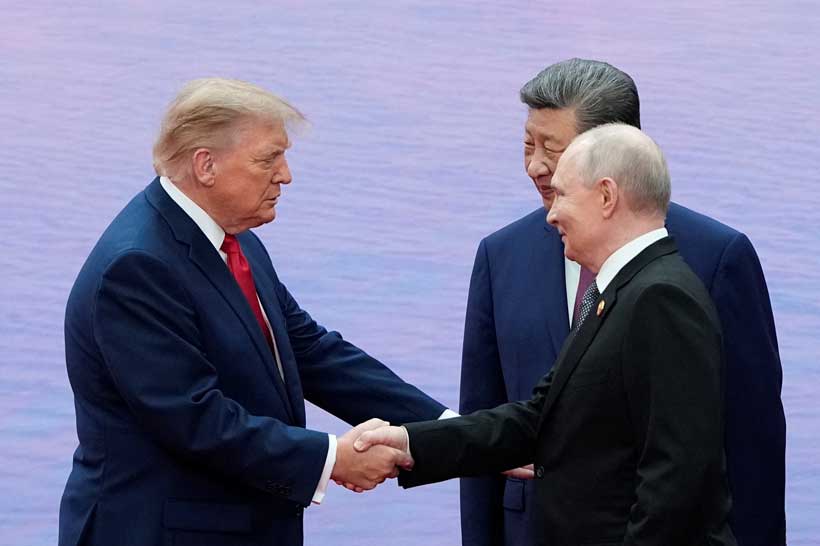
On Thursday, in Shenzhen, the leaders of the world’s three largest nuclear powers will sit at one table for the first time. Beijing confirmed this week that Xi Jinping will host Vladimir Putin and Donald Trump on 19 November, on the sidelines of the APEC summit. The pairs know each other well. Putin and Xi have met more than 40 times since 2013; Trump has met Putin seven times and Xi eight. But the three have never met as three.
The historical comparisons arrived on cue. Pyotr Tolstoy, a senior Russian lawmaker, said the meeting could lead to a “new Yalta”. The Kremlin’s own spokesman was more careful, noting that whatever is agreed in Shenzhen cannot be imposed on others. Chinese observers have dismissed the Yalta comparison as missing the mark.
The more useful question is not whether Shenzhen will redraw the world map. It will not. The question is whether the one pact Washington has actually put on the table, a three-way nuclear arms control agreement, can be produced by this format at all. The structure of the problem says it cannot, at least not yet. What Shenzhen can produce is something less visible and possibly more consequential: a precedent for great-power summitry conducted over the heads of those whose security is being discussed.
to read the full analysis, please subscribe to our Premium MD Briefing
Stay ahead of the geopolitical week.
MD Briefing delivers expert analysis across five global fronts — the Indo-Pacific, energy, geoeconomics, European security, and the Middle East — every Monday morning. Free.
