


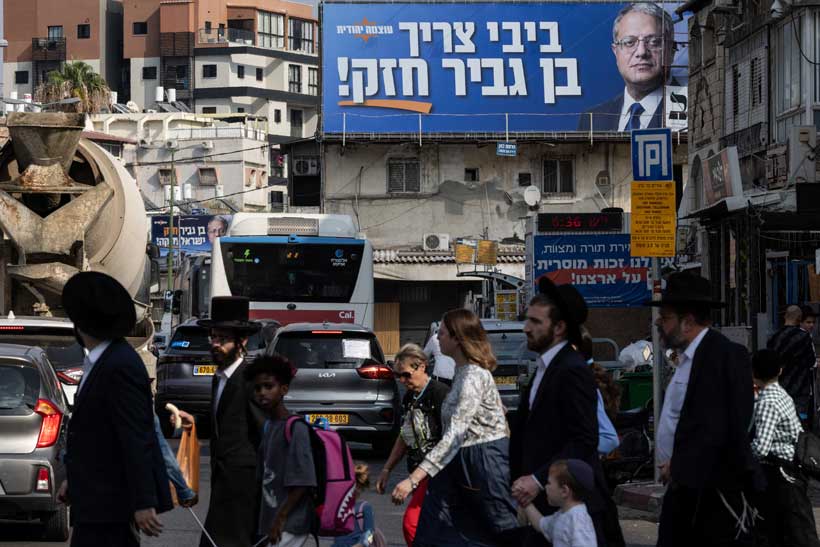
Israel’s inconclusive election has left Benjamin Netanyahu in office as caretaker prime minister, but without a clear parliamentary majority. Although his Likud party emerged as the largest faction, an opposition bloc has the numbers to challenge his leadership. The next government will depend on coalition negotiations, political compromises and whether rival parties can overcome their differences.
Several scenarios could determine Israel’s political future.
Another Election
If no candidate can secure enough support to form a government, Israel could head to another election. After the final results are published, President Isaac Herzog will consult party representatives and nominate the candidate he believes has the best chance of forming a coalition.
If the first candidate fails, another may be given the opportunity. The Knesset can also nominate a candidate under the relevant parliamentary procedures. If no government is formed within the prescribed timeframe, another election could follow.
Stay ahead of the geopolitical week.
MD Briefing delivers expert analysis across five global fronts — the Indo-Pacific, energy, geoeconomics, European security, and the Middle East — every Monday morning. Free.
Herzog has urged political parties to approach negotiations with an open mind, arguing that every effort should be made to avoid another vote. However, the difficulty of reconciling competing political interests could make a new election unavoidable.
A Unity Government
A unity government could bring Likud together with centrist and right-wing opposition parties, including Gadi Eisenkot’s Yashar, Avigdor Lieberman’s Israel Our Home and Naftali Bennett’s Together faction.
Together, these parties could command 66 seats in the 120-member Knesset, giving them a parliamentary majority.
However, the arrangement faces significant political obstacles. Netanyahu would have to distance himself from his traditional allies among the far-right and ultra-Orthodox parties. Meanwhile, opposition leaders would risk breaking their central campaign promise to remove him from power.
Nevertheless, if weeks of negotiations fail to produce a viable alternative, a unity government could emerge as a compromise. Renewed fighting with Iran or another major security crisis could also encourage political rivals to cooperate.
Eisenkot’s Minority Government
Another possibility is a government led by Eisenkot, supported by Together, The Democrats and Israel Our Home, with parliamentary backing from the Arab parties Ra’am and the Joint List.
According to the latest vote tally, Eisenkot’s potential coalition partners hold 48 seats, while the two Arab parties have 19. Their combined support would provide a majority of 67 seats, even if the Arab parties remained outside the government itself.
The main obstacle is political resistance to Arab parties playing a decisive role in government formation. Eisenkot would also have to reconsider his campaign pledge against including Arab parties in his government.
Netanyahu has sought to undermine the legitimacy of a government dependent on Arab support, particularly as public attitudes toward Israel’s Arab minority have hardened since the Hamas-led attacks of October 7, 2023.
However, both Arab parties have indicated that they are willing to cooperate with Eisenkot’s camp. Ra’am previously supported Bennett’s government in 2021, marking the first time an independent Arab party joined an Israeli governing coalition. That administration collapsed after 18 months.
Netanyahu Tries to Rebuild a Right-Wing Majority
Despite losing his parliamentary majority, Netanyahu could attempt to retain power by persuading opposition lawmakers to defect or support a right-wing government.
His coalition has fallen from 64 seats to 53, leaving him short of the 61 seats needed for a majority. However, Netanyahu has a long record of political manoeuvring and could seek to exploit divisions within the opposition.
He has previously succeeded in attracting lawmakers away from rival political camps. Yet replicating that strategy may prove difficult because the opposition’s collective objective is to end his premiership.
What Happens Next?
Israel’s political future will depend on whether party leaders are willing to compromise on issues that defined their election campaigns. A fresh election remains possible, while a unity government or an Eisenkot-led administration would require substantial political concessions.
Netanyahu’s ability to rebuild a majority cannot be ruled out, but neither can the opposition’s opportunity to replace him. Until coalition negotiations produce a viable parliamentary majority, Israel is likely to remain in a period of political uncertainty.
With information from Reuters.
