


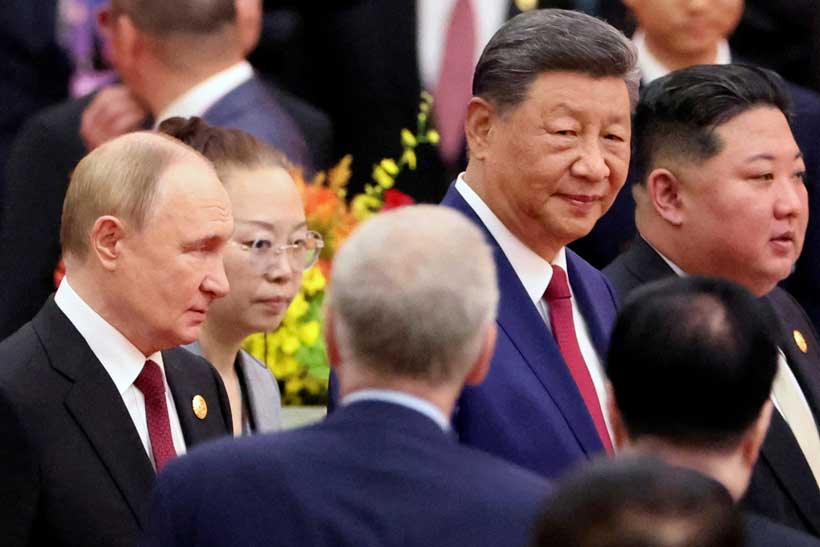
China has expressed support for diplomatic efforts to reduce tensions on the Korean Peninsula, including renewed dialogue between the United States and North Korea, according to South Korea’s presidential office. The position emerged after Chinese President Xi Jinping met South Korean President Lee Jae Myung on the sidelines of the Asia-Pacific Economic Cooperation (APEC) summit, highlighting Beijing’s potential role as Washington considers another attempt to engage Pyongyang.
The discussions come amid renewed speculation about a possible meeting between US President Donald Trump and North Korean leader Kim Jong Un during Trump’s Asian visit. Although no meeting has been confirmed, Washington has indicated that the US president remains open to dialogue with North Korea.
The diplomatic developments are significant because efforts to revive negotiations come seven years after the last Trump-Kim summit ended without an agreement on North Korea’s nuclear weapons programme or sanctions relief. With regional tensions still unresolved, South Korea is seeking to strengthen diplomatic coordination with both Beijing and Washington.
China Supports Dialogue to Reduce Korean Peninsula Tensions
During their meeting, Xi briefed Lee on recent developments in China’s relations with North Korea and said Beijing would continue playing a constructive role in issues concerning the Korean Peninsula, according to Seoul’s presidential office.
Stay ahead of the geopolitical week.
MD Briefing delivers expert analysis across five global fronts — the Indo-Pacific, energy, geoeconomics, European security, and the Middle East — every Monday morning. Free.
China also supports various initiatives aimed at easing tensions, including dialogue between Washington and Pyongyang.
For South Korea, the issue is directly connected to national security. Lee told Xi that developments on the Korean Peninsula were a matter of vital national interest for Seoul, emphasising the importance of maintaining peace and stability in the region.
The South Korean president also called for a more equal and mutually beneficial economic partnership between China and South Korea. He argued that stable relations between the two countries would depend partly on ensuring security across the peninsula.
Xi, meanwhile, expressed China’s readiness to strengthen communication and coordination with South Korea and maintain stable global industrial and supply chains.
The meeting reflects Beijing’s interest in maintaining regional stability while preserving its diplomatic influence over developments involving North Korea.
Trump Signals Openness to Another Meeting With Kim Jong Un
Trump’s possible return to negotiations with Kim has become another important dimension of the diplomatic discussions.
The US president has floated the possibility of meeting the North Korean leader during his trip to Asia, although neither Washington nor Pyongyang has confirmed that an encounter will take place.
US Secretary of State Marco Rubio said on Wednesday that Trump was prepared to engage in dialogue with North Korea. However, he clarified that Washington’s willingness to negotiate did not mean a meeting was necessarily scheduled during the visit.
The possibility of renewed engagement follows the collapse of earlier diplomatic efforts. Trump and Kim held three meetings during Trump’s first presidency, including two summits in 2018 and 2019. Their last summit in Hanoi ended without an agreement after disagreements over the scope of North Korea’s nuclear concessions and the sanctions relief it sought.
A new meeting could provide an opportunity to reopen diplomatic channels, but the underlying disagreements remain difficult to resolve.
Denuclearisation Remains a Major Point of Disagreement
One of the biggest obstacles to renewed negotiations is the absence of agreement over North Korea’s nuclear status.
Pyongyang has repeatedly indicated that it is unwilling to resume negotiations if denuclearisation remains the central condition. North Korea has continued developing its nuclear and missile capabilities, while Washington and its regional allies have refused to recognise the country as a legitimate nuclear-weapon state.
Trump has referred to North Korea as a nuclear power, a description that has attracted attention because of its implications for future negotiations. Treating North Korea’s existing nuclear capabilities as a starting point for diplomacy could potentially create more room for engagement, but it would also raise difficult questions about the long-term objective of negotiations.
The language used by Washington has also fuelled speculation about a possible adjustment in US policy. Trump’s latest global security roadmap no longer refers to denuclearising North Korea as an explicit objective, prompting questions about whether the administration is seeking a more flexible diplomatic approach.
Neither Xi nor Lee mentioned denuclearisation in their public opening remarks or in the South Korean presidential office’s account of their meeting.
The omission is notable because China has increasingly emphasised dialogue and stability in its approach to North Korea rather than publicly placing denuclearisation at the centre of its messaging.
Why South Korea Wants Closer Coordination With Beijing
South Korea faces a complex diplomatic challenge. It must maintain its security relationship with Washington while managing its economic and political relationship with China, which remains an important regional actor with direct influence over North Korea.
Beijing’s position is particularly significant because China has historically maintained close political and economic ties with Pyongyang. Its willingness to support dialogue could help create diplomatic opportunities, although its ability to persuade North Korea to change its nuclear policy remains uncertain.
For Lee, cooperation with Xi also provides an opportunity to reduce regional tensions without weakening South Korea’s security priorities.
The emphasis on an equal and mutually beneficial economic partnership suggests that Seoul wants to prevent security disagreements from undermining broader bilateral relations. Both countries have an interest in stable trade and industrial supply chains, particularly as competition between major economies creates additional pressure on regional commerce.
However, closer coordination does not necessarily mean that Seoul and Beijing share identical objectives regarding North Korea. South Korea remains directly exposed to the security risks posed by Pyongyang’s military capabilities, while China is primarily concerned with maintaining stability along its regional borders and preventing a wider crisis.
What Happens Next?
The immediate question is whether Trump’s renewed interest in Kim can produce a concrete diplomatic engagement. Washington has indicated its willingness to talk, but Pyongyang’s conditions for negotiations remain a major obstacle.
A meeting could offer an opportunity to reduce tensions and establish a framework for further discussions. However, without agreement on the nuclear issue, sanctions and the security arrangements surrounding the peninsula, another summit could face the same difficulties as previous negotiations.
China’s support for dialogue adds an important diplomatic dimension, particularly as Seoul seeks greater coordination with Beijing. Yet the success of any initiative will ultimately depend on whether Washington and Pyongyang are willing to make compromises.
For South Korea, the priority remains preventing further escalation while preserving regional stability. The emerging diplomatic signals suggest that dialogue may once again be possible, but a lasting agreement on North Korea’s nuclear programme remains far from certain.
With information from Reuters.
