


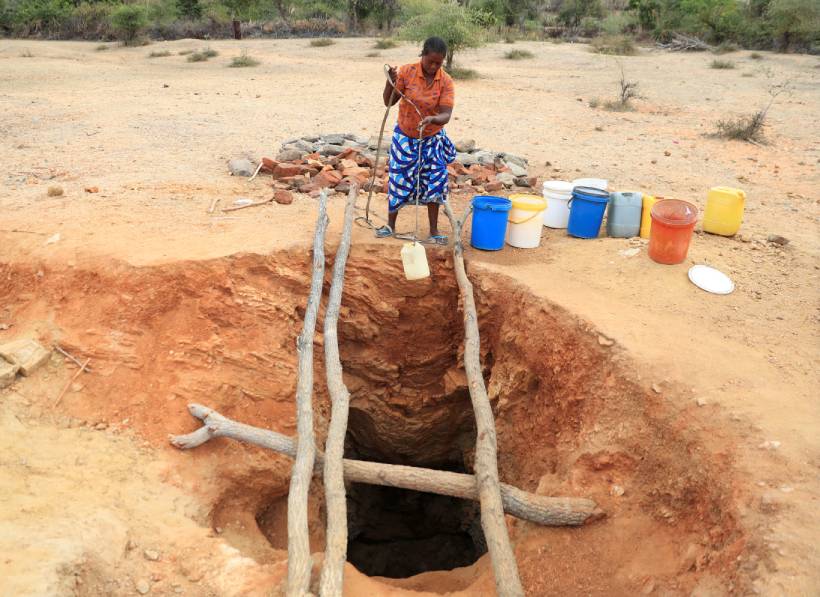
The World Food Programme (WFP) has warned that a powerful El Niño weather event could push nearly 49 million more people into acute food insecurity by the end of next year, raising the global total to 274 million across some of the world’s most vulnerable regions.
Strongest El Niño in Decades
According to the WFP, there is an 81% probability of a very strong El Niño, with Pacific Ocean temperatures reaching their highest levels since at least 1982 and potentially making it the strongest event since 1950.
El Niño typically disrupts global weather patterns, causing droughts, delayed monsoons, irregular rainfall, and flooding that threaten agricultural production and food supplies.
Regions Facing the Greatest Risk
The report identifies Central America and Southern Africa as the regions most vulnerable to worsening food insecurity.
Stay ahead of the geopolitical week.
MD Briefing delivers expert analysis across five global fronts — the Indo-Pacific, energy, geoeconomics, European security, and the Middle East — every Monday morning. Free.
Central America could experience an 83% increase in acute hunger, while Southern Africa could see a rise of nearly 75%. Southern Africa, South America, and the Caribbean may each record more than 12 million additional people facing severe food shortages.
Conflict and Rising Food Prices
Although global food supplies entered the El Niño period relatively strong following good harvests in 2025, the WFP warned that ongoing conflict in the Middle East and weather-related crop failures could drive food prices higher.
While previous El Niño events did not significantly disrupt global food markets, regional shortages and higher prices could severely reduce access to food for vulnerable populations.
Funding Cuts Limit Crisis Monitoring
The agency also highlighted that funding reductions from U.S. and European donors have weakened food security monitoring.
Household surveys declined from 1.1 million in 2024 to 800,000 in 2025, with further reductions this year, making it more difficult to identify emerging food crises before they escalate.
Early Action Needed
The WFP has expanded anticipatory assistance programmes across 18 countries, reaching more than 1.3 million people with cash support and emergency assistance before extreme weather strikes.
The agency stressed that while forecasts remain uncertain, governments and humanitarian organizations should prepare for droughts, floods, and disrupted agricultural production across Africa, Asia, Central America, and the Caribbean.
The WFP’s warning underscores how climate shocks are increasingly becoming global food security crises rather than isolated weather events. While stronger harvests and stable global food supplies provide some buffer, regions already affected by poverty, conflict, and fragile agricultural systems remain highly exposed. Equally concerning is the decline in humanitarian funding and food-security monitoring, which reduces the international community’s ability to detect and respond to crises before they worsen. As climate variability intensifies, the effectiveness of early warning systems, disaster preparedness, and international aid will play an increasingly important role in preventing weather-related shocks from escalating into large-scale humanitarian emergencies.
With information from Reuters.
