


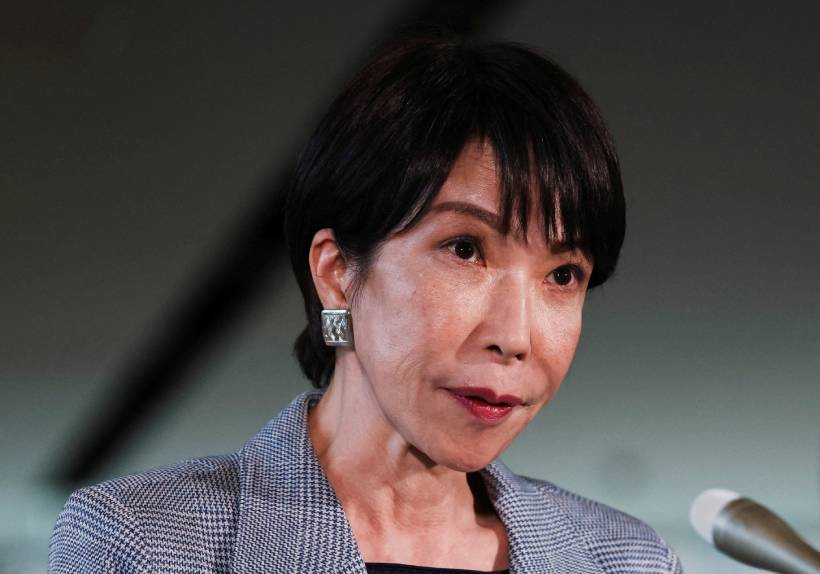
Japan’s government has approved Prime Minister Sanae Takaichi’s flagship proposal to sharply reduce the consumption tax on food, despite growing concerns over the country’s already stretched public finances.
The cabinet endorsed the plan after receiving unanimous approval from the ruling Liberal Democratic Party (LDP), clearing the way for implementation in April 2027, pending parliamentary approval.
What the Tax Cut Includes
The proposal would reduce the consumption tax on food from 8% to 1% for two years, while providing a government benefit equivalent to the remaining 1%, effectively making food purchases tax-free for consumers.
If enacted, it would mark Japan’s first reduction in the consumption tax since its introduction in 1989.
Stay ahead of the geopolitical week.
MD Briefing delivers expert analysis across five global fronts — the Indo-Pacific, energy, geoeconomics, European security, and the Middle East — every Monday morning. Free.
Fiscal Cost Raises Concerns
The measure is expected to create a 5 trillion yen ($31.7 billion) revenue shortfall, intensifying questions over how the government plans to finance the policy.
Finance Minister Satsuki Katayama said the government intends to fund the tax cut without issuing additional deficit-financing bonds, instead relying on spending cuts, subsidy reforms, and tax adjustments.
Political Divisions Persist
The proposal follows the collapse of cross-party negotiations over the scope and financing of the tax cut.
Even within the ruling LDP, several lawmakers opposed the measure due to the absence of a clearly identified funding source, with some boycotting the party’s approval meeting.
Markets Watching Japan’s Debt Outlook
The tax proposal comes as Japan faces rising fiscal obligations, including its 370 trillion yen public-private investment strategy through 2040 and increasing defence expenditures.
Concerns over fiscal sustainability have already affected financial markets. The Japanese yen has weakened after a brief recovery supported by coordinated intervention with the United States, while the benchmark 10-year government bond yield has climbed to 2.87%, raising expectations of higher borrowing costs.
The food tax cut reflects Prime Minister Takaichi’s effort to address rising living costs and strengthen public support, but it also highlights Japan’s growing fiscal dilemma. While the policy may provide short-term relief for households struggling with inflation, its long-term sustainability remains uncertain without a credible financing plan. Investors are likely to focus less on the immediate stimulus and more on whether Tokyo can balance tax relief with fiscal discipline. As Japan grapples with an ageing population, rising social spending, and higher defence commitments, maintaining market confidence may prove just as important as easing consumer prices.
With information from Reuters.
