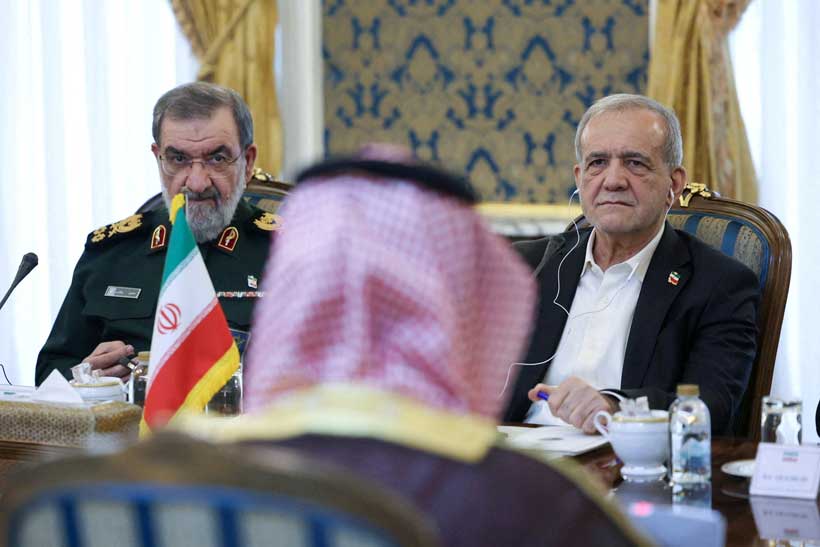
Qatari mediators have delivered a new draft deal to Iran aimed at ending the war with the US and Israel, according to an official familiar with the talks. However, a senior Iranian official dismissed the proposals as “unacceptable” and not a legitimate offer. The new draft was presented on Sunday and is under consideration by Tehran, with a response expected by the end of the week. Qatar and Pakistan are leading the mediation efforts as the ongoing conflict has disrupted global shipping and oil supplies, now affecting Saudi Arabia and Yemen as well.
The proposed deal includes a seven-day timeline meant to address the concerns of both Tehran and Washington, outlining daily confidence-building measures each side must take. This timeline could begin as early as next week, with several countries acting as guarantors for the deal. Nonetheless, Iran maintains its firm stance on the nuclear issue and insists on lifting US sanctions and the blockade on its ports first, rejecting US demands to include its nuclear program in the negotiations.
In late September, Iran had suggested a different seven-day plan concerning the reopening of the Strait of Hormuz, which the US rejected. The current draft is believed to be different from that earlier proposal, though its details remain unclear. Previous mediation attempts resulted in a temporary peace agreement in June, which quickly deteriorated.
Recent weeks have seen heightened tensions, particularly with Iran-backed Houthi forces attacking Saudi Arabia, further complicating the situation. Concerns emerged that Israeli Prime Minister Benjamin Netanyahu could resume attacks on Iran around election time, and US President Donald Trump renewed threats against Iran. Iranian officials have also indicated plans to retaliate against US and Israeli actions. Meanwhile, regional officials from Saudi Arabia, Turkey, and Pakistan met with Iranian representatives to pursue de-escalation. Qatar emphasized the need for Iran to cease threats and reopen the Strait of Hormuz for mediation efforts to progress. The conflict has contributed to increased oil prices and has sparked renewed clashes between Israel and Hezbollah, impacting Trump’s approval ratings ahead of the midterm elections.
Stay ahead of the geopolitical week.
MD Briefing delivers expert analysis across five global fronts — the Indo-Pacific, energy, geoeconomics, European security, and the Middle East — every Monday morning. Free.
With information from Reuters