


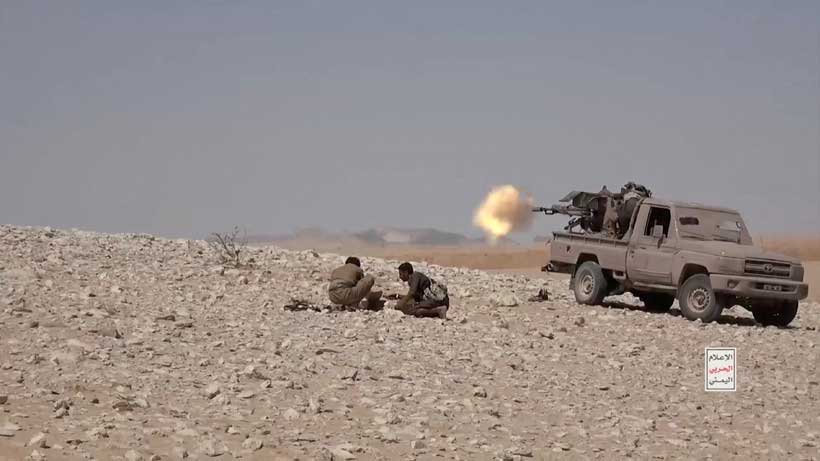
Yemen’s civil war is entering another dangerous phase as divisions among forces opposing the Iran-aligned Houthi movement threaten to weaken their campaign and reshape the country’s political and military landscape.
Saudi Arabia has replaced the commander overseeing its coalition operations after Yemeni allies suffered territorial setbacks, exposing deep divisions within the anti-Houthi camp. Although a United Nations-brokered truce in 2022 largely halted large-scale fighting, it failed to produce a lasting political settlement.
The conflict, which began in 2014, now involves a complex network of local armed groups, regional powers and competing political movements. Saudi Arabia and the United Arab Emirates have supported different factions, while Iran is accused of backing the Houthis. The wider confrontation involving Iran has added another layer of instability to an already fragmented war.
Understanding the main actors is essential to understanding why Yemen remains difficult to stabilise.
Stay ahead of the geopolitical week.
MD Briefing delivers expert analysis across five global fronts — the Indo-Pacific, energy, geoeconomics, European security, and the Middle East — every Monday morning. Free.
The Houthis: The Dominant Force in Northern Yemen
The Houthi movement, formally known as Ansar Allah, emerged as the central force in Yemen’s civil war after seizing the capital, Sanaa, in late 2014. Its advance forced the Saudi-backed government of then-President Abd Rabbu Mansour Hadi from power and prompted Saudi Arabia to launch a military intervention in March 2015.
The movement remains Yemen’s strongest military actor, controlling Sanaa and large parts of the north. Estimates suggest that it governs territory inhabited by between 60% and 65% of the country’s population.
Saudi Arabia and its coalition partners accuse Iran of providing the Houthis with weapons, training and financial support. The movement rejects the description of itself as an Iranian proxy, arguing that it develops its own weapons. Tehran has also denied the allegations.
The Houthis have demonstrated considerable military capabilities through missile and drone attacks against Saudi Arabia and the United Arab Emirates, including strikes on energy facilities and critical infrastructure. Their activities have also expanded beyond Yemen’s borders.
The movement is widely associated with Iran’s regional network of allies, known as the Axis of Resistance. During the Gaza war, it launched attacks against Israel and targeted commercial shipping in the Red Sea, presenting its operations as support for Palestinians.
In the latest escalation, the Houthis joined the conflict involving Iran by attacking Israel on March 28. They subsequently announced a naval blockade against Saudi Arabia in July and intensified attacks against the kingdom’s southern regions in September.
Despite more than a decade of Saudi-led airstrikes and subsequent US and British military operations, the movement has remained firmly established in northern Yemen.
Saudi Arabia: Leading the Anti-Houthi Coalition
Saudi Arabia intervened militarily in Yemen in March 2015, leading a coalition intended to restore the internationally recognised government and prevent the Houthis from consolidating control over the country.
Riyadh viewed the movement’s expansion as a major security threat, particularly because of its alleged relationship with Iran, Saudi Arabia’s principal regional rival.
However, the intervention failed to achieve its original objective. The Houthis retained control over the capital and much of northern Yemen, while the anti-Houthi coalition became increasingly divided among competing political and military factions.
Saudi Arabia has also had to balance its Yemen strategy with broader regional security concerns. Although Riyadh and Tehran reached a China-brokered diplomatic rapprochement, their strategic rivalry and mutual distrust remain significant.
The kingdom’s security concerns have intensified amid the wider conflict involving Iran, particularly given the Houthis’ record of targeting Saudi energy infrastructure. Riyadh signed a defence agreement with Turkey and Pakistan in August as regional instability increased.
The replacement of the commander overseeing the Saudi-led coalition following recent territorial setbacks reflects the growing pressure on Riyadh to reorganise its allies and strengthen the anti-Houthi campaign.
The Presidential Leadership Council: Yemen’s Internationally Recognised Government
The Presidential Leadership Council (PLC) is the internationally recognised authority governing from the southern port city of Aden. Established in Riyadh in April 2022, it replaced former president Hadi and was intended to unify the different factions fighting the Houthis.
The eight-member council is led by Rashad al-Alimi and includes several influential political and military figures.
However, the PLC has struggled to fulfil its central objective. Its members represent competing interests and maintain different relationships with Saudi Arabia and the UAE. These divisions have weakened its ability to coordinate military operations and establish a coherent political strategy.
The government remains heavily dependent on Saudi military support, including air power, as it seeks to recover territory from the Houthis.
Its internal divisions illustrate a central problem in Yemen’s conflict: opposition to the Houthis has not translated into agreement over the country’s future political structure.
A’amaliqa: The Giants Leading Much of the Anti-Houthi Campaign
The A’amaliqa forces, commonly known as the Giants Brigades, are among the most important military formations fighting the Houthis. Emerging in 2016, the group consists largely of fighters associated with the ultra-conservative Sunni Salafi movement in southern Yemen.
The formation has developed into a significant force along the country’s western and southern fronts. However, like other armed groups in Yemen, it has experienced internal divisions and the emergence of competing factions.
One of its most influential leaders is Abu Zara al-Muharrami, a hardline figure and member of the Presidential Leadership Council. He oversees military operations along the strategically important Red Sea coastline near the Bab el-Mandeb Strait, one of the world’s key maritime chokepoints.
Other factions have maintained links with the UAE, while the Homeland Shield Forces broke with the Emirati camp and are now backed by Saudi Arabia.
These competing loyalties demonstrate how regional rivalries have shaped the structure of Yemen’s anti-Houthi forces.
National Resistance Forces: A Separate Military Challenge to the Houthis
The National Resistance Forces are another major anti-Houthi formation, led by Tarek Saleh, the nephew of former Yemeni president Ali Abdullah Saleh and a member of the Presidential Leadership Council.
Originally established with UAE support, the force operates along Yemen’s western coast and is considered one of the better-equipped formations opposing the Houthis.
Unlike southern separatist groups, the National Resistance Forces advocate maintaining a unified Yemeni state. They therefore position themselves as a counterweight not only to the Houthis but also to movements seeking independence for southern Yemen.
Their relationship with Saudi Arabia has also remained important despite their origins in the UAE-backed military camp.
On September 10, Saleh instructed his forces to regroup and establish an alternative command centre in a secure location as Houthi fighters captured territory. The move highlighted the growing pressure on anti-Houthi forces to reorganise their positions.
Southern Transitional Council: The Push for Southern Independence
The Southern Transitional Council (STC) is a powerful separatist movement seeking independence for southern Yemen. Led by Aidarous al-Zubaidi, it has received military training and equipment from the UAE.
South Yemen existed as an independent state until unification with northern Yemen in 1990. An attempt to restore southern independence in 1994 was defeated by forces loyal to then-President Ali Abdullah Saleh.
The STC became a major political and military actor after declaring its intention to establish self-rule in southern Yemen in 2020. Although it remains part of the Saudi-led anti-Houthi coalition, its ambitions have repeatedly brought it into conflict with the internationally recognised government and Saudi Arabia.
Tensions escalated sharply in December 2025 when the group captured large areas of Hadramout and Al Mahra provinces and advanced towards the Saudi border.
The expansion challenged Riyadh’s influence and exposed the competing objectives of Saudi Arabia and the UAE. While both countries initially cooperated against the Houthis, their differing relationships with southern factions have increasingly complicated the coalition.
Islah Party: The Islamist Component of the Anti-Houthi Camp
The Yemeni Congregation for Reform, commonly known as al-Islah, is a Sunni Islamist political movement with historical links to the Muslim Brotherhood.
It remains an important component of Yemen’s internationally recognised government and has maintained a significant political and military presence in areas opposing the Houthis.
Its strongest traditional base has been Marib, a strategically important province containing Yemen’s only gas-producing region and one of its largest oilfields.
However, al-Islah is viewed with deep suspicion by the UAE and the Southern Transitional Council, which regard the movement as a terrorist organisation. Its presence has therefore contributed to tensions within the broader anti-Houthi coalition.
The dispute reflects a wider ideological divide over the political future of Yemen, particularly between Islamist movements and factions supported by the UAE.
The UAE: A Regional Power With Its Own Interests
The United Arab Emirates joined the Saudi-led coalition in 2015 and became one of its most effective military contributors on the ground.
Although Abu Dhabi announced the withdrawal of its troops in 2019 and completed the process in 2020, it retained considerable influence through local armed groups, particularly the Southern Transitional Council and other allied formations.
The UAE’s involvement has been driven by several strategic considerations. Its opposition to the Muslim Brotherhood has shaped its hostility towards al-Islah, while its interest in securing maritime routes through Bab el-Mandeb and the Gulf of Aden has made southern Yemen particularly important.
However, relations between Riyadh and Abu Dhabi deteriorated over their competing priorities in Yemen. The UAE withdrew its remaining forces in January following a dispute with Saudi Arabia, marking a significant development in the relationship between the two former coalition partners.
The rivalry has complicated efforts to build a unified anti-Houthi front and has given local factions greater room to pursue their own political and territorial ambitions.
What Happens Next in Yemen?
Yemen’s conflict is no longer simply a confrontation between the Houthis and a Saudi-backed government. It has evolved into a fragmented struggle involving separatists, Islamist movements, regional powers and competing military formations.
The Houthis continue to control the country’s capital and much of its north, while their opponents remain divided over political authority, territorial control and the future structure of the Yemeni state.
Saudi Arabia faces the challenge of rebuilding a coalition whose members do not necessarily share the same objectives. The UAE’s continued influence through local partners, despite its military withdrawal, further complicates Riyadh’s efforts to establish a unified command.
The wider conflict involving Iran also risks drawing Yemen deeper into regional confrontation, particularly given the Houthis’ ability to threaten shipping routes and neighbouring states.
A lasting settlement will therefore require more than a military strategy against the Houthis. It will depend on whether Yemen’s rival factions and their external supporters can reach an agreement over power-sharing, territorial arrangements and the country’s political future. Until then, the fragmentation of the anti-Houthi camp will remain one of the biggest obstacles to ending Yemen’s civil war.
With information from Reuters.
