


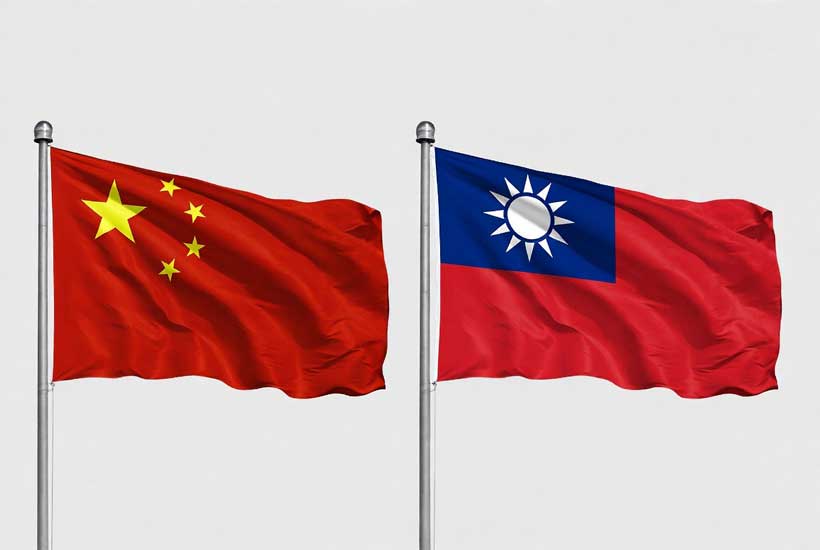
China is expanding its maritime operations around Taiwan and into the western Pacific by coordinating fishing boats suspected of belonging to its maritime militia with coast guard and research vessels, Taiwan’s Coast Guard has warned. The activity could increase pressure on Taiwan, Japan and the Philippines while strengthening Beijing’s ability to operate in disputed waters without triggering open conflict.
Taiwan’s Coast Guard said it had dispatched a patrol vessel to drive away a suspected Chinese militia fishing boat operating alongside a Chinese coast guard ship and a research vessel off Taiwan’s Pacific coast in August.
The vessel, identified as Minfudingyu 07902, came within approximately 2.7 nautical miles of Taiwan’s restricted waters on August 16, according to the coast guard. Its findings corroborated an earlier Reuters report documenting the first known sighting of a Chinese militia boat off Taiwan’s Pacific coast.
Taiwanese authorities said Chinese maritime activity had increased since June in overlapping economic waters involving Taiwan, Japan and the Philippines, following announcements by Tokyo and Manila of talks on delimiting their exclusive economic zone boundaries.
Stay ahead of the geopolitical week.
MD Briefing delivers expert analysis across five global fronts — the Indo-Pacific, energy, geoeconomics, European security, and the Middle East — every Monday morning. Free.
Exclusive economic zones extend up to 200 nautical miles from a country’s coast and grant it specific rights over natural resources in those waters.
How China’s Grey-Zone Strategy Works
Taiwan’s Coast Guard described the coordinated deployment of civilian, scientific and law-enforcement vessels as part of China’s broader grey-zone strategy. These operations allow Beijing to expand its presence and reinforce its maritime claims without crossing the threshold into an overt military confrontation.
The coast guard warned that such activities increase the surveillance and response demands on regional governments while creating additional security risks and challenging the existing international maritime order.
It also said the operations could assist China’s battlefield preparation, highlighting the strategic importance of Taiwan’s eastern coastline as a maritime traffic and supply route.
Taiwanese officials have long expressed concern that China could use a combination of military, paramilitary and civilian vessels to rehearse a potential maritime blockade. Coordinated operations could help Beijing monitor shipping movements, test Taiwan’s response capabilities and maintain a persistent presence around the island.
The coast guard has placed the Minfudingyu 07902 on a priority watchlist, saying the vessel displayed characteristics associated with Chinese maritime militia activity. It said it would continue monitoring the boat.
Why Taiwan’s Eastern Coast Matters
China’s activity off Taiwan’s eastern coast carries particular significance because the area provides access to the wider Pacific. A sustained Chinese presence there could complicate Taiwan’s maritime logistics and potentially place pressure on routes used to move supplies and other essential goods.
Taiwan’s Coast Guard also warned that the operations could increase the security burden on Japan and the Philippines, particularly as the three face overlapping maritime interests and growing Chinese activity.
Japan and the Philippines have been discussing maritime boundary delimitation in their respective exclusive economic zones. Increased Chinese vessel deployments in these areas could complicate regional maritime management and heighten tensions over access to resources and navigation.
Taiwan’s government considers the island self-governing and rejects Beijing’s sovereignty claims. China regards Taiwan as part of its territory and has not ruled out using force to bring it under its control.
Beijing has maintained that its operations off Taiwan’s eastern coast are legitimate and lawful because they take place in waters it claims as Chinese territory. Taipei strongly disputes that position.
What Makes China’s Maritime Militia Significant?
China’s maritime militia dates back to the 1950s and consists of fishing vessels whose crews receive state support and training for maritime operations. The vessels can operate alongside coast guard and other government ships, helping Beijing reinforce its claims in contested waters while retaining an ostensibly civilian presence.
The strategy has been used in South China Sea disputes, where fishing boats and other civilian-looking vessels have operated around contested maritime features. Their presence can make it more difficult for other governments to respond without risking escalation or appearing to target civilian vessels.
The suspected militia boat’s activity off Taiwan’s Pacific coast suggests that this approach may be extending into strategically important waters beyond the island’s western approaches.
Taiwan’s surveillance findings were based on a reconnaissance flight conducted by Apex Aviation. The company reviewed radar screenshots, infrared imagery and automatic identification system data to document the cluster of vessels.
China’s defence ministry and the Philippines’ defence and foreign ministries did not immediately respond to requests for comment, while Japan’s Coast Guard declined immediate comment.
Could These Operations Increase Regional Tensions?
The reported activity underscores how maritime competition in the western Pacific can intensify without a direct military confrontation. By combining coast guard deployments with vessels suspected of militia involvement, China can sustain its presence, gather information and test neighbouring governments’ responses while complicating decisions about how to respond.
For Taiwan, the central concern is whether these operations are helping China prepare for a possible blockade or other coercive action. For Japan and the Philippines, the challenge is managing increased maritime pressure while protecting their interests and avoiding escalation.
The reported deployment does not establish that China has decided to impose a blockade. However, Taiwan’s warning highlights the potential strategic value of persistent maritime operations that blur the boundaries between civilian activity, law enforcement and military preparation.
As Chinese vessels continue operating across contested waters, the ability of Taiwan and its regional partners to coordinate surveillance and maritime responses will remain an important factor in managing security risks across the western Pacific.
With information from Reuters.
