


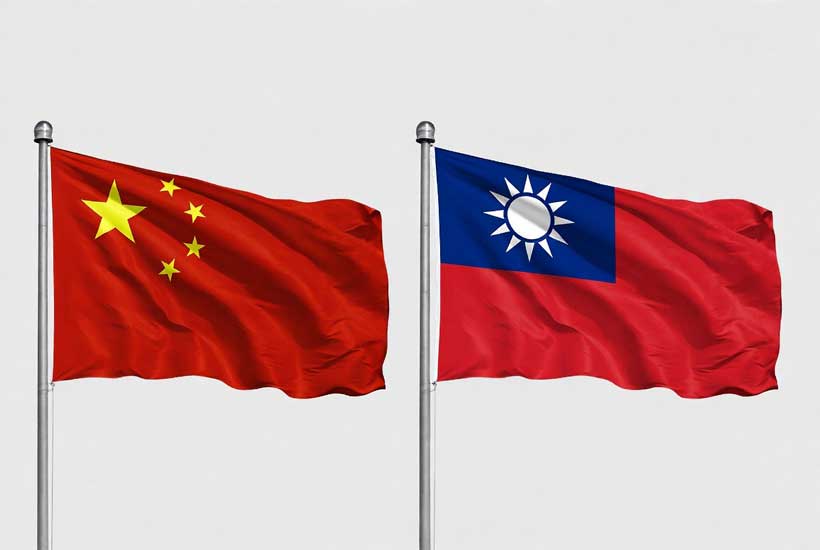
Chinese President Xi Jinping has renewed Beijing’s determination to bring Taiwan under its control, declaring that the island’s complete “reunification” with mainland China is inevitable and that the historical process cannot be stopped. Although Xi emphasised a peaceful settlement, he offered no indication that Beijing was prepared to abandon its longstanding position on the Taiwan question.
His remarks come at a sensitive moment in regional diplomacy, ahead of the Asia-Pacific Economic Cooperation (APEC) summit in Shenzhen, where Xi is expected to meet US President Donald Trump. They also arrive shortly before important local elections in Taiwan, adding political significance to Beijing’s latest statements on cross-Strait relations.
Xi Reaffirms Beijing’s Reunification Objective
Speaking at the Great Hall of the People in Beijing on Thursday, Xi described resolving the Taiwan question as an “unwavering historical mission” of the Chinese Communist Party.
“The tide of history cannot be stopped,” he said, insisting that complete reunification must and would eventually be achieved.
Stay ahead of the geopolitical week.
MD Briefing delivers expert analysis across five global fronts — the Indo-Pacific, energy, geoeconomics, European security, and the Middle East — every Monday morning. Free.
Xi’s speech marked the 160th anniversary of the birth of Sun Yat-sen, the revolutionary leader who helped bring an end to imperial rule in China through the 1911 revolution and establish the Republic of China.
The Chinese president used the occasion to connect Beijing’s reunification objective with Sun’s legacy, describing him as a national hero, patriot and pioneer of China’s democratic revolution.
Xi also called on Chinese people, including those in Taiwan, to oppose what Beijing describes as separatist forces and support peaceful development across the Taiwan Strait.
Peaceful Reunification Remains Beijing’s Official Position
Xi reiterated China’s commitment to peaceful reunification under the “one country, two systems” framework, which Beijing has repeatedly proposed as a model for Taiwan’s future relationship with mainland China.
Under this arrangement, Taiwan would become part of China while retaining a degree of autonomy. However, the proposal has little political support on the island, where major political parties reject Beijing’s preferred framework.
China considers democratically governed Taiwan part of its territory, despite never having exercised control over the island. Taiwan’s government maintains that its future can only be determined by its people.
Although Xi did not mention military force in his speech, Beijing has never renounced its right to use force to bring Taiwan under its control. Chinese military aircraft and naval forces continue to operate around the island, while China’s military activity and regional reach have expanded further into the Pacific.
This creates a persistent contradiction between Beijing’s stated preference for peaceful reunification and its continued military pressure on Taiwan.
Sun Yat-sen’s Legacy Becomes Part of the Political Dispute
The choice of occasion for Xi’s remarks is also significant because Sun Yat-sen occupies an important place in the political histories of both mainland China and Taiwan.
Beijing presents Sun as a national figure whose commitment to Chinese unity supports its reunification position. Xi argued that Sun consistently defended national unity and opposed efforts to divide the country.
In Taiwan, however, Sun is officially regarded as the “father of the nation”, and his portrait remains displayed in the presidential office.
The competing interpretations reflect the unresolved political legacy of the Chinese civil war. After the Communist victory in 1949, the defeated Republic of China government retreated to Taiwan, where it continued to govern. The People’s Republic of China was established on the mainland.
The two governments subsequently developed separate political systems and institutions, leaving the island’s status at the centre of one of Asia’s most sensitive geopolitical disputes.
Taipei has also challenged Beijing’s efforts to claim credit for China’s victory in the Second World War, arguing that it was the Republic of China government that fought alongside the Allies. The People’s Republic of China did not exist during the war.
Taiwan Warns Against Beijing’s Political Messaging
Xi’s speech follows Taiwan’s warning last month that its people should avoid participating in Chinese events marking Sun Yat-sen’s anniversary.
Taipei argued that Beijing presented a distorted interpretation of Sun’s political legacy and sought to use his historical reputation to advance its own position on Taiwan.
The disagreement reflects a broader struggle over national identity and historical legitimacy. While Beijing emphasises a shared Chinese identity and national reunification, Taiwan’s political leadership has increasingly stressed the island’s separate identity and democratic institutions.
President Lai Ching-te and his ruling Democratic Progressive Party have maintained a firm position against Beijing’s claims. Lai has repeatedly argued that only Taiwan’s people have the right to decide the island’s future.
China, meanwhile, considers Lai a separatist and has refused to engage in direct talks with him.
APEC Summit Adds Diplomatic Significance
The timing of Xi’s remarks is particularly important because they come ahead of the APEC summit in Shenzhen, where the Chinese president is expected to meet Trump again.
Taiwan remains a major point of tension in US-China relations. Washington maintains unofficial relations with Taipei and provides support for its defence, while Beijing opposes foreign involvement in what it considers an internal matter.
The expected meeting between Xi and Trump therefore creates an important diplomatic backdrop for Beijing’s latest statements. Although Xi’s speech did not directly address Washington, his reaffirmation of China’s reunification objective reinforces the issue’s importance in the broader US-China relationship.
The remarks also come shortly before local elections in Taiwan, where political debates over relations with Beijing and the island’s future security remain significant.
What Happens Next?
Xi’s latest comments do not signal an immediate change in China’s Taiwan policy. Instead, they reinforce Beijing’s longstanding objective while maintaining the official preference for peaceful reunification.
The central uncertainty is whether China will continue relying primarily on political pressure and military demonstrations or intensify its efforts to constrain Taiwan’s international position.
For Taiwan, the challenge remains balancing its democratic autonomy and separate political identity against growing pressure from Beijing. For the United States, Taiwan will continue to test the limits of its relationship with China, particularly as both governments seek to manage wider economic and strategic competition.
The upcoming APEC meeting could provide an opportunity for Xi and Trump to discuss their differences, but there is little indication that the fundamental disagreement over Taiwan is close to resolution. Beijing’s message remains clear: it considers reunification inevitable, while Taipei insists that the island’s future belongs to its people.
With information from Reuters.
