


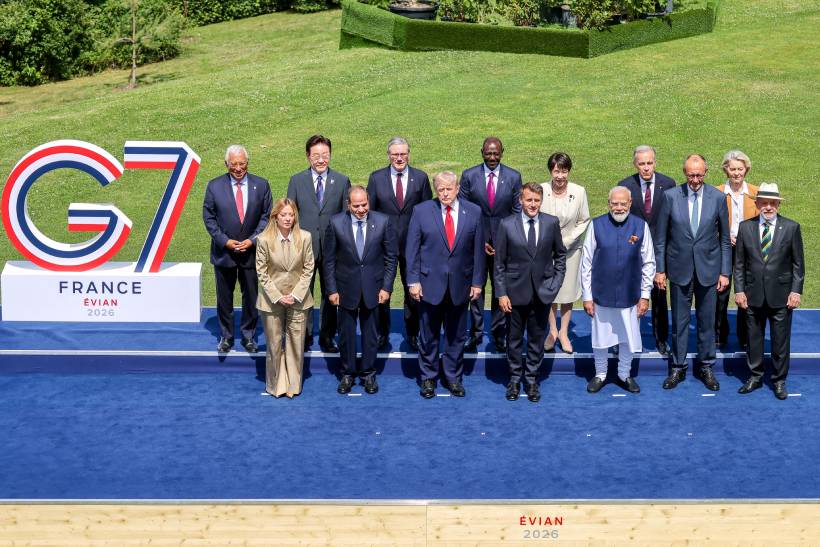
G7 foreign ministers have issued their strongest collective warning yet over China’s expanding activities in the waters east of Taiwan, saying the operations threaten regional stability, freedom of navigation and the safety of international shipping. The declaration, released after a meeting in Paris, highlights growing concern among major industrialised democracies that Beijing’s maritime presence could increase pressure on Taiwan and complicate security across the Indo-Pacific.
The statement comes as China has intensified coast guard patrols off Taiwan’s eastern coastline, prompting officials in Taipei to warn that Beijing may be preparing for a potential maritime blockade. Although the G7 has previously expressed concern about Chinese military and maritime activity around the island, the latest declaration brings those concerns together in a more explicit and coordinated diplomatic position.
G7 Warns Against Changing the Taiwan Status Quo
In their joint declaration, G7 foreign ministers said China’s increasingly assertive activities east of Taiwan threaten regional stability, freedom of navigation and the safety of international shipping.
The ministers also reiterated their opposition to unilateral attempts to change the status quo, particularly through force, coercion or the threat of either.
Stay ahead of the geopolitical week.
MD Briefing delivers expert analysis across five global fronts — the Indo-Pacific, energy, geoeconomics, European security, and the Middle East — every Monday morning. Free.
The statement is significant because the United States, Britain, France and Germany had previously voiced concerns about China’s activities in the area, but the latest declaration represents a unified position across the G7.
The grouping’s intervention reflects the wider international importance of the Taiwan Strait and surrounding waters. The region is a major route for international shipping, while tensions between Beijing and Taipei carry implications for regional security and the interests of countries beyond East Asia.
China, which considers Taiwan part of its territory, rejects international criticism of its activities around the island. Beijing maintains that the Taiwan question is an internal matter and opposes what it views as foreign interference.
China’s Coast Guard Patrols Raise Blockade Concerns
China has increased its activity off Taiwan’s east coast since June through regular coast guard patrols. Taiwanese officials believe the operations could form part of preparations for a potential maritime blockade involving overlapping military, paramilitary and civilian assets.
The eastern coastline has particular strategic importance for Taiwan. Taipei considers the surrounding waters critical to maintaining supply routes from international partners in the event of a blockade or military conflict.
Taiwan has also accused the China Coast Guard of harassing shipping and attempting to exercise what it describes as fictional jurisdiction in the area. These accusations followed China’s latest reported patrol off the island’s eastern coast last month.
The concern is not limited to the coast guard. China’s military operates around Taiwan on a daily basis, while its naval presence extends into the wider Western Pacific.
Taiwan Defence Minister Wellington Koo said on Tuesday that China was conducting area-denial drills in the Western Pacific involving an aircraft carrier and other naval formations, following a reported increase in Chinese military activity.
Such operations matter because control over surrounding maritime areas could affect Taiwan’s ability to receive external supplies and assistance during a crisis. They also raise questions about how quickly routine patrols and military exercises could escalate into a wider confrontation.
Beijing Rejects the G7’s Criticism
China responded sharply to the G7 declaration, accusing the grouping of interfering in its internal affairs and misrepresenting the situation.
Chinese Foreign Ministry spokesperson Mao Ning said the statement disregarded objective facts and amounted to an attempt to malign China. She also described the G7 as an ideological grouping operating with a Cold War mentality and engaging in bloc politics.
Beijing’s response reflects its longstanding opposition to international involvement in the Taiwan issue. China recognises no Taiwanese claim to sovereignty and maintains that reunification is a national objective.
On Thursday, Chinese President Xi Jinping again called for the complete reunification of Taiwan with the mainland, while pledging to pursue it peacefully.
However, Beijing has not renounced the possible use of force. This position remains a central concern for Taiwan and its international partners, particularly as Chinese military and coast guard activities continue around the island.
Taiwan Welcomes International Support
Taiwan’s presidential office welcomed the G7 declaration, describing peace and stability in the Taiwan Strait and the wider Indo-Pacific as essential to global security and prosperity.
Presidential spokesperson Karen Kuo said Taiwan would continue strengthening its self-defence capabilities and cooperating with like-minded international partners, including G7 members.
For Taipei, the declaration offers diplomatic support at a time when it is increasingly concerned about China’s maritime and military presence. However, statements of concern do not in themselves change the military balance or guarantee that international partners would intervene in a crisis.
Taiwan’s emphasis on self-defence and cooperation reflects the importance it places on maintaining the ability to protect its maritime access and respond to potential coercion.
What Happens Next?
The G7 declaration adds diplomatic weight to concerns about China’s activities east of Taiwan, but it also highlights the limits of international consensus in managing cross-strait tensions.
The immediate issue is whether China’s coast guard patrols and naval exercises remain within the pattern of sustained pressure around the island or become part of more restrictive operations affecting maritime access. For Taiwan, the ability to maintain supply routes from international partners remains a central security concern.
For Beijing, opposition to what it regards as foreign interference in the Taiwan question is likely to remain a defining feature of its response to G7 statements. Meanwhile, the United States and its partners face the challenge of expressing support for regional stability without allowing diplomatic tensions to develop into a direct confrontation.
The latest declaration therefore underscores a broader strategic concern: developments around Taiwan are no longer viewed solely as a bilateral dispute between Beijing and Taipei. The security of surrounding waters, international shipping and regional stability has made the issue an increasingly important concern for major powers.
With information from Reuters.
