


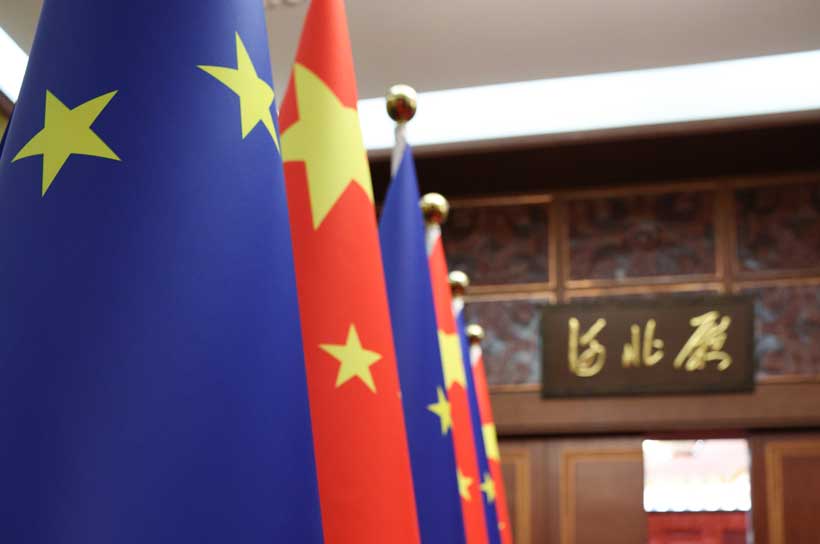
Europe’s ambition to accelerate electrification is facing a difficult test as geopolitical tensions, energy insecurity and domestic political pressures threaten to undermine its climate goals. While the European Union wants to reduce its reliance on imported fossil fuels, its transition towards cleaner energy technologies risks creating a new dependence on China, exposing the limits of its ambition to become a global leader in the energy transition.
The challenge is also becoming more immediate as governments respond to rising energy costs and voters grow increasingly concerned about the economic consequences of climate policies. At the COP31 climate summit, discussions about accelerating global electrification are therefore confronting a broader question: can governments pursue decarbonisation while protecting energy security, industrial competitiveness and political stability?
COP31 Pushes for a Global Electrification Target
Turkey, which is hosting this year’s climate negotiations, is encouraging governments to support a flagship pledge to increase electricity’s share of global energy consumption to 35% by 2035, compared with approximately 20% today.
The proposal reflects a central principle of climate policy. Replacing fossil fuel-powered vehicles, heating systems, industrial equipment and other technologies with electricity can significantly reduce greenhouse gas emissions. It could also help countries become less vulnerable to fluctuations in international oil and gas markets.
Stay ahead of the geopolitical week.
MD Briefing delivers expert analysis across five global fronts — the Indo-Pacific, energy, geoeconomics, European security, and the Middle East — every Monday morning. Free.
However, electrification alone does not guarantee lower emissions. Its climate benefits depend on how electricity is generated. Countries that expand electric vehicle use and industrial electrification while relying heavily on coal and natural gas may increase electricity consumption without achieving the same environmental benefits as those investing in renewable energy.
This creates a significant challenge for the global transition. China and the United States, the world’s two largest economies, are preparing to meet growing electricity demand partly through fossil fuels. Meanwhile, the European Union is attempting to pursue a cleaner pathway and establish itself as the world’s first “electro-continent”.
Yet Europe’s ambitions are increasingly complicated by economic pressures and geopolitical competition.
Europe’s Green Transition Has a China Problem
The European Union continues to pursue an ambitious electrification agenda. In September, it unveiled plans to increase electricity’s share of final energy consumption to approximately 46% by 2040, nearly double its current level.
The strategy depends on expanding heat pumps, electric vehicles, solar power and wind energy. Brussels estimates that achieving the target could reduce the bloc’s annual fossil fuel import bill by €260 billion ($288 billion) by 2040. That would represent substantial savings compared with Europe’s spending on imported fossil fuels since 2022.
Beyond climate objectives, electrification is increasingly viewed as an economic and security priority. Reducing dependence on imported oil and gas could make European economies less exposed to external supply disruptions while strengthening their industrial competitiveness.
However, the technology required to achieve these ambitions presents a strategic difficulty. China dominates several of the supply chains essential to electrification, including solar panels, batteries, electric vehicles, magnets and rare-earth materials.
According to the International Energy Agency, China manufactures around 75% of the world’s electric vehicles and more than 80% of its battery cells. It also supplies most of the European Union’s imported solar modules. Although Europe retains major wind turbine manufacturers, Chinese competition is expanding. China supplied 60% of the EU’s imported wind turbines in 2025.
This industrial imbalance has contributed to growing tensions between Brussels and Beijing. The EU’s trade deficit with China reached €359.9 billion in 2025, an increase of more than 20% from the previous year. Chinese electric vehicles, combining relatively low prices with increasingly competitive technology, have become a particular source of concern for European manufacturers.
Brussels has responded by imposing tariffs of up to 45% on Chinese electric vehicles, reflecting concerns about the competitive pressure facing Europe’s automotive industry.
The result is an uncomfortable contradiction. The faster Europe electrifies its economy to reduce dependence on imported fossil fuels, the greater its potential reliance on Chinese technology and manufacturing.
The EU has introduced initiatives to strengthen domestic production of clean energy technologies and critical raw materials. However, building competitive supply chains requires substantial investment, industrial capacity and time. Until those capabilities develop, Europe’s green transition will remain closely connected to Chinese manufacturing.
The Iran War Is Reopening Europe’s Energy Security Debate
The US-Iran war has added another layer of uncertainty to Europe’s energy transition. Disruptions to oil and gas exports through the Strait of Hormuz have pushed European energy prices higher, with diesel reaching a record above $200 a barrel and natural gas prices rising to their highest levels since 2022.
The crisis has reinforced the argument that Europe needs to reduce its exposure to international fossil fuel markets. Yet it has also demonstrated how quickly energy security can take priority over longer-term climate commitments.
Faced with immediate supply concerns, several European countries have reconsidered their energy policies. Britain, Greece and Romania have explored ways to increase domestic fossil fuel production or have softened measures intended to reduce fossil fuel consumption.
EU governments have also agreed to delay by a year requirements for oil, gas and coal importers to report methane emissions, reflecting concerns that additional obligations could worsen supply pressures.
The financial response has been equally significant. Since March, Germany, France, Spain and Britain have introduced more than €40 billion in tax reductions and subsidies to protect households and businesses from rising energy costs, according to consultancy Bruegel.
These measures illustrate the political difficulty of maintaining an ambitious climate agenda during an energy crisis. Governments may support long-term decarbonisation, but they also face immediate pressure to keep energy affordable and prevent economic disruption.
Domestic Politics Could Slow the Energy Transition
Europe’s electrification ambitions are not being challenged by geopolitical developments alone. Domestic political divisions are also becoming increasingly important.
Right-wing parties in France, Germany and other European countries have made opposition to expensive net-zero policies and support for fossil fuel production more prominent in their political messaging. Rising energy bills and concerns about industrial competitiveness provide fertile ground for arguments that climate policies are imposing excessive costs on households and businesses.
This creates a difficult environment for governments attempting to balance emissions reductions with economic stability.
The political challenge is particularly important because electrification requires more than ambitious targets. It depends on sustained investment in electricity networks, renewable energy generation, charging infrastructure, industrial capacity and affordable technology. These changes take years to deliver and require consistent political support.
When energy prices rise or industries face competitive pressure, governments may find it increasingly difficult to maintain public support for policies whose benefits are expected to materialise over the longer term.
What Happens Next?
COP31’s proposed 35% global electrification target highlights the growing recognition that electricity will play a central role in the transition away from fossil fuels. But Europe’s experience demonstrates that setting ambitious targets is easier than implementing them under difficult economic and geopolitical conditions.
The European Union faces three interconnected challenges: securing affordable energy, reducing its dependence on Chinese clean technology and maintaining domestic support for climate policies. Progress on one front could complicate efforts on another.
The Iran war has exposed the risks of relying on imported fossil fuels, while China’s dominance of clean technology supply chains has revealed that the transition itself can create new forms of strategic dependence. At the same time, rising costs are giving political opponents of climate policies greater influence over the debate.
Europe’s long-term climate ambitions remain significant, but its ability to achieve them will depend on whether it can develop domestic industrial capacity, diversify its energy and technology supplies, and make electrification economically attractive to households and businesses.
The central test for European governments is no longer simply whether they support the energy transition. It is whether they can sustain that commitment when energy security, industrial competition and domestic political pressures demand difficult choices.
With information from Reuters.
