


“Conscious of his emptiness, a man tries to make a faith for himself in the political realm. In vain.” -Karl Jaspers, Reason and Anti-Reason in our Time (1952)
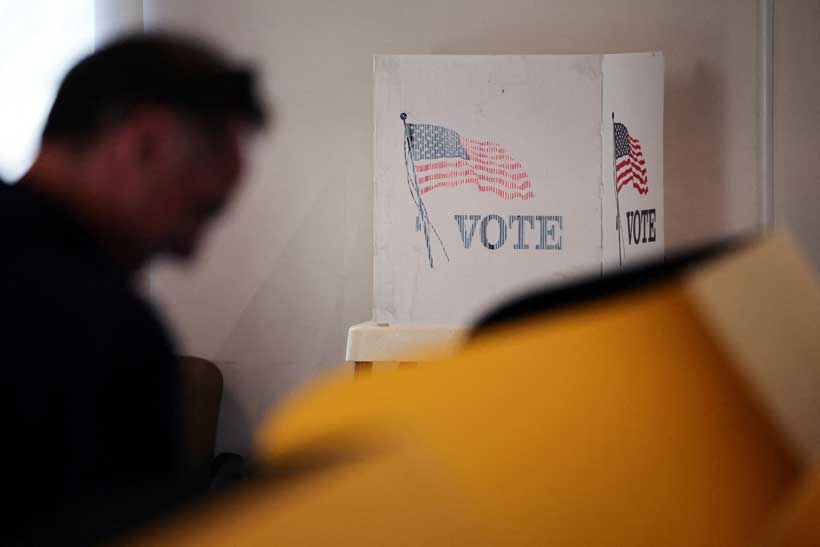
Though the dissembling “Trump Era” will end with elections, America’s core problems will remain undiminished. This is because the country’s multiple debilities are deeply rooted and not challengeable in the “political realm.” In essence, any hopes for a fundamental political change will be “in vain.”
What should be done? The United States is now suffering unprecedented presidential assaults on science, health, law and history. While elections may produce variously transient changes, they can never “fix” what is most genuinely perilous.
It’s not just what’s happening domestically. While President Trump regards the Russia-Ukraine conflict as just another war, it is also something more under international law. Jurisprudentially, Ukraine is effectively a “crime scene,” the result of relentless “aggression” by Vladimir Putin. Ipso facto, the task for the United States is not to negotiate any “even-handed” terms of peace, but to prioritize compliance with the Law of Nations.[1]
Stay ahead of the geopolitical week.
MD Briefing delivers expert analysis across five global fronts — the Indo-Pacific, energy, geoeconomics, European security, and the Middle East — every Monday morning. Free.
For the moment, America’s most grievous threat is its president. Nonetheless, even if the nation is able to survive intact the next two years, the individual and societal traits that brought him to power will remain. By any meaningful standard, therefore, whichever party wins, the nation will eventually lose.
Whatever is decided at the polls, America will remain a “mass society” based on rampant conformity, demeaning simplifications, vulgar entertainments and shameless leadership manipulations.[2] Recalling 20th century artist Max Ernst, unless this nation can free itself from more enduring weaknesses, it will continuously regress as a malleable “horde.”[3] Logically, such regression could not be interminable. In a worst case scenario, it would end with a catastrophic nuclear war.[4]
How should such worrisome expectations be best identified and explained? Ironically, the correct answer is unhidden: America is a society that doesn’t sincerely value knowledge, education or learning. Currently led by an elected man of the “marketplace,”[5] a persistent deceiver who never reads books, America has made itself into a “know nothing” country. Inter alia, this describes a nation that wallows aimlessly in belligerent nationalism and spurns intellect, science and law with indifference.
There is something else to explain. In their complicity with national defilement and (potentially) self-destruction, Americans are not just passive victims. On the contrary, these individuals hold themselves captive by countenancing a steady stream of presidential falsehoods and political simplifications.[6]
The core problem centers on considerations of “mind.” In her magisterial two-volume work, The Life of the Mind (1971), political philosopher Hannah Arendt explores the “manifest shallowness” of historical evil-doers, and hypothesizes that the critical causes of political derangement harm are neither evil motives nor “common stupidity.” Instead, she concludes, the root problem of good and evil in politics is thoughtlessness, i.e., a literal absence of thought. Verifiably, this debilitating trait can render any susceptible person subject to the “wisdom” of clichés, stock phrases and outright lies.[7]
But who are these “mass-centered” individuals in America? To begin, they are the “Many”[8] who make themselves “susceptible.” This does notmean only those persons who lack higher education. Significantly, in Donald Trump’s self-fragmenting United States, well-educated and affluent persons enthusiastically join forces with ritualistic gun worshippers and assorted street fighters.
Alas, the world has seen this movie before, in Europe, during the 1930s and 1940s. For the moment, at least, the Trump Era seems less portentous and less apocalyptic, but even this “good news” could change quickly. This is especially the case if ongoing US presidential incoherence were allowed to produce a nuclear war.[9]
The alliance of “joined forces” was created to meet certain common and overlapping Trump objectives. In the end, we may learn from both history and logic, each societal segment will suffer grievously and alongside the general citizenry. In the end, all segments will “lose.”[10]
For philosopher Hannah Arendt, the true problem of politics is the literal absence of thought. In her learned and lucid assessment, menacing evils are not calculable according to any specific purpose or ideology. Rather, they are deceptively commonplace and altogether predictable. Evil, as we may learn from this famous philosopher, is “banal.”
Fundamentally, the “mass man” or “mass woman” (a Jungian term[11] that closely resembles Arendt’s evildoer) cheers wildly in rancorous crowds and chants obediently the humiliating gibberish of “officialdom.” Among other things, this servile predilection demands rank-ordering the genuine insights of logic and science below the nonsensical “insights” of partisan politics. Living in a commerce-driven society that has been drifting further away from any still-residual “life of the mind,” the manipulated and self-manipulating American routinely favors banality over truth.
It was in an orchestrated defiance of meaningful thought that assorted Trump followers mounted their January 6, 2021 attack on the United States Capitol. As a once-unimaginable footnote to this attack, all criminal convictions associated with this crime subsequently elicited clemency from Donald Trump.[12] Credo quia absurdum, said Roman philosopher Tertullian: “I believe because it is absurd.”
The Trump-obedient American citizen, like too many representatives in Congress (House and Senate) generally has no use for elevated study, verifiable evidence or critical thinking. Why should he/she? This president, he/she was promised, would do all necessary “thinking” for them. Could anything seem more convenient?
Combining the insights of Arendt and Jung, the true culprit of American anti-reason may now be unmasked. This long-overlooked malefactor is the once-independent human being who at some point ceased to be an authentic individual, the “One”who casually became the enemy of intellect and the ally of Arendt-defined “thoughtlessness.” Only by abjuring the lethal harms of anti-reason in the United States could it ever become plausible to oppose an authoritarian American presidency, whether already existing or still-impending,
There is still more. Under Trump, Reason remains conspicuously out of fashion in the United States. No matter how compelling and expansive the evidence of Trump-based derelictions has become, millions of dedicated adherents remain steadfastly loyal. Blind faith, not facts, still matter most to these unwittingly self-destructive citizens.
For these Americans, the familiar authoritarian declaration, “I follow,” is all that matters. For them, “I think” remains a wholly unknown or distinctly subordinate command. Moreover, the seemingly innocuous Trump mantra – “America First” – was plainly adapted from “Germany First” (“Deutschland liber alles”). For all who care to look, this insidious adaptation was never really disguised.
In the eighteenth century, Thomas Jefferson, chief architect of the Declaration of Independence and a future American president, exclaimed with enviable erudition: “I have sworn upon the altar of god eternal hostility against every form of tyranny over the mind of man.” US President Donald Trump, on the other hand, learning only “in his own flesh,”[13] effectively swore an oath of “eternal support” for such a tyranny. Earlier, in his first term, Trump returned from his June 12, 2018 Singapore summit with Kim Jung Un declaring that the risks of a bilateral nuclear war had summarily been removed.
Why? Because, said the president, he and Kim had “fallen in love.” Now, unsurprisingly, in early autumn 2026, Trump’s “lover” has pulled out all the stops on belligerent North Korea nuclearization.
For the United States, Trump’s stream-of-consciousness excursions into gibberish and incoherence represent much more than a national embarrassment. During the time of Covid, such presidential declensions became immediately life-threatening. Simultaneously, in law, other derelictions came close to being “genocide-like crimes.”[14]
America’s political processes and institutions are pitifully inadequate in dealing with President Trump’s chaotic instincts. Still, a large portion of this afflicted nation continues to display near-infinite forbearance for this president’s starkly inane and potentially tragic postures. The resultant withering of the nation’s heart and mind point unerringly to multiple existential threats. To summarize, during the Trump Era, all “normal” dangers of war[15] and terrorism have been worsened and exacerbated, not reduced or eliminated.
In principle, at least, America’s most insidious enemy during this Trump Era should be easy to recognize. It is an unphilosophical national spirit that knows nothing and wants to know nothing of truth.[16] Facing unprecedented and overlapping crises of health care, economics and law,[17] still-sizable elements of “We the People” feel at their safest when they can chant anesthetizing gibberish in chorus: “We’re number one;” “we’re number one;” “USA;” “USA;” “USA.” Mesmerized and bewildered Americans shout such mobilizing phrases passionately and reflexively, even as (1) their country’s capacity to project global power withers by the hour; and as (2) already-stark separations of rich and poor have begun to mimic the most downtrodden nations on planet earth.
Among manifold declensions, a badly-wounded American nation allows itself to be led and instructed by a marginally-literate pied piper, a would-be emperor who was visibly “naked” from the start and who managed to bring the United States to the brink of irreversible suffering.[18] In this connection, it is high time to inquire specifically: “Why is Russian president Vladimir Putin always the obvious beneficiary of Donald Trump’s foreign policy?
There is more. Even now, the champions of anti-Reason in America rise boisterously to defend theirleader.[19] Once again recalling philosopher Hannah Arendt, these determinedly twisted loyalties stem from massive citizen thoughtlessness.
Though Donald Trump was not in any way responsible for the biological menace of Covid, he willingly weakened the nation’s medical and scientific defenses.[20] Worth mentioning, too, is that meaningful national defense must always entail more than large-scale weapons systems and infrastructures.[21] Looking ahead, the United States has more to gain from launching a coherent and science-based health policy than from expanding its politics-spawned “Space Force.”[22]
Earlier, Thomas Jefferson, Chief architect of the Declaration of Independence, observed the congruence of viable national democracy with authentic wisdom and learning. Today, however, many still accept without complaint a president whose refrain during the 2016 election process was “I love the poorly educated.” Among other humiliating derelictions, this refrain consciously echoed Third Reich Propaganda Minister Joseph Goebbels Nuremberg rally comment: “Intellect rots the brain.”
Americans remain polarized not only by race, ethnicity and class, but also by different inclinations to challenging thought. For most of this cheerlessly manipulated country, any drift toward a “life of the mind” is automatically anathema. As evidence, we must finally acknowledge that trivial or debasing entertainments remain tangible compensation for enduring a personal life of tedious obligation, financial exhaustion and premature death.
Even at this eleventh hour, Americans must learn to understand that no nation can ever be “first”[23] that does not hold the individual “soul”[24] sacred. At one time in our collective history, following American Transcendental philosophers Ralph Waldo Emerson and Henry David Thoreau, a spirit of personal accomplishment actually earned high marks. Then, young people especially, strove to rise interestingly, not as the embarrassingly obedient servants of political power and raw commerce, but as plausibly proud owners of a unique Self.
Alas, today this Self still “lives” together with unbearable and uncertain ties. Whether Americans would prefer to become more secular or more reverent, to grant government more authority over their lives, or less, a willing submission to multitudes remains this nation’s unifying national “religion.” Regarding the pied piper in the Trump White House, all-too-many Americans continue to accept even the most patently preposterous presidential claims of growing national wealth and enhanced national security. The consequences of such deliberate self-delusion (Freud would call it “wish fulfillment) are not hard to decipher.
In fairness, it’s not just America. Unseemly crowd-like sentiments like those of the present-era have a long and diverse planetary history. In candor, we are surely not the first people to surrender to crowds. The contemporary “crowd person” is, in fact, a primitive and universal being, one who has lazily “slipped back,” in the words of Spanish philosopher Jose Ortega y’ Gasset, “through the wings, on to the age-old stage of civilization.”
This stage is grotesque, but it is not bare.[25] Unambiguously, it is littered with the corpses of dead civilizations.[26] But what else should be expected of the “horde”/”crowd”?[27]
Indiscriminately, the crowd defiles all that is most gracious and promising in any society. Charles Dickens, during his first visit to America, already observed back in 1842: “I do fear that the heaviest blow ever dealt at liberty will be dealt by this country in the failure of its example to the earth.”
To this point, even during the incessant Trump-horror, Americans have successfully maintained their political freedom from traditional political tyranny and oppression. But already, we have come to accept in once unimaginable terms the kind of presidential bullying that can shred and pull apart well-established constitutions. As corollary, Americans have cravenly surrendered their liberty to become authentic persons. Openly deploring a life of meaning and sincerity, this nation stubbornly confuses wealth with success, blurting out rhythmic chants of patriotic celebration even as their cheerless democracy vanishes into an irremediable despair.
Whatever its origin, there is an identifiable “reason” behind this synchronized delirium. In part, at least, such presidentially-orchestrated babble seeks to buffer Americans from a potentially terrifying and unbearable loneliness. In the end, it will be an unsatisfying and lethal remedy.
Still, there remain individual American citizens of integrity and courage. The fearlessly resolute individual who actively seeks an escape from the steadily-poisoning “crowd,” the One who opts heroically for disciplined individual thought over effortless conformance, must feel quite deeply alone. “The most radical division,” asserted José Ortega y Gasset in 1930, “is that which splits humanity…. those who make great demands on themselves…and those who demand nothing special of themselves…” In 1965, the Jewish philosopher, Abraham Joshua Heschel, offered an almost identical argument. Lamenting, “The emancipated man is yet to emerge,” Heschel then asked each One to inquire: “What is expected of me? What is demanded of me?”
Why are these same questions so casually pushed aside by American supporters of a rancorous president who opposes “emancipation” in any conceivable form?
It is time for camouflage and concealment in the pitiful American crowd to yield to what Abraham Joshua Heschel called “being-challenged-in-the-world.” Individuals who would dare to read books for more than transient entertainment, and who would be willing to risk social and material disapproval in exchange for exiting the crowd (“emancipation”), offer America its only real and lasting hope. To be sure, these rare souls can seldom be found in politics, in universities, in corporate boardrooms or almost anywhere else. Always, their critical inner strength lies not in pompous oratory, crowd-pleasing phrases or ostentatious accumulations of wealth, but in the ampler powers of genuineness, thought and reason.
Even now, there is much to learn. Even today, hardly a glimmer of intellectual originality animates America’s public discussions of politics and economics. Even after America’s largely self-deceiving citizenry had lost all residual sense of awe in the world, this national public not only avoids authenticity. It typically loathes it.
The philosophical division of American society into Few and Mass represents a useful separation of those who are imitators from those who could initiate true understanding. “The mass,” said Jose Ortega y Gasset, “crushes beneath it everything that is different, everything that is excellent, individual, qualified and select.” Today, in prospectively fatal deference to this Mass, the intellectually un-ambitious American not only wallows in nonsensical political and cultural phrases, he or she also applauds a national ethos of legal surrender.[28]
There is more. By definition, the Mass, Crowd or Horde can never become “few.” Still,individual members of the Mass can make the transformation. Those who are already part of the “few” must announce and maintain their determined stance. “One must become accustomed to living on mountains,” says Nietzsche, “to seeing the wretched ephemeral chatter of politics and national egotism beneath one.” It was Nietzsche, too, in Zarathustra, who warned presciently: “Never seek the Higher Man at the marketplace.”
Aware that they may still comprise a core barrier to America’s spiritual, cultural, intellectual and political disintegration, the “Few” (resolute opponents of the “Crowd”) refuse to chant in ritualized chorus. Ultimately, this should remind us of something very important: Individually and collectively, doggedly staying the course of self-actualization and self-renewal – a lonely course of lucid consciousness rather than a falsely-comforting course of self-delusion – is the only purposeful option. In doing their misguided work, Trump cheerleaders in all walks of life draw feverishly upon the sovereignty of the unqualified. This Crowd or Mass depends for its very breath of life on the relentless withering of personal dignity and the correlative servitude of individual consciousness. Oddly, “We the people,” – even if still “Few” – are largely unaware of this insidious parasitism. At best, whatever the upcoming electoral outcomes, we should expect a system of governance in which Americans are more-or-less permitted to speak and interact freely, but in which they would still need to coexist with an anti-intellectual plutocracy.
In the early 1950s, Karl Jaspers, familiar with the earlier writings of Danish philosopher Soren Kierkegaard, sought to explain what a dissembling “Crowd” had brought to his native Germany and Germany’s captive nations. Publishing Reason and Anti-Reason in Our Time in 1952, the distinguished German philosopher explained the formidable difficulties of sustaining Reason among many who would prefer “the fog of the irrational.” Jaspers’ earlier observations about Nazi Germany may apply equally well to explaining Donald Trump’s still-dissembling America:
Reason is confronted again and again with the fact of a mass of believers who have lost all ability to listen, who can absorb no argument and who hold unshakably fast to the Absurd as an unassailable presupposition.[29]
Here, in essence, Jaspers underscores the “fraudulent freedom of obedience” in a society that might will itself to be a democracy, but is really just an electoral celebration of tyranny. In earlier times, such recurrent celebrations were unexceptional, even de rigeur, but they “set the stage” for what Americans have had to experience so painfully during the Trump Era. Before America can be freed from the hideously false “freedom of obedience,” the underlying society will need to be placed in status nascens, as if “newly born.”
, In 1633, when Galileo Galilei kneeled before the Inquisitorial Tribunal of Rome and forced to renounce the compelling science of Copernicus, he revealed the vulnerability of Reason to variously mortal seductions of anti-Reason. This storied renunciation is not “just history.” For Americans, it is also a warning of what such seductions could bring us in the future and what should be done merely to survive.
Like Max Ernst’s “Horde” or Soren Kierkegaard’s “Crowd,” the “Mass” is “untruth.” Before this can change in America, Americans will need attention to spare for more intentionally refined intellectual analysis. After Trump, inter alia, there should remain no conceivable excuse for defining policy by rhythmic imitation or adrenalized instinct.
It’s time for a summation. For Americans to accept the manifold responsibilities of serious and compassionate thought is anterior to invoking any gainful ideas of citizenship. In the end, an American is what he or she wills himself/herself to be.[30] Always, this core goal should be to resemble the Danish philosopher’s “Single One.” We ought never again will ourselves to become captive in what Kierkegaard calls the “primeval forest of evasion,” that is, to lose ourselves in “The Crowd.”
For the imperiled American polity and society, looking to elections for improved national security and personal well-being would be a mistake. Even if electoral results might first seem redemptive,[31] these results could be neither deep nor enduring. This is because elections will leave unchanged the principal underlying causes of US political defilement and anti-reason. It follows that for Americans to “make a faith” for themselves in elections would be a grave mistake. Recalling philosopher Karl Jaspers, it would be “in vain.”
[1] In this connection, Trump has never understood or acknowledged that international law is part of the law of the United States. In the words used by the U.S. Supreme Court in The Paquete Habana, “International law is part of our law, and must be ascertained by the courts of justice of appropriate jurisdiction, as often as questions of right depending upon it are duly presented for their determination. For this purpose, where there is no treaty, and no controlling executive or legislative act or judicial decision, resort must be had to the customs and usages of civilized nations.” See The Paquete Habana, 175 U.S. 677, 678-79 (1900). See also: The Lola, 175 U.S. 677 (1900); Tel-Oren v. Libyan Arab Republic, 726 F. 2d 774, 781, 788 (D.C. Cir. 1984) (per curiam) (Edwards, J. concurring) (dismissing the action, but making several references to domestic jurisdiction over extraterritorial offenses), cert. denied, 470 U.S. 1003 (1985) (“concept of extraordinary judicial jurisdiction over acts in violation of significant international standards…embodied in the principle of `universal violations of international law.'”).
[2] Warns Jose Ortega y’Gasset in The Revolt of the Masses (1930): “The mass man has no attention to spare for reasoning; he learns only in his own flesh.”
[3] Max Ernst’s The Horde is an avant-garde artist’s rendering of Jose Ortega y’Gasset’s “mass man.” However, there is nothing surreal about America’s Trump-era declensions. It was already a term used by Sigmund Freud, likely as an adaptation from Friedrich Nietzsche’s “herd.” Conceptually, “horde,” “herd” and “mass” are all similar to Soren Kierkegaard’s “crowd,” which the Danish philosopher famously summarized (Point of View: “That Individual”) as “untruth.”
[4] See by this writer at Modern Diplomacy: Louis René Beres, https://moderndiplomacy.eu/2026/10/18/an-existential-threat-presidential-incoherence-and-nuclear-war/
[5] In this regard, consider the philosopher Friedrich Nietzsche’s succinct warning in Zarathusrtra: “Never seek the higher man at the marketplace.”
[6] Here, one may be usefully reminded of Bertrand Russell’s trenchant observation in Principles of Social Reconstruction (1916): “Men fear thought more than they fear anything else on earth – more than ruin, more even than death.”
[7] “Happy are those,” observes poet Rainer Maria Rilke, “who know that behind all the speeches are still the unspeakable lies.” (Possibility of Being, 1906).
[8] Contrasted with the “Few” by Spanish philosopher Jose Ortega y’Gasset.
[9] See by this writer, Louis René Beres, at Modern Diplomacy (October 18, 2026): https://moderndiplomacy.eu/2026/10/18/an-existential-threat-presidential-incoherence-and-nuclear-war/
[10] Said Nazi Propaganda Minister Joseph Goebbels in 1934: “”Whoever can conquer the street will one day conquer the state.” Later, in 2019, Donald Trump echoed this dreadful sentiment: “I have the support of the street, of the police, of the military, the support of Bikers for Trump. I have the tough people, but they don’t play it tough – until they go to a certain point and then it would be very bad, very bad.” In a similar vein, during a 2016 rally in Las Vegas, Trump told a wildly cheering crowd that he’d “like to punch the protestors in the face.” “I love the old days, you know what they used to do to guys like that when they’re in a place like this, they’d be carried out on a stretcher,” Then, identifying a specific target person in the audience, Trump added: I’d like to punch him in the face.”
[11] See pertinent writings of Swiss psychologist Carl G. Jung, especially The Undiscovered Self (1957).
[12] On this matter, see by this writer, Louis René Beres, at Princeton Political Review (29 September 2026): https://www.princetonpoliticalreview.org/opinion-1/a-law-based-reminder-us-president-donald-j-trump-lacks-authority-to-pardon-crimes-against-international-law
[13] “The mass-man,” says philosopher Jose Ortega y’Gasset, “has no attention to spare for reasoning; he learns only in his own flesh.” (The Revolt of the Masses, 1930).
[14] Professor Beres is the author of several major books and law journal articles on such crimes. See, for example, Louis René Beres, “Genocide and Genocide-Like Crimes,” in M. Cherif Bassiouni., ed., International Criminal Law: Crimes (New York, Transnational Publishers, 1986), pp. 271-279. Presently, during fall 2026, Vladimir Putin, with the effective indifference of Donald Trump, is committing openly genocidal crimes against Ukraine. On these “crimes against humanity,” see, by this author, Louis René Beres: https://www.jurist.org/commentary/2025/08/why-a-russia-ukraine-territory-swap-would-violate-us-and-international-law/ Putin’s original crimes against Ukraine were crimes of aggression.” Though these crimes have only become more egregious, US President Trump blames only the victim state. See RESOLUTION ON THE DEFINITION OF AGGRESSION, Dec. 14, 1974, U.N.G.A. Res. 3314 (XXIX), 29 U.N. GAOR, Supp. (No. 31) 142, U.N. Doc. A/9631, 1975, reprinted in 13 I.L.M. 710, 1974; and CHARTER OF THE UNITED NATIONS, Art. 51. Done at San Francisco, June 26, 1945. Entered into force for the United States, Oct. 24, 1945, 59 Stat. 1031, T.S. No. 993, Bevans 1153, 1976, Y.B.U.N. 1043.
[15] Under international law, the question of whether or not a formal “state of war” exists between states is generally ambiguous. Traditionally, it was held that a declaration of war was necessary before any true state of war could be said to exist. Hugo Grotius even divided wars into declared wars, which were legal, and undeclared wars, which were not. (See Hugo Grotius, The Law of War and Peace, Bk. III, Chs. III, IV, and XI.) By the start of the twentieth century, the position that war obtains only after a conclusive declaration of war by one of the parties was codified by Hague Convention III. This treaty stipulated that hostilities must never commence without a “previous and explicit warning” in the form of a declaration of war or an ultimatum. (See Hague Convention III Relative to the Opening of Hostilities, 1907, 3 NRGT, 3 series, 437, article 1.) Currently, declarations of war may be tantamount to admissions of international criminality, because of the express criminalization of aggression by authoritative international law, and it could therefore represent a clear jurisprudential absurdity to tie any true state of war to formal and prior declarations of belligerency. It follows that a state of war may now exist without any formal declarations, but only if there exists an actual armed conflict between two or more states, and/or at least one of these affected states considers itself “at war.”
[16] Apropos of truth in Plato’s The Republic: “To them, I said, the truth would be literally nothing but the shadows of the images.”
[17] See, by this author, Louis René Beres: https://www.jurist.org/commentary/2020/04/the-trump-presidency-a-breathtaking-assault-on-law-justice-and-security/
[18] This includes a greatly expanded risk of nuclear war. See, by this author, Louis René Beres, at Princeton Political Review (8 February 2026): https://www.princetonpoliticalreview.org/opinion-1/a-house-of-dynamite-donald-trump-and-nuclear-war
[19] See, by this author, at JURIST: Louis René Beres, https://www.jurist.org/commentary/2020/05/louis-beres-america-rise-and-fall. On the mutual reinforcements of the “crowd” and crowd leader (Fuehrer), see Kierkegaard’s lucidly summarizing statement: “In the outside world, the crowd is busy making a noise. The one makes a noise because he heads the crowd, the many because they are members of the crowd.” See: Point of View: “That Individual.”
[20] “This virus is going to disappear,” said Trump unambiguously, on February 27th, 2020. Of course, during his second term, Trump (generally via Health Secretary Robert F. Kennedy Jr.) places his own visceral views of vaccination and epidemic disease above the views of recognized science.
[21] On this matter, of course, one ought also to note this president’s withdrawal from treaties with Russia and America’s exit from the United Nations World Health Organization.
[22] The United States Space Force was created by US President Donald Trump on December 20, 2019, under terms of the National Defense Authorization Act. Although it was intended to bolster this country’s overall military power in any expanding strategic competition with Russia, its most likely effects will be contractive, corrosive and continuously destabilizing.
[23] This president’s self-serving refrain of “America First” ignores an overarching empirical truth: America was “first” in Covid-19 deaths, but not in any other tangibly enviable standard of civilizational quality or improvement. Always, we have the biggest bombs and missiles, but little else to show for even the most basic expectations of human dignity, empathy and compassion. For this president and his followers, caring about others is still a sign of weakness.
[24] Both Sigmund Freud and Carl Jung thought of “soul” (in German, Seele) as the very essence of a human being. Neither Freud nor Jung ever provides a precise definition of the term, but it was not intended by either in any ordinary religious sense. For both psychologists, it was a still-recognizable and critical seat of both mind and passions in this life. Interesting, too, in the present context, is that Freud explained his already-predicted decline of America by various express references to “soul.” Freud was disgusted by any civilization so apparently unmoved by considerations of true “consciousness” (e.g., awareness of intellect and literature), and thought that the anti-intellectual American commitment to shallow optimism and material accomplishment would occasion sweeping psychological misery.
[25] This references the barren theatrical stages of Irish playwright Samuel Beckett.
[26] Dostoyevsky reminds us soberly: “And what is it in us that is mellowed by civilization? All it does, I’d say, is to develop in man a capacity to feel a greater variety of sensations. And nothing, absolutely nothing else. And through this development, man will yet learn how to enjoy bloodshed. Why, it has already happened…. Civilization has made man, if not always more bloodthirsty, at least more viciously, more horribly bloodthirsty.” (See Fyodor Dostoyevsky, Notes from Underground, 108 (Andrew R. Mac Andrew, tr., New American Library, 1961 (1862).
[27] In his modern philosophical classic, Being and Time (1953), Martin Heidegger laments what he calls (in German) das Mann, or “The They.” Drawing fruitfully upon earlier seminal insights of Nietzsche, Kierkegaard, Jung and Freud, Heidegger’s “The They” represents the ever-present herd, crowd, horde or mass, an “untruth” (the term favored by Danish philosopher Soren Kierkegaard) that can all-too-quickly suffocate intellectual growth. Regarding Heidegger’s always-threatening “The They,” the crowning human untruth lies in (1) “herd” acceptance of immortality at institutional and personal levels; and (2) herd encouragement of the notion that personal “power over death” is potentially derivative from nation-states. Ironically, history reveals that this absurd notion can become murderous at several levels (i.e., both homicidal and genocidal).
[28] “America First” should have a disturbing resonance to Americans in legal terms. To wit, American law was founded upon the learned jurisprudence of Sir William Blackstone, which had acknowledged the ubiquitous obligation of states to help one another. According to Blackstone, each state is always expected “to aid and enforce the law of nations, as part of the common law, by inflicting an adequate punishment upon offenses against that universal law….” See: 2 William Blackstone, Commentaries on the Laws of England, Book 4, “Of Public Wrongs.” Lest anyone ask about the significance of Blackstone for current US national security policies, one need only point out that Commentaries were an original and core foundation of the laws of the United States. This fact remains unknown to US President Donald Trump. His force-based policies of “America First” (argumentum ad bacculum) represent the opposite of what Blackstone would have had urged or could even have expected.
[29] See Jaspers’ Reason and Anti-Reason in Our Time.
[30] In modern philosophy, the provenance of this term lies in Arthur Schopenhauer’s The World as Will and Idea (1818). For his own inspiration (and by his own expressed acknowledgment), Schopenhauer drew freely upon Johann Wolfgang von Goethe. Later, Nietzsche drew just as freely (and perhaps more importantly) upon Schopenhauer. Goethe. also served as a core intellectual source for Spanish existentialist Jose Ortega y’ Gasset, author of the prophetic work discussed above, The Revolt of the Masses (Le Rebelion de las Masas (1930). See, accordingly, Ortega’s essay, “In Search of Goethe from Within” (1932), written for Die Neue Rundschau of Berlin on the occasion of the centenary of Goethe’s death. It is reprinted in Ortega’s anthology, The Dehumanization of Art (1948) and is available from Princeton University Press (1968).
[31] Swiss Psychologist Carl G. Jung defines society as the “sum total of individual souls seeking redemption.”
