A Pipeline Back On, and Nowhere to Go
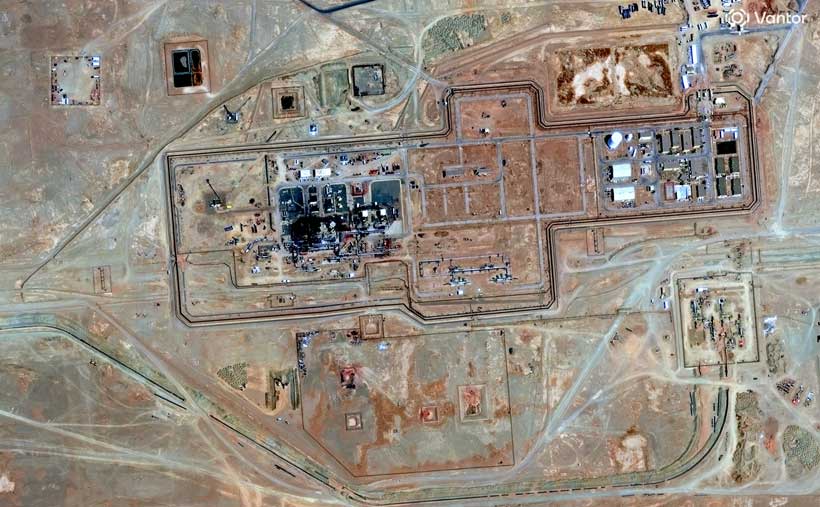
On 22 September, Saudi Aramco began pumping crude again through the East-West pipeline, the 1,200-kilometre line that carries oil from the Gulf coast to the Red Sea port of Yanbu. Brent slipped below $100 on the news. Markets treated it as relief. It was not.
The pipeline had been shut for nearly two weeks after drones hit it on 11 September. Repairing it restores the pipe, not the exit. Barrels that reach Yanbu for Asian buyers still have to sail south through the Bab el-Mandeb, and the Houthis now sit on both sides of that decision. They hold Yemen’s Red Sea coast and have declared the strait closed to Saudi shipping. The kingdom has spent seven months treating Hormuz as its problem. Its real constraint is now 2,000 kilometres to the west.
How the Bypass Became a Bottleneck
Since the US-Israeli war on Iran began in February, the Strait of Hormuz has been largely closed, passing roughly 6–9 million barrels a day against some 20 million before the war. Riyadh’s answer was to send oil west. East-West flows rose to 4–5 million barrels a day, and Saudi exports through the Bab el-Mandeb ran at roughly eight times last year’s level.
Stay ahead of the geopolitical week.
MD Briefing delivers expert analysis across five global fronts — the Indo-Pacific, energy, geoeconomics, European security, and the Middle East — every Monday morning. Free.
The Houthis noticed. They claimed attacks on two Saudi tankers in July and kept hitting ships through August. Then, from 10 September, they took the port of Mokha and pushed down the coast to Perim Island, which sits in the strait itself. Almost simultaneously, drones launched from Iraq’s Maysan province knocked out the pipeline. In August, Saudi oil supply fell to a more than three-decade low. Modern Diplomacy has described the result as a kingdom with no exit. The question this piece asks is what that enclosure does to Saudi foreign policy.
Why Sanaa Now Outranks Tehran
Most coverage still frames Saudi Arabia’s fate as a function of the US-Iran negotiation: reopen Hormuz and the kingdom’s problem is solved. That gets the sequencing wrong, for three reasons.
First, Riyadh is not at the Hormuz table. The talks that matter are between Washington and Tehran. On 23 September, Iran’s foreign minister, Abbas Araghchi, handed US envoys Steve Witkoff and Jared Kushner a road map for a regionwide ceasefire of up to 60 days, a phased reopening of Hormuz, an end to the US blockade of Iran and a halt to attacks on Arab neighbours. Qatar, Pakistan and Egypt mediated. Saudi Arabia did not. President Trump has so far refused to lift the blockade first. Whatever emerges, the kingdom will be a beneficiary of that deal, not a party to it. It cannot speed it up.
Second, the Red Sea problem is aimed at Saudi Arabia, and only Saudi Arabia. At a meeting with US diplomats in Muscat in mid-September, Houthi representatives said they would keep to their May 2025 truce with Washington and allow “freedom of navigation” for all other ships. Their targets were Saudi vessels only. That is not a shipping crisis. It is a political blockade with one addressee, and a blockade with one addressee can only be lifted by a bargain with that addressee.
Third, force will not reopen the strait on any useful timeline. Washington has declined the Crown Prince’s request for renewed US strikes. Allies have sent help, but it is defensive. France is deploying air defences to Yanbu. A Greek Patriot battery intercepted a missile and a drone over the port on 24 September. Britain has sent a refuelling tanker. All of this protects the terminal. None of it clears the strait. On the ground, Yemeni government forces are celebrating the capture of a single hill in Taiz.
Put those together and the priority is clear. A Hormuz deal that Riyadh cannot shape would still leave its only bypass hostage. A Houthi deal that Riyadh can negotiate itself would reopen its exit to Asia, which buys most Saudi crude. Riyadh seems to have reached the same conclusion. According to Lebanon’s Al Akhbar, the kingdom has sent Sanaa, via Oman, an offer of a two-week truce followed by direct talks. Riyadh has not confirmed it, and Al Akhbar is close to Hezbollah, but the logic fits.
This is where Tehran comes back in, and not through Hormuz. Iran’s road map promises to stop its attacks on Arab neighbours. As reported, it says nothing about the Houthis. That leaves Tehran free to trade Hormuz with Washington while keeping a deniable lever over Riyadh in the Red Sea. The pipeline strike shows how that lever works: it was launched from Iraqi territory, not Iranian, and claimed by no state. Iran can raise or lower the price of a Saudi-Houthi deal without ever putting a ship in the Strait.
The strongest objection is that the Houthis are not Iran’s puppets. They have their own demands: salaries, an end to the blockade of their ports, recognition. They came close to a deal with Riyadh on those terms in 2023 without Tehran in the room. That is true, and it strengthens the argument rather than weakening it. If the Houthis act on their own account, an Iran deal will not deliver Houthi restraint, and Riyadh has to pay Sanaa directly. If they do not, Tehran holds the Red Sea card. Either way, the Houthi deal comes first.
A second objection is that Hormuz still carries more Saudi oil. Seven supertankers loaded in the Gulf over the weekend of the restart. But volume is not leverage. What shapes a state’s foreign policy is the choke point it can do something about. For Riyadh, that is now the Red Sea.
Three Ways This Plays Out
Base case: a quiet, costly bargain (55%). Omani mediation produces a Saudi-Houthi truce within weeks. It starts with humanitarian and salary concessions and a pause in Saudi airstrikes. In return, the Houthis stop targeting Saudi tankers without formally lifting their “closure”. The strait reopens in practice, not on paper. Riyadh pays in money and status, and the Houthis come out as a de facto Red Sea power that the kingdom has recognised. The key assumption is that Tehran does not veto the deal, because a Saudi-Houthi truce also helps Iran’s case in Washington.
Downside case: Hormuz reopens, the Red Sea doesn’t (30%). Washington and Tehran agree a phased Hormuz reopening at talks in Oman. The deal is silent on Yemen, as Iran’s current draft already is. The Houthis keep the Saudi-only blockade and escalate against Yanbu to raise their price. Riyadh, left out of the US-Iran bargain, turns to the Makkah Pact with Pakistan and Turkey for a harder military response, drawing Islamabad and Ankara into Yemen. Markets would price Hormuz good news while Saudi exports to Asia stay capped.
Alternative case: Riyadh becomes Tehran’s advocate (15%). Oman merges the tracks. Iran widens its “no attacks on Arab neighbours” pledge to cover Houthi action, in exchange for Saudi backing in Washington for a faster end to the US blockade. This is the scenario few are pricing in: the kingdom lobbying for sanctions relief for Iran because that is the cheapest way to reopen its own exit.
The Strait That Sets the Terms
Saudi Arabia built the East-West pipeline so that no single choke point could hold its economy hostage. The Houthis have turned that insurance into a second trap, and one with a single, political addressee. That is why Riyadh needs Sanaa before it needs Tehran. It is also why Iran can squeeze the kingdom without touching Hormuz.
Watch the text of whatever emerges from the next round of talks in Oman. If the commitment to end “attacks on Arab neighbours” names Yemen or the Houthis, Tehran has decided to cash in its Red Sea lever. If it does not, Tehran is holding on to it. The first Saudi-flagged tanker to sail south through the Bab el-Mandeb unharmed will show which one it chose.