A Landslide, and an Empty Resort
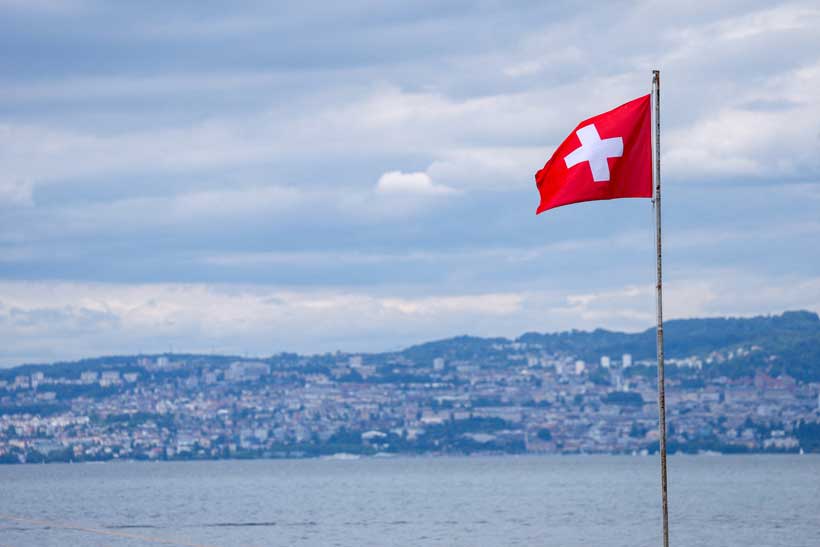
On Sunday, Swiss voters rejected the “Safeguard Swiss Neutrality” initiative by 70.2% to 29.8%. Not a single canton voted in favour. The initiative would have written “permanent, armed and comprehensive” neutrality into the constitution, barred cooperation with military alliances unless Switzerland was attacked, and banned sanctions not mandated by the UN. Moscow openly supported a Yes vote, which appears to have helped the other side.
Three months earlier, the US–Iran memorandum that briefly paused the war was meant to be signed at Switzerland’s Bürgenstock resort. In the end it was signed at Versailles and in Tehran, and the negotiating had been done by Pakistan. Swiss voters have decided what neutrality means for Switzerland. They could not decide how much other governments value it.
What the Initiative Would Have Undone
Stay ahead of the geopolitical week.
MD Briefing delivers expert analysis across five global fronts — the Indo-Pacific, energy, geoeconomics, European security, and the Middle East — every Monday morning. Free.
The initiative was launched in November 2022 by the Pro Schweiz group and backed by the Swiss People’s Party (SVP) and its patron Christoph Blocher. It was a direct response to Switzerland’s decision to adopt the EU’s sanctions on Russia. The government, parliament and every major party except the SVP opposed it. They argued that Switzerland’s current, flexible approach to neutrality had “served the country well.”
That approach has changed considerably since 2022. Switzerland applies EU sanctions and has joined the European Sky Shield Initiative, the European joint air-defence programme. In December 2025 parliament scrapped the ban on re-exporting Swiss-made arms and allowed the government to approve exports to countries at war if neutrality and national security are not endangered. The initiative would have reversed all three. By rejecting it, voters endorsed a neutrality that stays out of military alliances but takes part in sanctions, air defence and arms supply chains.
Neutral at Home, Displaced Abroad
Most coverage, including MD’s own preview, has treated the vote as a question about Switzerland’s ties to NATO, and the result as a turn towards the West. That is fair but incomplete. The vote was about the legal definition of neutrality. It did not address the question that matters more for Switzerland’s international standing: whether other states still value a neutral intermediary.
There are two kinds of value. The first is what might be called infrastructure: the practical services that let adversaries keep talking. Here Switzerland remains unusually important. It has represented US interests in Tehran since 1979. It closed its embassy there briefly when the war escalated in March and reopened it in April “in consultation with Iran and the United States,” keeping what it calls an open line between the two. No other country does this, and it depends entirely on Tehran and Washington continuing to trust Bern.
The second is political mediation: bringing the parties together and producing an agreement. On this, 2026 has gone against Switzerland. Pakistan brokered the April ceasefire and hosted the Islamabad talks. Qatar, Pakistan and Egypt were in the room when Iran’s foreign minister met US envoys in New York on 23 September. The next round may take place in Oman. As MD has noted, there have been five mediators in six months, and Switzerland is not among them. What these countries offer is not neutrality but leverage: Pakistan’s army chief has access to Trump, Qatar has money and hosts US forces, and Egypt controls the Suez Canal.
This is where Sunday’s result has a cost that the campaign did not discuss. A Switzerland that sanctions Russia, joins European air-defence projects and lets its arms be re-exported is a more reliable European partner, and the vote confirmed that most Swiss want that. It is also a less plausible mediator in the eyes of Moscow, and perhaps in time Tehran, both of which increasingly judge neutrality by what a country does rather than by its legal status. Moscow has already made that judgment. It refused to attend the Ukraine peace summit Switzerland hosted at Bürgenstock in 2024 and has repeatedly said Switzerland is no longer neutral. Sunday’s vote, with Russia openly backing the losing side, will not change its view. For Russia, Switzerland is now a Western state that happens to stay outside NATO. Switzerland has chosen to be a flexible partner. The price is that it can no longer present itself as the obvious neutral broker.
The strongest objection is that Switzerland was never the main political mediator between the US and Iran. Its role was always the technical, confidential work, which by its nature rarely makes the news. That is true, and it supports the argument. Swiss neutrality is now valuable mainly for its infrastructure, not for brokering deals. The strategic question for Bern is whether to accept that narrower role and build on it, or to keep promoting Geneva as a venue for peace summits that other capitals keep holding elsewhere. Defence Minister Martin Pfister warned last year that Switzerland’s restrictive arms rules undermined trust with Germany and NATO allies. Switzerland is now winning that trust, but it also needs the trust of Moscow and Tehran, and the two pull in opposite directions.
Three Futures for the Swiss Channel
Base case (around 55%): a reliable back office. Switzerland keeps its role representing US interests in Tehran and hosts occasional technical meetings, but the political US–Iran negotiations stay with Pakistan, Qatar and Oman. At home, the debate moves on to the vote on the new package of agreements with the EU and to how the arms-export rules are applied. The SVP treats its 30% as a base for the 2027 federal election. The key assumption is that neither Tehran nor Washington finds fault with the Swiss channel.
Downside (around 25%): neither neutral nor integrated. Moscow steps up its criticism of Swiss “non-neutrality,” and Swiss infrastructure becomes a target of hybrid attacks. The Swiss army chief has already warned that the country holds critical European infrastructure “that anyone seeking to destabilise the continent could target.” Tehran restricts the Swiss channel after a dispute. Meanwhile the EU package runs into trouble in parliament or at the ballot box. Switzerland would then have given up much of its value as a neutral without gaining secure integration with the EU. Banks, commodity traders and international organisations in Geneva would feel the effect.
Upside (around 20%): neutrality as a verification service. Switzerland turns its practical strengths into a new role: hosting or verifying the technical parts of settlements, such as monitoring a Hormuz shipping-route agreement or a Ukraine ceasefire, which Pakistan and Qatar cannot credibly do. That would make Swiss neutrality valuable again by offering what the new mediators lack.
The Vote Was About Law. The Question Is About Value.
Sunday’s landslide settled what Switzerland’s neutrality means in law. It will remain flexible, compatible with sanctions and cooperation with Europe, and a clear rejection of Moscow’s efforts to influence the vote. But it did not restore Switzerland’s role as a broker. The main mediation of the year is taking place in Islamabad, New York and possibly Salalah, among mediators with direct interests in the outcome. Switzerland’s remaining advantage is its practical diplomatic infrastructure. Bern now needs to decide whether to make that its main offer.
Watch where the next US–Iran round and any Ukraine ceasefire talks are held. If Geneva hosts even a technical round in the coming months, Switzerland still has a role. If not, Switzerland’s international role has narrowed to representing US interests in Tehran and handling technical work in the background.
The Swiss decided on Sunday what their neutrality is. Other governments will decide what it is worth to them.