


Through a series of high-level dialogues and negotiations, the African Union and the European Union (AU-EU) were established, bringing the two huge regions with enormous resources to pursue complementary development ambitions and engage in profound economic transformations while sustaining Africa’s sovereignty. The AU-EU high-level summits and institutional relations have, often, struggled or been perceived as ineffective due to deep structural, historical, and political divides. Due to several obstacles and administrative hurdles, limited results were recorded during the past years.
Key Reasons Behind AU–EU Strains and Criticisms
Unequal Power Dynamics and Colonial Legacy: The relationship carries historical baggage from European colonization. African leaders frequently criticize the EU for maintaining a patronizing donor-recipient mindset rather than treating African nations as equal sovereign partners.
Mismatch of Expectations and Priorities: Summits often rely on grand declarations and vague financial pledges from Brussels, while African nations expect concrete action on debt relief, technology transfer, and fair trade. The EU, conversely, often uses financial leverage to demand alignment on European geopolitical or migration priorities.
Stay ahead of the geopolitical week.
MD Briefing delivers expert analysis across five global fronts — the Indo-Pacific, energy, geoeconomics, European security, and the Middle East — every Monday morning. Free.
Diversification of African Partnerships: The EU is no longer Africa’s exclusive or dominant partner. African countries have increasingly turned to other global heavyweights—such as China, Russia, and the expanded BRICS bloc—for infrastructure financing, trade, and security cooperation, reducing the relative leverage and appeal of EU-led frameworks.
Internal AU Challenges: The African Union faces internal hurdles in presenting a unified, powerful front. Vast disparities in economic stability, governance, and institutional strength among AU member states make it difficult to enforce continental policies or present cohesive demands.
Disagreements Over Governance and Crises: Tensions flare over how to handle democratic backsliding, unconstitutional changes of government (coups), and human rights abuses in Africa. The AU’s adherence to principles of non-interference often clashes with the EU’s preference for political conditionalities and sanctions.
AU-EU Reawakening to Changing Reality
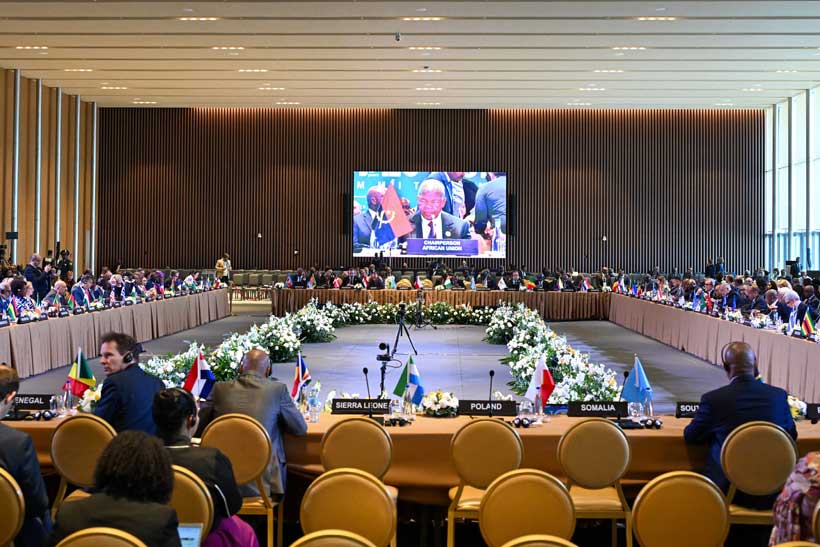
In the follow-up to the 7th African Union-European Union summit held in Luanda, Angola, in November 2025, which marked the 25th anniversary of their strategic partnership, the African Union (AU) and the European Union (EU), that summit reviewed shared priorities and agreed to advance the implementation of the commitments toward more balanced and mutually beneficial bilateral partnerships, guided by geopolitical challenges and the willingness to explore the economic opportunities in the landscape.
The November 2026 meeting was co-chaired by Ambassador Willy Nyamitwe, Chairperson of the African Union Permanent Representatives Committee and Ambassador of the Republic of Burundi to Ethiopia, and Ms. Patricia Llombart Cussac, Managing Director for Africa at the European External Action Service. It also brought approximately 400 participants, including 77 Heads of Delegation, 50 from the AU and 27 from the EU. Its main objectives were to facilitate dialogue on shared priorities for the AU–EU partnership and to support coordination between the two sides on matters of common economic interest.
Key Results and Outcomes of the 2026 Meeting
*Adoption of the AU-EU Partnership Implementation Plan: Senior officials adopted an implementation plan structured around four priority areas:
*Prosperity (trade, economic integration, the African Continental Free Trade Area (AfCFTA), and sustainable value chains).
*Peace, Security, and Governance.
*People (health, education, and social development).
Follow-up Mechanism and Joint Monitoring Report: The meeting established a new follow-up mechanism to monitor progress, enhance institutional coordination, and improve accountability. Parties also released a Joint Monitoring Report reviewing achievements from 2022 to 2025.
Global Gateway & Infrastructure Focus: Discussions highlighted the Global Gateway Africa-Europe Investment Package, scaling up investments in transport, energy, digital transformation, and infrastructure.
Digital and AI Governance: Ethiopia—acting via Prime Minister Abiy Ahmed as the AU Champion for AI and digital health—presented the AU common position, emphasizing universal digital literacy, cyber infrastructure, and startup ecosystems.
Trade and Regulatory Concerns: The AU side raised critical challenges regarding EU trade measures—specifically requesting adjustments or relief concerning the EU Deforestation-Free Regulation (EUDR) and the Carbon Border Adjustment Mechanism (CBAM), which impact key African agricultural and commodity exports like coffee and cocoa.
Peace, Security, and Counterterrorism: Following the SOM, the AU Peace and Security Council (PSC) and the EU Political and Security Committee (EUPSC) prepared for their 9th informal joint retreat and annual consultative meetings, addressing counterterrorism frameworks (noting Africa as a major epicenter of global security threats) and European Peace Facility support.
The AU Co-Chair, Ambassador Willy Nyamitwe, stated that “our partnership must open doors: to opportunity for our youth, to growth for our economies, and to a stronger voice for our two continents.” That is how we turn shared ambition into shared prosperity.”
The EU Co-Chair, Managing Director Patricia Llombart Cussac, highlighted that “we meet against the backdrop of a partnership that delivers. Trade is a powerful example: 97% of African exports enter the EU market duty-free under predictable rules, providing long-term stability for businesses. Today, we precisely mark together 25 years of the Everything But Arms arrangement. This goes together with large-scale investment that creates jobs and added value to local communities. Our AU-EU Partnership is much more than words: it means concrete results to the direct benefit of the people.”
Delivering on the AU-EU Partnership
The SOM adopted the AU-EU Partnership Implementation Plan under the four priority areas for action: Prosperity, Peace, Security and Governance, People, and Multilateralism. It translates the political commitments made in Luanda into tangible results to the benefit of the peoples of Africa and Europe.
Senior officials also adopted a follow-up mechanism to strengthen institutional coordination, monitor progress in implementing agreed commitments, and enhance accountability. In addition, the representatives released a Joint Monitoring Report, taking stock of the partnership’s achievements for the period 2022-2025, from the 6th to the 7th AU-EU Summit. Representatives reiterated their attachment to the implementation of the AU-EU Partnership and that commitments made at the highest political level translate into concrete actions for the benefit of both continents.
The deliberations addressed key areas of common interest, covering the four pillars of the AU-EU Partnership in two plenary sessions on prosperity and multilateralism, including peace and security and migration and mobility.
Against the backdrop of complex geopolitical tensions, growing international uncertainties, and increasing unilateral approaches to global challenges, the AU and the EU reaffirmed their commitment to effective multilateralism, respect for international law, and adherence to the principles of the United Nations Charter, valuing the AU-EU Partnership built on trust, reliability, and predictability. The officials exchanged views on key geopolitical issues, including peace and security, migration and mobility, United Nations reform and the UN80 initiative, food security and the impact of El Niño, as well as global digital governance and artificial intelligence.
Discussions on prosperity focused on strengthening trade and economic integration, including existing support for the African Continental Free Trade Area (AfCFTA), and the development of sustainable value chains. The AU and the EU exchanged views on Africa’s investment outlook, with emphasis on the Global Gateway Africa-Europe Investment Package, infrastructure development, transport, connectivity, energy, de-risking, digital transformation, health, and education.
Both sides underscored the need for strengthened international cooperation and collective action to address common challenges, promote peace and stability, reform global governance and financial institutions, and ensure that the international system responds more effectively to the priorities and aspirations of both continents.
For the European Union, the parties agreed to maintain regular political dialogue and close coordination between the AU and the EU in multilateral fora, with a view to advancing common interests and contributing to a more inclusive and effective multilateral system. SOM concluded with both sides committing to enhanced dialogue and continued cooperation in advancing the sustainable development of both continents, with particular emphasis on the AU Agenda 2063 and the UN Sustainable Development Goals.
