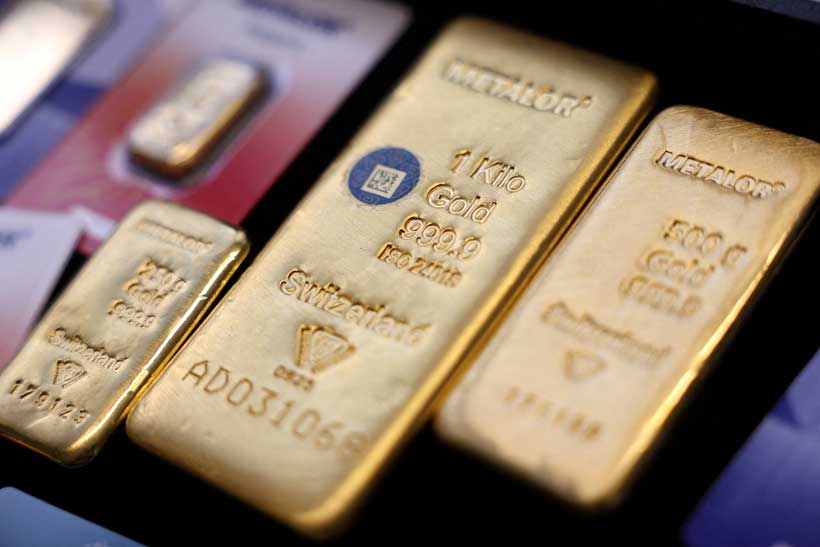
Gold used to spike on every Gulf war headline because the same buyers set both its price and its ownership. In 2026 those are two different groups — central banks accumulating on a multi-year de-dollarization logic, and Western speculators trading the Fed’s rate path — and only the second one is moving this week’s price.
Gold fell 0.7% on Monday to about $4,402 an ounce, even as Brent crude jumped to a six-week high on the first direct US-Iran naval exchange of fire in the Strait of Hormuz. Commentary read the divergence as proof markets have priced the war as contained. The CFTC’s own numbers, published that same week, tell a more specific story: large speculators cut their net long gold futures position by roughly 15,000 contracts in the week leading into it, unwinding into a stronger dollar and firmer Treasury yields. The World Gold Council’s most recent quarterly data show the opposite move from a different set of buyers entirely — central banks purchased gold at the fastest pace in over a year, during the worst quarterly price drop for gold since 2013. Two different owners are trading gold for two different reasons, and only one of them is setting this week’s headline number.
The Context Gold demand splits roughly into four buyer types: central bank reserve managers, Asian retail bar-and-coin buyers, institutional over-the-counter accumulation, and Western exchange-traded funds and futures speculators. Historically these groups moved together during fear episodes — 2008, 2020, the initial 2022 Ukraine shock — which is how gold earned its reputation as a real-time fear gauge. That correlation broke down in 2026. Gold fell more than 11% in June alone, its fourth straight monthly decline and worst quarterly performance since 2013, driven by dollar strength and rising Fed rate-hike odds — even as the US-Israeli war against Iran, now in its seventh month, continued to escalate.
To read the full analysis, please subscribe to our premium MD Briefing
Stay ahead of the geopolitical week.
MD Briefing delivers expert analysis across five global fronts — the Indo-Pacific, energy, geoeconomics, European security, and the Middle East — every Monday morning. Free.