


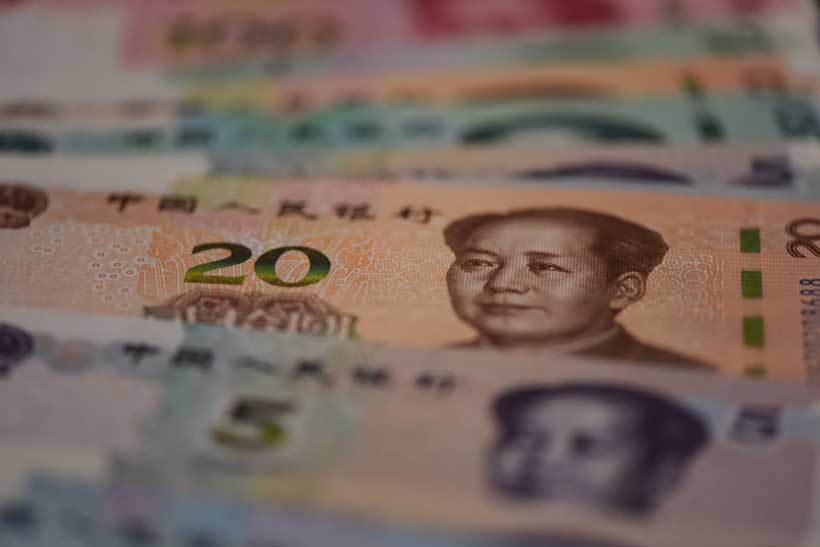
China is accelerating efforts to bolster the circulation and presence of its domestic currency—the yuan—across the African continent through a series of operational and financial initiatives aimed at expanding cross-border trade settlements and banking services.
– Key Pillars of China’s Operational Initiatives in Africa
1) Expanding Clearing and Payment Networks: China has signed an agreement with the Ecobank Group—which operates in approximately 30 African markets—to facilitate yuan-denominated payments via the Cross-Border Interbank Payment System (CIPS). Furthermore, Stanbic Bank in Kenya has launched services linked to this Chinese payment system, while South Africa’s Standard Bank has taken significant strides toward establishing a joint clearing bank for the Chinese currency.
2) Moving Beyond Basic Trade Settlements: The use of the yuan is no longer limited to settling payments for imports and exports; it has expanded to encompass clearing services, financing, and digital payment instruments.
Stay ahead of the geopolitical week.
MD Briefing delivers expert analysis across five global fronts — the Indo-Pacific, energy, geoeconomics, European security, and the Middle East — every Monday morning. Free.
3) Tariff Exemptions and Trade Support: China has boosted the volume of bilateral trade by eliminating tariffs on a wide range of African goods. This has encouraged traders and port authorities to adopt the yuan as a direct settlement currency, helping them avoid the volatility associated with the U.S. dollar.
4) Debt Restructuring and Conversion: Several African nations—such as Kenya—have moved to convert a portion of their debt and infrastructure-related loans (specifically those tied to railway projects) from U.S. dollars into yuan, taking advantage of lower interest rates. Additionally, there are plans to issue Panda bonds (yuan-denominated bonds) within capital markets.
5) Transaction Figures and Volume: According to the report on the internationalization of the yuan issued by the People’s Bank of China, the value of cross-border payments and receipts between China and Africa reached approximately 155.3 billion yuan.
– How does the internationalization of the yuan affect foreign exchange reserves in the Arab and African regions?
The internationalization of the Chinese yuan is having a direct and growing impact on the structure of foreign exchange reserves in the Arab and African regions. It reduces the historical reliance on the US dollar and the euro, while encouraging central banks to diversify their assets by holding the yuan to facilitate trade and debt repayment directly with China.
This monetary shift—supported by Beijing’s expansion of clearing networks and the Cross-Border Interbank Payment System (CIPS)—is reshaping the financial landscape in both regions through the following key mechanisms:
1. Settling bilateral trade in local currencies (de-dollarization)
– Provision of foreign currency: Agreements with institutions such as Ecobank and various central banks (including those of Egypt, Libya, and Saudi Arabia) allow for the settlement of imports from China directly in yuan.
– Easing pressure on the dollar: This direct exchange preserves the dollar reserves—which are often critical for developing nations—allowing them to be used for other international obligations.
2. Debt restructuring and repayment in yuan
– Financial linkage with China: As China is the largest creditor to many African nations, the shift toward the yuan enables central banks to maintain reserves in the Chinese currency, specifically earmarked for debt servicing.
– Reducing double-conversion costs: This avoids the need to convert local currencies into dollars and subsequently into yuan to repay loans, thereby lowering the costs associated with financial intermediation.
3. Asset Diversification and Hedging Against Geopolitical Risks
– An Alternative Monetary Haven: Central banks in the Arab and African regions are holding increasing proportions of the yuan as an official reserve asset to hedge against fluctuations in U.S. interest rates and shocks originating from the West.
– Integration with Chinese Markets: Beijing’s accelerated efforts to allow foreign institutions to trade in its financial markets are encouraging Arab and African central banks to invest their reserves in Chinese government bonds denominated in yuan.
◇ Comparing the Impact of Yuan Internationalization Across the Two Regions
| Comparison points | The Arab region (the Gulf and its surroundings) | Vs. The African continent |
| The main motivation | Financial investment diversification and partial pricing of energy (petroyuan) | Alleviating foreign exchange shortage crises and paying off commercial debts |
| The basic mechanism | Bilateral swap agreements and Panda bonds and stocks | Direct banking link via the clearing network and the CIPS system |
| Nature of the impact | A flexible and gradual strategic shift towards diversifying surpluses | An increasing reliance on redistributing external dependence |
– Key Challenges and Hidden Risks
1) Capital Account Restrictions: China’s lack of full flexibility regarding the convertibility of the yuan and the free flow of capital across its borders hinders its transition into a truly global reserve currency.
2) Redistribution of External Dependence: Analysts argue that a complete shift in Africa could merely replace reliance on dollar channels with reliance on yuan channels, rather than achieving genuine monetary independence.
1) Trade invoicing and tariff incentives (concrete policy conditions—regulatory requirements—trade mechanics in Beijing pairing with the May 1, 2026, zero customs duty frame to incentivize African exporters and sovereign entities to invoice and settle bilateral trade directly in Chinese yuan rather than US dollar?
– China’s practical initiative to promote the adoption of the yuan in Africa incentives concerning trade invoicing and customs tariffs (comprising concrete policy conditions, regulatory requirements, and trade mechanisms coordinated with Beijing, coinciding with a tariff-elimination framework that takes effect on May 1, 2026; the objective is to encourage African exporters and sovereign entities to invoice and settle bilateral trade directly in Chinese yuan, rather than in U.S. dollars).
– China’s practical initiative to promote the internationalization of the yuan in Africa will enter a critical phase, coinciding with the implementation of a tariff-elimination framework effective May 1, 2026. This dual mechanism aims to link preferential trade benefits directly to the adoption of the yuan (RMB) for bilateral invoicing and settlement, thereby reducing reliance on the U.S. dollar.
The incentives, policy conditions, and regulatory requirements of this initiative—coordinated between Beijing and African stakeholders—are structured as follows:
1. Concrete Policy Conditions and Customs Benefits
■ Comprehensive Exemption Subject to Rules of Origin: The framework grants a full customs exemption (zero tariffs) to 53 African nations (excluding Eswatini). Beijing mandates compliance with strict rules of origin and rigorous product-tracking procedures to ensure that goods are not re-exported from countries outside the continent. Direct Cost Reductions (Invoice Discounts): Chinese firms and importers offer discounts and preferential pricing terms to African exporters who agree to issue letters of credit and invoices in the Chinese yuan (CNY).
■ Priority Customs Clearance (Green Channel): Shipments and companies that utilize direct settlement in the Chinese currency are granted access to expedited processing lanes and streamlined customs procedures at Chinese ports, helping to accelerate supply chains.
2. Regulatory Requirements and Mechanisms in Coordination with Beijing
■ Mandatory Integration with the CIPS System: The initiative requires African central and commercial banks to join the Cross-Border Interbank Payment System (CIPS), China’s alternative to the SWIFT network—either as direct or indirect participants.
■ Expansion of Local Clearing Facilities: The establishment and expansion of official yuan clearing banks in regional economic hubs, such as Kenya, South Africa, Nigeria, and Angola, to provide necessary liquidity without the need for transactions to pass through the U.S. dollar.
■ Currency Swap Agreements: The activation of currency swap agreements—signed between African central banks and the People’s Bank of China (PBOC)—to facilitate direct access to the yuan for local exporters and importers, thereby mitigating the risks associated with exchange rate volatility.
How does the Cross-Border Interbank Payment System (CIPS) operate in the region and in Africa?
In the Middle East and Africa, the Chinese Cross-Border Interbank Payment System (CIPS) functions through a mechanism for direct settlement in Chinese Yuan (RMB). It serves as a financial alternative that reduces reliance on the U.S. dollar and the traditional SWIFT network. This mechanism is expanding rapidly, driven by major trade partnerships and the Belt and Road Initiative.
– The operational mechanisms of CIPS in the region and Africa can be summarized, as follows:
1. Participation Structure (Direct and Indirect)
The system operates through two tiers of membership, connecting local banks to the Chinese network:
A) Direct Participants: Major banks, often state-owned Chinese banks with regional branches, large regional institutions, such as Standard Bank and Ecobank in Africa, or prominent banks from the UAE and Saudi Arabia, maintain direct settlement and clearing accounts with CIPS.
B) Indirect Participants: Smaller local banks that lack a direct connection to the system but execute their Yuan-denominated transactions through accounts held with major banks (the direct participants).
2. Hybrid Settlement and Clearing Mechanism
The system utilizes advanced technology to ensure high efficiency and speed:
A) Real-Time Gross Settlement (RTGS): Used for large-value or high-priority financial transactions, where settlements are processed immediately in real time.
B) Deferred Net Settlement (DNS): Used for small-scale retail commercial transactions, where payments are bundled and cleared as a single batch to alleviate liquidity pressure.
3. Technical Compatibility and Messaging Standards
A) CIPS is based on the international standard ISO 20022 for financial messaging, the same modern standard adopted by global banks.
B) This compatibility allows banks in Africa and the Middle East to seamlessly integrate the system into their existing infrastructure, without the need for complex software modifications.
C) The system covers a broad range of time zones, ensuring that the needs of regional and African markets are met around the clock.
4. Direct Trade Settlement and Avoiding Dollar Volatility
A) Eliminating Intermediary Currencies: In the traditional system, importing goods from China requires converting a local currency, such as the Egyptian pound or the Kenyan shilling, into US dollars and subsequently converting those dollars into Chinese yuan. Through CIPS, settlement occurs directly from the local currency to the yuan.
B) Mitigating Foreign Exchange Shortages: African and regional nations are facing a scarcity of US dollars, such as Tunisia and Egypt, and others; they’re benefiting from using the yuan directly to pay for substantial Chinese imports, thereby easing the strain on their US dollar reserves.
5. Expansion via Regional Partners (Real-World Examples)
A) In Africa: Standard Bank Group (the largest African bank by assets) and Ecobank Group (which operates in 34 African countries) have become key gateways connecting the continent to the Chinese system, facilitating the settlement of hundreds of millions of dollars in trade directly in yuan.
B) In the Gulf region: China has established yuan clearing centers in cooperation with central banks (such as those of the UAE and Saudi Arabia) to build a financial infrastructure that enables the secure settlement of energy and trade transactions in the yuan.
– List of Major African Banks That Have Officially Joined China’s CIPS System:
The African continent is witnessing a significant acceleration in joining China’s Cross-Border Interbank Payment System (CIPS), aimed at facilitating direct commercial transactions in Chinese yuan and reducing reliance on the U.S. dollar.
□ The following are some of the prominent African institutions and banks that have officially joined the system or signed operational agreements with it:
– Standard Bank Group: The first African commercial bank to integrate directly with the CIPS system (beginning in late 2025). It has since expanded and activated the service across its subsidiaries in several African countries, including Kenya, Ghana, Tanzania, Uganda, and Namibia.
– Ecobank Group: A major pan-African banking group operating in 34 sub-Saharan African countries. In October 2026, the group officially signed a memorandum of understanding to join the system directly, enabling it to provide yuan clearing and settlement services to its clients on a large scale.
– African Export-Import Bank (Afreximbank): A multilateral-regional financial institution that has officially joined as a direct participant to support Africa’s intra-regional and international trade, bypassing traditional channels.
– Attijariwafa Bank: The first Moroccan bank to officially join the CIPS system (in October 2026), allowing its corporate clients in Morocco to make direct and rapid payments to Chinese suppliers in Chinese yuan.
– Bank of Kigali: The largest commercial bank in Rwanda officially announced its transition to becoming a direct participant in the system by September 2026 to facilitate trade.
– Central Bank of Libya: In July 2026, the official administration of the Central Bank of Libya reached an agreement with the People’s Bank of China to connect Libyan banks to the CIPS (Cross-Border Interbank Payment System), enabling the settlement of payments and direct financial transfers, as well as the development of a framework for joint investment.
3. Mechanisms for Encouraging Sovereign Entities and Exporters
■ Payment of Taxes and Mining Royalties in Yuan: African nations allow Chinese-invested companies to pay government fees, mining royalties, and taxes in the Chinese yuan. This provides African governments with a sovereign reserve of the currency, which can be used to settle their debts with Beijing directly in yuan.
■ Financing and Refinancing Incentives: Chinese development banks, such as the Export-Import Bank of China, offer concessional loans to sovereign entities, contingent upon the settlement of a portion of the associated infrastructure and trade contracts in yuan. This helps to narrow the gap in demand for hard currency.
– The Structure of the Trade Deficit Between China and Africa and Its Impact on the Availability of Yuan Liquidity.
The trade deficit between Africa and China is characterized by a chronic structural imbalance that heavily favors Beijing. During the first eight months of 2026, Africa’s trade deficit with China surged by 34.48%, reaching $80.07 billion. This imbalance not only hinders African growth but has also become a primary driver for increasing the liquidity of the Chinese yuan and its penetration into African financial systems, serving as a necessary alternative in the face of a shortage of U.S. dollars.
– The structure of this deficit and its direct relationship to yuan liquidity can be broken down, as follows:
v First: The Structure of the Trade Imbalance (What does Africa sell, and what does it buy?)
1) African exports with low value-added: Most African exports to China consist of raw materials, minerals, oil, and energy (as seen in exports from Angola, the Democratic Republic of the Congo, and Zambia). These commodities are subject to global price volatility and fail to generate industrial value locally.
2) Chinese inflows with high consumer and technological value: Conversely, China supplies African markets with manufactured goods, heavy equipment, and technological products, most notably green technology and machinery. As Western protectionism—along with U.S. and European tariffs on Chinese goods—has intensified, Beijing has redirected its massive production surplus toward the African continent.
3) Limited Scope of Customs Exemptions: Although China announced the elimination of tariffs for 53 African nations—set to take full effect by May 2026—the primary beneficiaries remain countries with well-developed infrastructure, such as South Africa and Egypt. Meanwhile, landlocked nations are unable to capitalize on these exemptions due to their limited manufacturing and logistical capabilities.
v Second: The Impact of the Trade Deficit on Yuan Liquidity in Africa
Contrary to the conventional economic view that a trade deficit drains liquidity, Africa’s trade deficit with China has created a paradox: it has actually fostered an abundance of Yuan liquidity, driven by several mechanisms:
1) A Safe Haven Amid the Dollar Crunch: African central banks, such as those in Lusaka, Luanda, and Accra, have faced severe shortages of US dollar reserves. As African nations are compelled to import goods from China to meet their needs, Beijing has offered the yuan as a financial alternative, effectively signaling, “You do not need US dollars to purchase from us; use the yuan you earn from selling your minerals.” Consequently, the Yuan has evolved from a mere foreign currency into a liquidity lifeline for daily operations.
2) Establishment of Direct Financial Channels and Clearing Systems: To facilitate the flow of this liquidity, the People’s Bank of China has designated major banking groups to manage Yuan clearing across the continent—notably Standard Bank, which operates in 19 African countries, and Ecobank, present in 34 countries, both utilizing China’s Cross-Border Interbank Payment System (CIPS). This has enabled the direct settlement of transactions, bypassing the need for intermediary conversions via the US dollar or the Western SWIFT payment network.
3) Debt Inversion: Financial relations have entered a new historical phase, with African nations now paying more to China—in the form of loan principal and interest—than they receive in new Chinese financing. To service these debts without depleting their dollar reserves, countries such as Kenya and Ethiopia have begun turning to yuan-based debt swaps, while Zambia has started accepting the yuan as payment for mining revenues, a practice that further facilitates the circulation of the Chinese currency within local economies.
In summary, persistent African trade deficits are directly fueling the regionalization and internationalization of the yuan. African partners find themselves compelled to integrate the Chinese currency into their banking systems to ensure the continuity of supply chains and to circumvent the high costs associated with dollar-denominated debt.
2) Bilateral currency swaps and sovereign credit facilities: How is the People’s Bank of China (PBOC) utilizing bilateral currency swap arrangements, RMB-denominated sovereign lending, and debt restructuring terms to inject yuan liquidity into African banking sectors and encourage its domestic circulation?
The People’s Bank of China (PBOC) employs an integrated financial strategy that links sovereign debt management with the internationalization of the Chinese currency (the yuan), leveraging the dollar-shortage crisis currently affecting emerging markets in Africa. This mechanism transforms instances of financial distress into channels for injecting yuan-denominated liquidity and establishing China’s banking infrastructure across the continent.
1. Bilateral Currency Swaps: Lines of Financial Defense
Currency swap agreements established between the PBOC and African central banks (such as those in Egypt, Nigeria, and South Africa) serve a dual purpose:
A) Providing emergency liquidity: These agreements allow African central banks to obtain yuan in exchange for their local currencies, eliminating the need to liquidate their scarce dollar reserves.
B) Facilitating direct trade: African central banks inject this liquidity into their domestic banking sectors, enabling local importers to purchase Chinese goods directly in yuan. This reduces currency conversion costs and lessens reliance on the U.S. dollar as an intermediary.
2. Debt Reprofiling as a Strategic Transformation Tool
As African nations face acute pressure in servicing dollar-denominated debt, the PBOC and Chinese financial institutions are reshaping debt terms through:
A) Yuan-denominated restructuring: Converting existing loans from U.S. dollars into Chinese yuan, a process seen in the restructuring of railway loans in Kenya, as well as in similar negotiations with Ethiopia and Mozambique.
B) Reducing Financing Costs: The People’s Bank of China (PBOC) leverages the historically low interest-rate environment for the yuan compared to the US dollar. This lowers interest rates on loans extended to borrowing nations—for instance, in Kenya, the rate dropped from 4% to 3% following the conversion—in exchange for the countries’ commitment to repay in Chinese currency.
3. Sovereign Lending and Liquidity Circulation via Banking Infrastructure
The PBOC does not merely inject yuan into these economies; it ensures the currency remains within the Chinese financial ecosystem through two mechanisms:
A) Linking Yuan-Denominated Loans to Procurement: New sovereign credit facilities are denominated in the yuan and are contingent upon the financing of projects executed by Chinese firms. Consequently, liquidity flows out of China only to return as commercial profits.
B) Developing an African Clearing Network (CIPS): The African banking sector is being integrated into the Cross-Border Interbank Payment System (CIPS)—a Chinese alternative to the SWIFT system. For example, Standard Bank—Africa’s largest bank by assets—has been designated as a yuan clearing bank across 19 African nations, facilitating rapid, localized trading of the currency within the continent.
– Illustrative Table: The Economic Impact of Chinese Instruments in Africa
Financial instrument
Direct Impact
Its impact on the African banking sector
The strategic objective of the People’s Bank of China (PBOC)
Currency swaps (swaps)
Exchanging the yuan for the local currency
Reduces pressure on dollar reserves
Creates permanent reserve liquidity lines in yuan
Debt currency conversion
Debt clearing from dollars to yuan
Reduced annual debt servicing costs
Conversion of future financial claims to yuan
Linking payment technologies
Mandatory use of the CIPS network
Settlement of transactions with China within minutes
building a parallel financial system independent of American dominance
– Volume of Currently Active Currency Swap Agreements Between China and Countries in North and West Africa
Currency swap agreements currently in effect between China and countries in North and West Africa are concentrated in two key nations that are spearheading this trend in the region. The total announced volume of these active agreements amounts to approximately 45 billion Chinese yuan (equivalent to about 6.6 billion US dollars), distributed as follows:
1. North Africa (Arab Republic of Egypt)
A) Current agreement volume: 30 billion Chinese yuan (equivalent to about 4.43 billion US dollars).
B) Status: The agreement has been renewed and expanded for an additional three years. Its ceiling has been increased by 67%, rising from the 18 billion yuan level established when it was first signed in 2016.
C) Objective: To facilitate trade and financial settlements in local currencies and alleviate pressure on conventional foreign exchange reserves.
2. West Africa (Federal Republic of Nigeria)
Current agreement volume: 15 billion Chinese yuan (equivalent to about 2.4 billion US dollars).
A) Status: The agreement signed between the Central Bank of Nigeria and the People’s Bank of China is currently active. It aims to provide liquidity to Nigerian importers and Chinese companies, enabling them to settle transactions directly without the need for intermediation in US dollars.
B) Prospects for Expansion in West and North Africa:
– Morocco and Tunisia: Memoranda of understanding and general framework agreements exist to promote the use of the yuan; however, these have yet to evolve into substantial, direct currency swap lines in a structural sense. Countries like Morocco, for instance, continue to rely on commercial banking channels to access the renminbi.
– Integration with the CIPS System: In parallel with these arrangements, the region is witnessing a surge in major banks joining the Cross-Border Interbank Payment System (CIPS), a Chinese payment infrastructure. Examples include the Ecobank Group (headquartered in Togo and operating across West Africa) and GCB Bank in Ghana, which have joined to facilitate direct clearing in yuan, serving as a complement to existing swap mechanisms.
A quick comparison of active swap agreements in the two regions
| Country/Region | Agreement Size in Chinese Yuan | Approximate Value in US Dollars | Current Status of Agreement |
| Egypt (North Africa) | 30 billion yuan | $4.43 billion | Renovated and expanded |
| Nigeria (West Africa) | 15 billion yuan | 2.40 billion dollars | Active and ongoing |
- Focusing on the analytical aspect: To what extent do African governments benefit from these credit lines for debt settlement?
Financial and geopolitical analysis of sovereign debt management in Africa reveals that the use of credit lines, whether bilateral (such as those from China) or multilateral (from institutions like the IMF or the World Bank) for debt settlement is both conditional and short-term. Often, what begins as a solution transforms into a mechanism for postponing the crisis, ultimately deepening structural dependency.
■ To analyze this landscape accurately, the nature and extent of these benefits, can be broken down into the following aspects:
- Temporary Flexibility and the Avoidance of Default (Immediate Benefit)
- Alleviating Urgent Liquidity Crises: New credit lines, such as Chinese refinancing loans or the IMF’s Extended Fund Facility, provide African governments with the foreign currency necessary to repay maturing sovereign bonds or interest on existing debt. This averts a worst-case scenario: a formal sovereign default, which could lead to a country’s isolation from international financial markets and a downgrade in its credit rating.
- Debt Swapping: Some nations have benefited by replacing short-term commercial debt – which often carries extremely high interest rates (sometimes reaching 55% in private markets) – with bilateral or multilateral credit lines. These alternatives typically offer lower interest rates and longer repayment periods, providing the national budget with a short-term reprieve.
- The Dilemma of Postponing the Crisis and Increasing Cumulative Costs (The Structural Downside)
- The Accumulation of Compounding Interest: Most debt settlement operations involving credit lines do not entail a genuine reduction of the principal debt, rather, they rely on rescheduling and extending repayment periods, such as (China’s debt-service suspension initiatives or programs offered by the IMF). Analytically, this means that governments are effectively buying time at the expense of higher cumulative costs, as interest continues to accrue, thereby increasing the long-term debt burden.
- Depletion of Domestic Resources and Export Chains: Given that African economies rely heavily on the export of raw materials with low value-added, directing credit lines toward debt settlement – instead of productive investment – creates a structural gap. Consequently, the nation becomes unable to generate sufficient dollar-denominated revenue to keep pace with the rising costs.
- Analytical Comparison of Available Credit Line Mechanisms
| Comparison points | Multilateral credit lines (IMF and World Bank | Vs. Bilateral credit lines (China as a prime example) |
| Nature of the conditions | Harsh structural conditions: require reducing subsidies, liberalizing the currency, and austerity plans that put pressure on social stability | Commercial/geopolitical conditions: There are no declared political conditions, but they often require tangible guarantees (ports, mines) or secret guarantees in contracts |
| The financial and regulatory impact | Pushes for comprehensive financial reforms that may improve governance but limit the flexibility of national economic decision-making | These reforms provide quick liquidity and tangible infrastructure projects, but their terms lack transparency and increase the risk of sovereign asset mortgaging in the event of default |
| Sustainability | Offers lower interest rates, but failure to meet conditions freezes loans immediately | Interest rates are higher than those offered by international institutions, and default leads to rescheduling, increasing the overall loan cost |
- Case studies of specific African countries that have either struggled or succeeded in utilizing such credit lines (e.g., Zambia, Ghana, or Kenya)
The case studies of Zambia, Ghana, and Kenya reveal significant variations in how these nations have managed financial crises, restructured debt, and addressed deficits through credit lines and international programs, supported by the International Monetary Fund (IMF) and the G20 Common Framework:
- Zambia: From Prolonged Default to Post-Restructuring Success
Zambia was the first African nation to default on its sovereign debt following the 2020 COVID-19 pandemic, leading to complex, years-long negotiations:
- Cause of Default: An accumulation of commercial and Chinese debt – incurred to fund infrastructure projects- compounded by severe economic pressures.
- Turning Point (2024–2026): After a long and arduous process, Zambia successfully reached a landmark debt-restructuring agreement covering over $13 billion. This included securing deals with official creditors, China, and holders of its Eurobonds.
- Current Status and Success: Zambia has transitioned from a state of default to active debt management. The country’s external debt decreased by 5% in the first half of 2026, and the restructuring helped provide liquidity, injecting more than $11.5 billion into the national economy. Credit rating agencies, such as (S&P and Fitch) have upgraded Zambia’s sovereign rating; meanwhile, inflation has begun to decline, and the local currency (the kwacha) has stabilized.
- Ghana: A Model of Rapid Recovery and Fiscal Discipline
In late 2022, Ghana defaulted on most of its external debt following a severe liquidity crisis and record-high inflation that exceeded 50%.
- Resolution Mechanism: Ghana implemented an Extended Credit Facility (ECF) program with the International Monetary Fund (IMF) valued at $3 billion. The government first executed a bold Domestic Debt Exchange Programme (DDEP) in 2023, followed by a comprehensive restructuring agreement for its international bonds (Eurobonds) in late 2024.
- Current Status and Success: Ghana has reached the final, full stages of its external debt restructuring program, having settled the last remaining components (such as the SADEREA medical-related bonds). The IMF has completed the sixth and final review of its financing program. Economic indicators for 2025/2026 have shown significant improvement: inflation has declined sharply, and international reserves have doubled to approximately $11.9 billion. This has paved the way for Ghana’s gradual return to domestic and international capital markets through the issuance of long-term bonds.
- Kenya: A Case of Critical Sustainability and Social Unrest
Kenya represents a complex case study, while it has not formally defaulted on its bonds, it faces a high risk of default and immense financing pressures. As follows:
- Strategic Challenge: Kenya has relied on successive credit programs from the IMF to finance its deficit and meet maturing obligations, such as (Eurobond repayments). The Fund’s conditions included the implementation of strict austerity measures and tax increases aimed at reducing the budget deficit.
Social and Political Unrest: These fiscal policies – mandated as part of the financing programs – triggered a wave of widespread popular protests led by young people. This forced the government to rescind certain financial laws and ease spending pressures.
- Current Situation: Kenya and the International Monetary Fund (IMF) have canceled the final review of a $3.6 billion credit support program. The government is aiming to reduce its debt-to-GDP ratio to below 55% by 2028 to ensure long-term sustainability. While the IMF and the World Bank classify Kenya’s debt as sustainable, they also categorize the country as being at a high risk of debt distress. Consequently, the government is struggling to strike a balance between fiscal responsibility and social stability.
- Summary of the comparison
| Country | Credit Status | Current Outcome and Trajectory |
| Zambia | Stumbled (2020) | After a long restructuring: debt fell by 5%, the currency stabilized and investor confidence returned |
| Ghana | Stumbled (2022) | Success and rapid recovery: 97% of restructuring completed, sharp drop in inflation and rise in cash reserves |
| Kenya | Has not faltered (high risk) | Critical stage: social pressure against austerity conditions, and wavering in completing IMF programs |
● Analytical Summary
The true benefit African governments derive from credit lines for debt restructuring remains limited unless accompanied by a comprehensive strategy for economic diversification, mobilizing domestic resources, and establishing independent rating agencies such as an African Credit Rating Agency to reduce the high borrowing costs imposed on the continent unfairly compared to other regions. Without these reforms, credit lines remain merely a tool for issuing new loans to pay off old ones, keeping the continent trapped in a vicious cycle of financial dependency.
