


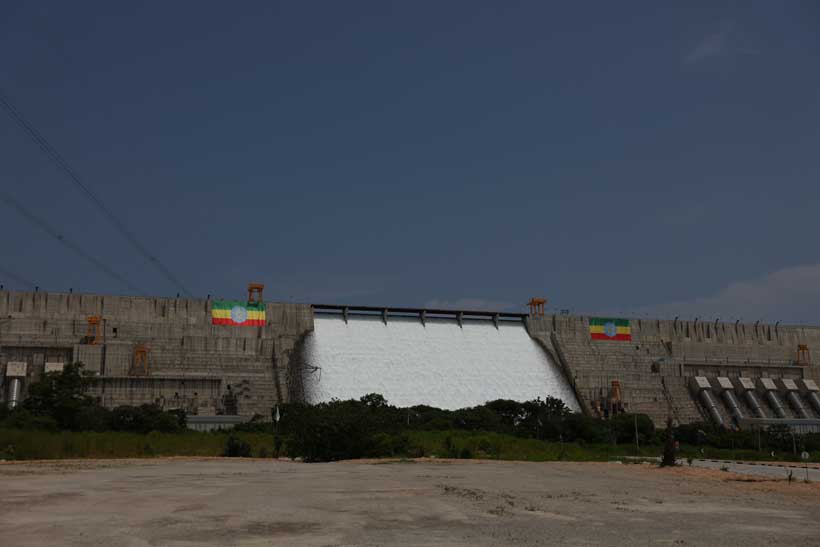
The Chinese Foreign Ministry announced simultaneous diplomatic tours by three special envoys to several Middle Eastern and African countries during the first half of November 2026, aimed at promoting peace talks and easing regional tensions. These tours include visits to several countries, notably by Chai Jun (to the Middle East, including Iran, Oman, and Saudi Arabia), Liu Xianfa (to Africa, including Egypt, Ethiopia, and Djibouti), and Hu Zhang Chun (to Eritrea). The tours focus on proposing peace initiatives, implementing President Xi Jinping’s principles on resolving African issues, and supporting de-escalation in conflict zones, the Red Sea, and the Arabian Gulf. In this context, the shuttle diplomacy tour undertaken by Liu Xianfa (the Chinese government’s special representative for African affairs) in early November 2026 to Egypt, Ethiopia, and Djibouti is of significant geopolitical importance. This tour is intended to implement the Four Principles proposed by President Xi Jinping for constructive engagement in resolving pressing issues in Africa. This tour also carries profound strategic implications for Egypt, both in terms of its management of the Grand Ethiopian Renaissance Dam (GERD) file and its shared leadership role in addressing issues of the Global South. The Egyptian researcher analyzed these implications in the following points:
– First: The implications of the Chinese envoy’s tour to Africa and Egypt regarding the implementation of President Xi Jinping’s Four Principles for resolving pressing issues in Africa
This African tour by the Chinese envoy to Egypt and the East African region in particular is of paramount importance for implementing the four principles proposed by President Xi Jinping for constructive engagement in Africa’s pressing issues. These principles are
1) China’s support for the principle of African-led solutions (the African Spiral): prioritizing solutions generated by African institutions, such as the African Union, while providing Chinese logistical and political support without imposing external prescriptions.
Stay ahead of the geopolitical week.
MD Briefing delivers expert analysis across five global fronts — the Indo-Pacific, energy, geoeconomics, European security, and the Middle East — every Monday morning. Free.
2) China’s approach to addressing the root causes of conflicts and development in Africa: By linking peacekeeping efforts with economic development and infrastructure, China recognizes that poverty and underdevelopment are the true causes of crises in the Horn of Africa.
3) China’s encouragement of ceasefires and prioritizing political dialogue in Africa: It advocates for de-escalating tensions (whether border disputes or internal conflicts, such as those in Sudan and the Horn of Africa) through negotiations rather than military options.
4) China’s commitment to the principle of collective and comprehensive security: China rejects the principle of security hegemony by any single regional or international power and works to build a balanced regional security system in the Red Sea and Horn of Africa.
– Second: The Implications of the Chinese Envoy’s African Tour for Egypt Regarding the Grand Ethiopian Renaissance Dam (GERD)
China is a major economic and development partner for all parties to the dispute (Cairo and Addis Ababa). Therefore, the chosen destinations for the tour reflect Beijing’s desire to act flexibly as an acceptable and influential mediator through:
1) Reaffirming China’s strategic balance and proposing a calm and neutral mediation: Beijing seeks to implement its vision of developmental peace by bridging the gap between Egypt and Ethiopia. China understands that the stability of the Horn of Africa and Egypt’s water security are fundamental pillars for ensuring the safety of its massive investments and logistical projects in the region. By including both Egypt and Ethiopia in the tour, Beijing aims to reaffirm its role as a neutral mediator, without taking absolute bias towards one side at the expense of the other, based on the comprehensive strategic partnership it maintains with both countries.
2) Leveraging Chinese leverage: China has close financial and technological ties to Ethiopia’s infrastructure (including the energy and electricity sectors), and it also maintains a comprehensive strategic partnership with Egypt and high-level coordination on water security. This tour presents Cairo with an opportunity to urge Beijing to use its economic influence to push Addis Ababa toward flexibility and signing a legally binding agreement regulating the filling and operation of the dam.
3) China’s securing of the balance of power in the Horn of Africa: The inclusion of Djibouti in the Chinese tour (home to China’s first overseas military base and controlling the Bab el-Mandeb Strait) reflects China’s desire to contain escalating tensions in the Horn of Africa, a region sensitive to China’s logistical and vital interests, especially after Ethiopia’s repeated declarations of its desire to secure a sovereign maritime outlet. Egypt, along with other regional powers, shares this view, rejecting any infringement on national sovereignty or the governance of maritime borders.
4) Reinforcing the legal framework for water: Chinese actions align with previous joint statements between Egypt and China, such as those issued during the Egyptian-Chinese summit, which affirmed the Nile River as a vital lifeline for Egypt. These statements called for resolving disputes in accordance with international law and the principle of not causing harm, without accepting unilateral dictates from the Ethiopian side or jeopardizing Egyptian water security.
5) China’s strategic link between Nile security and Red Sea security: The inclusion of Djibouti and Eritrea (through the Chinese Special Envoy for Horn of Africa Affairs) reflects China’s understanding that the Grand Ethiopian Renaissance Dam (GERD) issue cannot be separated from maritime security in the Red Sea and securing the southern entrance to the Suez Canal, which directly impacts Egyptian national security.
– Third: The Significance of the Chinese Envoy’s African and Egyptian Tour Regarding the Issues of the Global South
These Chinese diplomatic moves coincide with the rise of the Global South bloc, with Egypt at its heart, as a balancing force in the multipolar international system. Their significance is embodied in the following:
1) Regarding the axis related to strengthening the multipolar system: The strategic and developmental implications of the Chinese envoy’s African tour reflect the desire of China and Egypt (as prominent members of the BRICS group) to find African-African or Global South-led solutions to regional crises, independent of Western and American interventions or dictates.
2) Strengthening the Global South’s Joint Leadership: China presents itself as a reliable economic and political ally to the countries of the Global South (through frameworks such as BRICS and the Forum on China-Africa Cooperation (FOCAC)) and seeks to prevent the outbreak of internal conflicts within this bloc so that Western and American powers cannot exploit them to redraw the map of influence in the African continent.
3) Rejecting Hegemony and Prioritizing Local Solutions: Beijing adopts a discourse opposing direct foreign interventions and proposes a diplomacy of friendly dialogue instead of sanctions or political pressure. Egypt shares this view with China regarding the necessity of respecting the sovereignty of nation-states.
4) Regarding the axis related to the integration between China’s Belt and Road Initiative and Egypt’s Suez Canal: The strategic and developmental implications of the Chinese envoy’s African tour indicate that Egypt and Djibouti represent strategic gateways for global trade under China’s Belt and Road Initiative. The stability of these countries ensures the smooth flow of supply chains through the Red Sea and the Suez Canal, serving the shared development interests of the countries of the Global South.
5) Regarding the axis related to China’s application of the concept of developmental peace through its envoy’s African tour: The strategic and developmental implications of the Chinese envoy’s African tour confirm China’s endeavor to demonstrate that disputes over shared resources, such as water and energy in the case of the Grand Ethiopian Renaissance Dam, can be resolved through joint development incentives and infrastructure investments, rather than military or political escalation.
6) Regarding the axis related to strengthening African solidarity through the Chinese envoy’s African tour: The strategic and developmental implications of the Chinese envoy’s African tour confirm the extent of Beijing’s support during its special envoy’s visit to key regional powers in East Africa and Egypt in particular for China to formulate a unified position for the Global South to confront shared economic, climate, and security challenges, based on the principle of mutual respect and shared interests.
– This is a point that the Egyptian researcher has further developed and summarized through a table she designed, as follows:
| The axis | Strategic and developmental implications |
| Strengthening the multipolar system | The tour reflects the desire of China and Egypt (as prominent members of the BRICS group) to find African-African or global South-led solutions to regional crises, away from Western and American interventions or dictates |
| The integration of the Belt and Road Initiative and the Suez Canal | Egypt and Djibouti represent strategic gateways for global trade under China’s Belt and Road Initiative. The stability of these countries ensures the smooth flow of supply chains through the Red Sea and the Suez Canal, serving the shared development interests of developing nations |
| Applying the concept of developmental peace | China seeks to demonstrate that disputes over shared resources (such as water and energy in the case of the Grand Ethiopian Renaissance Dam) can be resolved by offering joint development incentives and infrastructure investments, rather than military or political escalation |
| Strengthening African solidarity | Through visits to key regional powers in East Africa, Beijing supports the formulation of a unified stance among developing countries to address common economic, climate, and security challenges, based on the principles of mutual respect and shared interests |
Therefore, we conclude that the Chinese envoy’s African tour represents a valuable diplomatic opportunity for Egypt to strengthen communication channels with Ethiopia through a high-level international mediator, and it also strengthens Cairo’s position as a fundamental and indispensable pillar in shaping the security and stability of the Horn of Africa and protecting the interests of the Global South is undeniable.
