


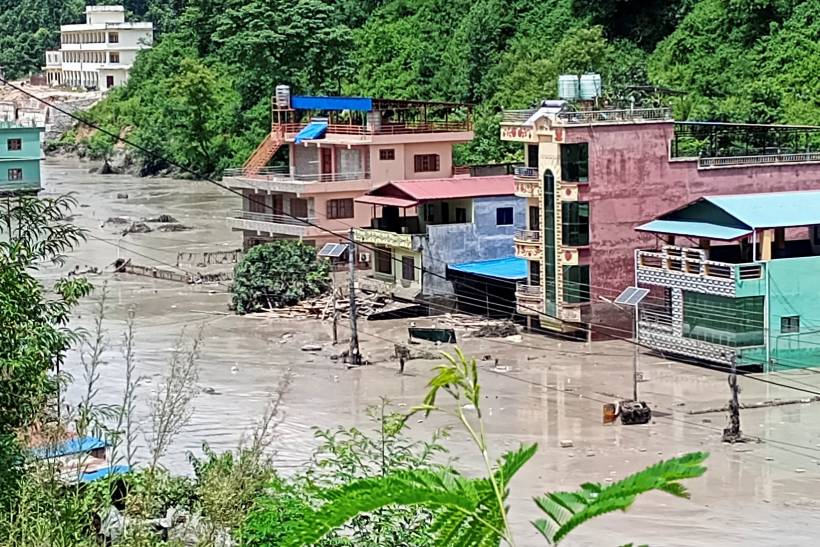
Nepal is facing one of its deadliest disasters in recent years after a glacier collapse on August 26 triggered a massive surge of ice, rock and mud across the country’s Himalayan border region with China. The disaster has devastated towns, hydropower facilities, roads and bridges, leaving thousands missing and prompting a major domestic and international rescue operation.
Death Toll Surpasses 1,000
Nepal’s confirmed death toll reached 1,003, while around 4,000 people remain missing, including 590 foreign nationals from 39 countries.
More than 11,000 people have been rescued across affected areas, while over 9,200 personnel have been deployed to search for survivors, recover bodies, reopen roads and provide emergency medical assistance.
Remote Communities Cut Off
The scale of destruction has made access one of the biggest challenges for rescuers. Roads, bridges, electricity networks and communication infrastructure were destroyed across several Himalayan districts.
Stay ahead of the geopolitical week.
MD Briefing delivers expert analysis across five global fronts — the Indo-Pacific, energy, geoeconomics, European security, and the Middle East — every Monday morning. Free.
Rescue teams have used helicopters, excavators and heavy machinery to reach isolated communities and restore transport routes. Temporary bridges have also been constructed to allow relief supplies and rescue personnel to enter areas cut off by the floods.
Hydropower Stations Become Major Rescue Sites
Several hydropower projects have become the centre of rescue operations because hundreds of workers are believed to remain trapped inside tunnels.
Nepal’s authorities said 639 people remain stuck at several hydropower stations, while 279 workers have already been rescued.
Army teams have been draining water from tunnel entrances and using rock breakers and excavators to create access routes. However, rescuers say some tunnels are so badly damaged that reaching those inside remains extremely difficult.
International Assistance Arrives
China, India and Nepal have deployed specialised teams to support rescue operations, including the construction of temporary bridges and work around damaged hydropower facilities.
China is also sending DNA testing experts and additional relief supplies, including drones and water purification equipment.
South Korea plans to send a 44 member emergency relief team after nine of its nationals working at a hydropower project were reported missing.
Nepal had initially declined broad foreign participation in search and rescue operations but said it needed specialised equipment and technical assistance.
China and India Support Nepal’s Response
The disaster has also highlighted the importance of Nepal’s relationships with its two major neighbours.
China has been involved in reopening access to the Nepal China border, while Indian teams are participating in rescue operations alongside Nepali authorities.
The cooperation is particularly significant because the disaster occurred in a strategically sensitive Himalayan region where Nepal, China and India share interconnected river systems and face growing climate related risks.
Hydropower Infrastructure Under Pressure
Nepal’s rapidly expanding hydropower sector has been particularly exposed to the disaster.
The country has invested heavily in hydropower to address domestic energy shortages and increase electricity exports to India. However, the destruction of hydropower facilities demonstrates the vulnerability of infrastructure built in steep, geologically fragile mountain terrain.
The disaster could therefore prompt greater scrutiny of how hydropower projects are designed, located and protected against increasingly severe climate and geological hazards.
Climate Change Raises Long Term Concerns
Nepali Prime Minister Balendra Shah has linked the disaster to the growing risks associated with climate change and called for stronger international attention to the country’s vulnerability.
China’s state broadcaster similarly described the flood as being linked to glacier instability resulting from the long term effects of global warming.
The Himalayan region is particularly vulnerable because rising temperatures are accelerating glacier melt while changing precipitation patterns can increase the risk of glacial lake outburst floods, landslides and sudden flash floods.
A Growing Himalayan Security Challenge
The disaster extends beyond Nepal’s immediate humanitarian crisis. The Hindu Kush Himalayas contain major glaciers and serve as the source of numerous rivers flowing into densely populated parts of South Asia.
As climate change increases instability in the region, disasters of this kind could become increasingly disruptive to communities, infrastructure, energy supplies and cross border water systems.
Analysis
Nepal’s crisis highlights the growing intersection between climate change, disaster preparedness and regional security in the Himalayas. The immediate priority remains finding survivors, but the scale of the destruction raises questions about whether existing infrastructure and early warning systems are adequate for a rapidly changing mountain environment.
The heavy losses at hydropower facilities are particularly significant. Nepal’s economic strategy increasingly depends on hydropower and electricity exports, yet the disaster demonstrates that the same Himalayan environment providing the country with its energy resources also exposes infrastructure to extreme physical risks.
The international rescue effort also demonstrates the importance of regional cooperation. Nepal cannot manage Himalayan disasters entirely on its own when rivers, glaciers and mountain hazards cross national boundaries. Cooperation with China and India on early warning systems, satellite monitoring, glacier research, hydrological data and emergency response will become increasingly important.
More broadly, the disaster strengthens Nepal’s case for greater international climate finance. For vulnerable Himalayan states, climate change is no longer simply an environmental concern. It is increasingly affecting human security, infrastructure, energy security, livelihoods and regional stability.
The key challenge now is to move beyond emergency relief and build a permanent regional disaster management framework capable of detecting Himalayan hazards before they become catastrophes.
With information from Reuters.
