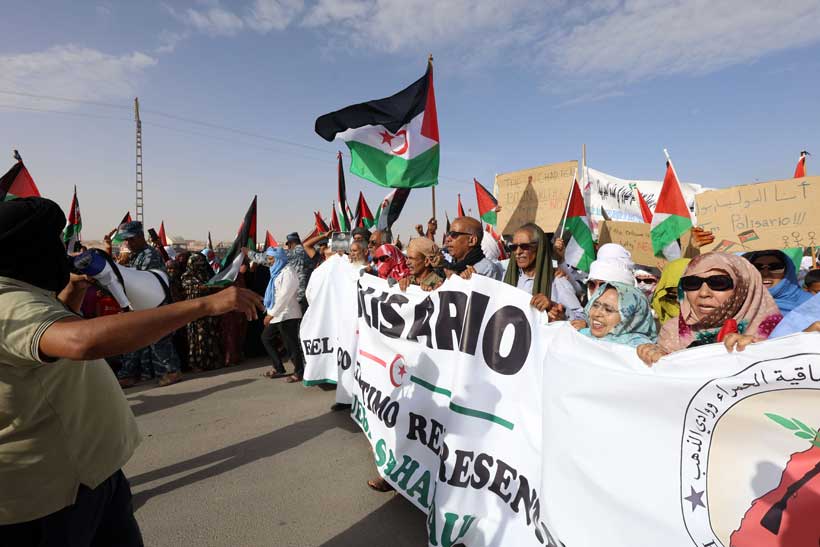
There is something deeply troubling about a peace process in which the very powers meant to keep negotiations moving become obstacles to progress. Morocco-Western Sahara has long been caught between incompatible political demands, regional mistrust and diplomatic overwork. Now it jeopardizes becoming further involved in a contest between Washington and Moscow over who will shape the lines of a settlement.
The Security Council confrontation on 30 October 2026 exposed the risks. Russia vetoed a U.S. draft to renew and reshape the United Nations mission in Western Sahara. Moscow then proposed its own extension, but found it easier to block Washington than to secure support for an alternative.
Neither outcome brought a political resolution any closer. Instead, the Council left the future of a significant international presence uncertain. The case is difficult but clear to all involved: defeating another country’s proposal is no path to peace.
Two failed proposals, no diplomatic winner
Stay ahead of the geopolitical week.
MD Briefing delivers expert analysis across five global fronts — the Indo-Pacific, energy, geoeconomics, European security, and the Middle East — every Monday morning. Free.
The American draft would have extended the mandate of the United Nations Mission for the Referendum in Western Sahara (MINURSO) through October 2027. It also proposed renaming it the United Nations Mission in Western Sahara, removing the explicit reference to a referendum and making Morocco’s autonomy proposal the central framework for negotiations.
These were more than administrative changes. In a dispute where wording carries legal and political weight, changing a mission’s name can signal a shift in what it is expected to do. Russia argued that the draft risked prejudging the territory’s future and undermining self-determination. Its veto blocked a proposal backed by eleven Council members, while three abstained. Russia’s alternative to keep the mission’s existing name and mandate for another year received only three votes in favor.
The distinction matters: this was not a straightforward exchange of equivalent vetoes. The Russian proposal failed to secure the nine votes required for adoption, regardless of the U.S. vote against it. Washington, in turn, could not secure support for its preferred context, while Moscow failed to persuade the Council to preserve the existing arrangement on its terms. Neither side could reasonably claim a meaningful diplomatic outcome.
A mission cannot substitute for a settlement
Yet MINURSO was established in 1991 to support a ceasefire and facilitate a referendum on Western Sahara’s future. The referendum never took place. Disagreements over voter eligibility became entangled with broader questions of sovereignty, identity, and the vote’s implications. Over time, the mission came to occupy an uneasy position: maintaining an international peace and presence around a political process that could not deliver on its original promise.
That does not make MINURSO worthless. Monitoring, communication, and efforts to ease tensions still matter, especially when trust between the parties is limited. Even without a final agreement, the mission can help keep conditions from declining. But maintaining stability is not the same as resolving the conflict. The Security Council has repeatedly renewed MINURSO without resolving the political disagreements that constrain its effectiveness. Another routine extension is unlikely to produce a breakthrough on its own, and restructuring or renaming the mission would not settle the underlying dispute. Reform matters only if it supports a credible political strategy.
Washington and Moscow both face a credibility test.
The United States has a sound reason to look beyond a negotiating framework that has run its course. Introduced in 2007, Morocco’s autonomy initiative proposes self-government within Moroccan sovereignty. Supporters see it as a practical way to move a process that has been stalled for years.
Still, diplomatic endorsement alone cannot make a proposal workable. The people who would live under it need to understand its guarantees and have a meaningful say in shaping them. That leaves Washington with a difficult task: showing that support for autonomy can lead to substantive negotiations, rather than limiting the possible outcomes before talks even begin.
Russia’s position also demands scrutiny. Its objection to a settlement imposed in advance raises legitimate questions about consent and the credibility of a UN-led process. Still, merely defending the existing language is insufficient if the current framework cannot advance negotiations. Moscow demonstrated it could block an outcome it opposed.
The failure of its alternative revealed the limits of that influence. This is the core weakness of veto diplomacy: a government can reject another power’s approach without showing how its own position might help secure an agreement. Western Sahara needs more than competing acts of diplomatic resistance. At the same time, the dispute should not be reduced to a proxy conflict. Washington and Moscow are vying for diplomatic influence, not fighting a war in the territory. Their rivalry creates another obstacle in a conflict whose main disagreements remain regional and political.
Autonomy requires objectivity, not just support
To that extent, Morocco has secured diplomatic support for its autonomy proposal, but that does not constitute an agreed settlement. The Polisario Front continues to call for independence, while Algeria backs Sahrawi self-determination and the Polisario’s role in the political process. Those differences won’t be resolved simply because a Security Council text describes one option as more feasible than another. For autonomy to be a convincing proposal, it must answer practical questions: What powers would local institutions have? How would representatives be chosen? What would protect dissent, cultural identity, and fundamental rights? And how would disputes between regional and central authorities be settled?
These are not secondary matters to address after a diplomatic breakthrough. They are central to whether autonomy can become a credible political arrangement. Morocco can strengthen its proposal by setting out clear, concrete guarantees and explaining how autonomy would work in everyday political life. Its diplomatic gains would carry more weight if backed by a convincing account of how the arrangement would operate in practice. The other parties also have a responsibility to engage seriously. Rejecting the proposal without grappling with its provisions is unlikely to resolve the deadlock. Negotiations require confronting difficult questions, not simply repeating preferred outcomes.
The Regional Cost of Sustained Confrontation
In this context, Western Sahara cannot be understood in isolation from Morocco’s strained relationship with Algeria. Their rivalry raises the stakes and makes compromise harder to achieve politically. The costs extend beyond negotiations: mistrust across the region slows economic cooperation and cross-border exchange, while undermining prospects for a coordinated response to insecurity in the Sahel.
The missed opportunity is significant. North Africa needs stronger economic ties and more reliable ways to address shared security concerns. Yet political attention stays fixed on a standoff that repeatedly narrows the scope for cooperation. This is not an argument for setting aside the underlying claims in the name of development. Rather, allowing the conflict to sustain indefinitely is a strategic choice with consequences for both countries and their neighbors. Algeria should consider whether maintaining the current deadlock serves its long-term interests. Morocco, for its part, should recognize that diplomatic momentum alone cannot confer durable legitimacy. The African Union also has a role, but it should avoid creating a competing diplomatic track. Its contribution would be most useful in encouraging dialogue, easing polarization, and supporting a credible, UN-led process.
Protect the mission; rebuild politics.
For now, the priority should be to keep essential monitoring and communication in place while the Council decides what comes next for the mission. Uncertainty about its mandate does not settle questions of sovereignty, nor does it remove the need to manage security risks. Washington and Moscow should treat that immediate operational need separately from their disagreement over the territory’s eventual political status. Preventing escalation should not hinge on either side getting its preferred wording about the territory’s future. More broadly, diplomatic talks need to move beyond general appeals to realism, compromise, and mutual acceptability. Those ideas matter only when the parties discuss what they mean in practice.
That means closely examining governance, representation, rights, economic dispositions, and credible guarantees. Sahrawi perspectives must play a meaningful role in the process. Any resolutions driven simply by the preferences of foreign capitals will be hard for the people most directly affected to trust. The UN must adapt to changing conditions while upholding its principles. Self-determination, regional stability, and workable institutions should be considered together, not as competing priorities.
Peace is not measured by a resolution’s defeat
The Security Council’s failure highlights a deeper issue than disagreement over a single mission. It shows how easily global diplomacy can devolve into an exercise in preventing another government from claiming success.
The impasse in Western Sahara cannot last indefinitely. Blocking a settlement may preserve influence, but it does little to build trust, resolve questions of political legitimacy, or secure a better future for the people. The United States should show that its support for Morocco can advance inclusive negotiations. Russia should demonstrate that defending established principles can do more than perpetuate the deadlock. Regional parties must also confront the implications of treating concessions as a lasting political liability.
To that end, the key question is not whose wording appears in a UN Council resolution, but whether diplomacy can secure an arrangement that is credible, practical, and acceptable to those who will admit it. Until success is judged by that standard, Moroccan Western Sahara will remain caught between a peace process that promises progress and a political contest that rewards inaction.