


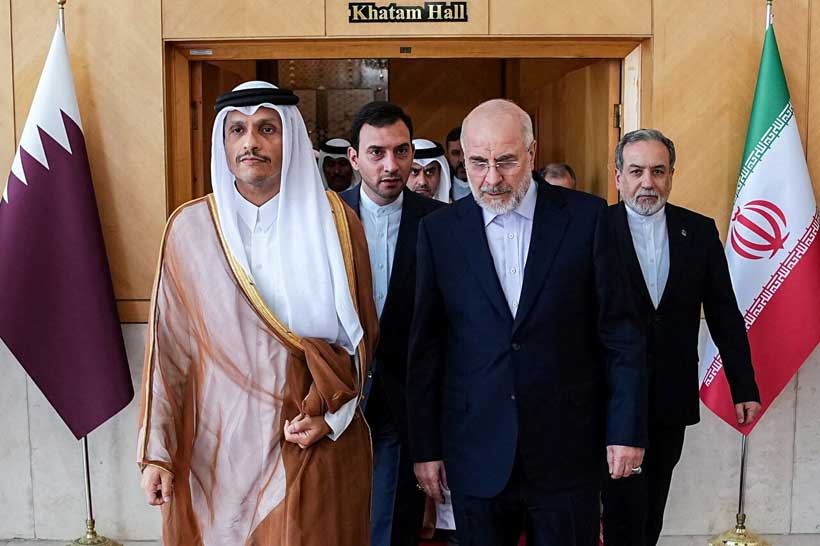
Qatari mediators have returned to Tehran in a renewed diplomatic effort to secure an agreement between the United States and Iran, as disagreements over nuclear negotiations, oil sanctions and maritime restrictions continue to obstruct a possible end to the Middle East war.
The latest mediation effort is being coordinated with Washington, according to an official familiar with the discussions. Qatar had already presented Tehran with a draft peace proposal earlier in the week, but an Iranian official dismissed its terms as unacceptable.
The renewed diplomatic activity suggests that communication channels remain open despite the absence of an agreed framework for negotiations. However, Washington and Tehran continue to disagree over what must happen before formal talks can begin.
Qatar Attempts to Bridge the US-Iran Divide
Qatar has emerged as an important intermediary in efforts to bring Washington and Tehran towards an agreement.
Stay ahead of the geopolitical week.
MD Briefing delivers expert analysis across five global fronts — the Indo-Pacific, energy, geoeconomics, European security, and the Middle East — every Monday morning. Free.
Its latest diplomatic initiative follows the presentation of a proposed peace plan to Iran on Sunday. The proposal was intended to provide a basis for negotiations, but Tehran has resisted the terms, particularly where they concern its nuclear programme.
The return of Qatari mediators to Tehran indicates that discussions have not collapsed despite the initial rejection. Coordination with the United States also suggests that Washington remains involved in exploring possible diplomatic arrangements.
Qatar’s role reflects its established position as a regional mediator, maintaining communication with parties that have limited direct diplomatic engagement.
Nevertheless, the success of its efforts will depend on whether it can persuade both sides to accept a negotiating sequence that addresses their competing priorities.
Nuclear Programme Remains the Central Obstacle
The most significant disagreement concerns when Iran’s nuclear programme should enter the negotiations.
Washington wants nuclear issues included from the beginning, making them a central part of any agreement to end the conflict. The US position reflects longstanding concerns over Iran’s nuclear activities and the possibility that Tehran could expand its nuclear capabilities.
Iran, however, wants immediate relief from American economic pressure before making concessions. Tehran is demanding that Washington end its blockade of Iranian ports and lift sanctions restricting its oil exports.
This creates a fundamental sequencing problem. The United States wants nuclear commitments incorporated into the initial negotiating framework, while Iran wants economic and maritime restrictions addressed first.
Unless the two sides find a compromise, even an agreement to resume formal talks could remain difficult.
Tehran Signals Interest in Alternative Proposals
Iranian Foreign Minister Abbas Araqchi said on Wednesday that Tehran remained in close contact with intermediaries to examine proposals that could ensure implementation of its own seven-day plan to end the Middle East war.
His remarks suggest that Iran is still pursuing diplomatic options, although it wants negotiations to reflect its own conditions.
The seven-day proposal provides another potential basis for discussions, but it remains unclear whether Washington would accept its terms or whether Qatar’s draft plan can be reconciled with Tehran’s demands.
The competing proposals also demonstrate that the dispute is not limited to the final terms of a settlement. Both governments are attempting to shape the framework and sequence of negotiations before making major concessions.
Trump’s Comments Add to Uncertainty Over US Outreach
US diplomatic signals have also been mixed.
On Thursday, President Donald Trump said Vice President JD Vance’s outreach to Iran concerned medical supplies, following media reports suggesting that the communication was connected to efforts to revive peace negotiations.
The comments leave uncertainty about the precise nature of Washington’s latest contacts with Tehran.
However, the continued involvement of Qatar indicates that indirect communication remains an important part of the diplomatic process. Such channels could help both sides explore possible compromises without immediately committing to formal negotiations.
What Happens Next?
The return of Qatari mediators to Tehran offers another opportunity to prevent the diplomatic process from stalling, but major obstacles remain.
The immediate challenge is finding a formula that allows discussions over Iran’s nuclear programme to proceed alongside negotiations on sanctions and the US port blockade.
Washington is unlikely to accept an arrangement that postpones nuclear issues indefinitely, while Tehran may resist negotiations that begin without meaningful economic relief.
Qatar’s ability to bridge this gap will be critical in the coming days. If mediators can secure agreement on the sequence of negotiations, the latest initiative could create a pathway towards a broader settlement.
If the two sides remain unwilling to compromise on their opening conditions, however, diplomatic contacts may continue without producing a concrete agreement to end the conflict.
With information from Reuters.
