


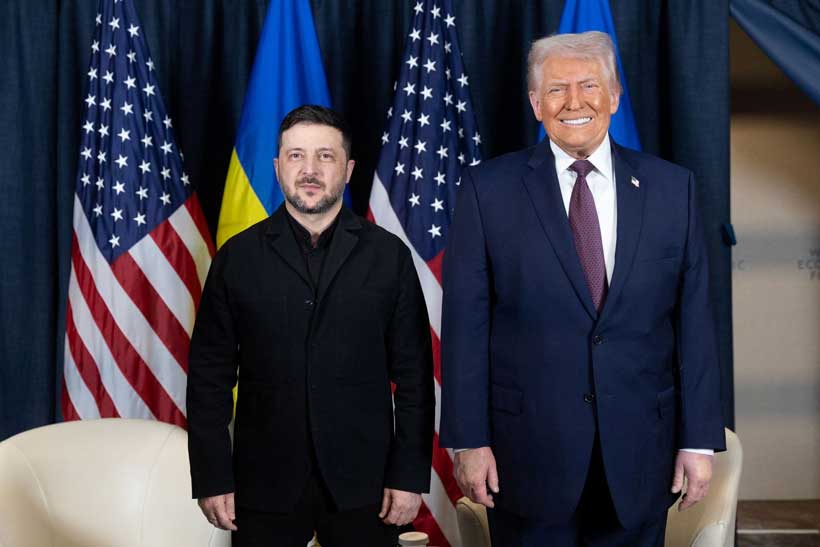
Land can be surrendered only once. A security guarantee can be reconsidered whenever a government changes or another war demands Washington’s attention. This becomes the centre of the latest American effort to end the war in Ukraine. Steve Witkoff and Jared Kushner may be preparing to travel to Kyiv and Moscow, but renewed diplomacy means little if Ukraine is still expected to make permanent concessions in exchange for protection that remains politically conditional. Volodymyr Zelensky’s new pressure-based plan is an attempt to reverse that order before the Americans arrive.
On the surface, the visit suggests that Washington is correcting course. Witkoff and Kushner are expected to hear Kyiv’s position before travelling to Moscow, after spending months focused on Iran and the Gulf. Yet the negotiations did not stall because the two sides lacked another intermediary. They stalled over questions that shuttle diplomacy cannot soften. Russia wants Ukrainian territory it does not fully control, while Ukraine wants protection that will survive the moment it is actually tested. Unless Washington has changed its position on either issue, the trip will restore contact without altering the bargain. With the midterm elections approaching, diplomatic movement also carries domestic value for a White House emerging from months dominated by Iran and Gaza. That does not make the initiative insincere, but it gives Washington a political reason to value the appearance of momentum before the disputes over territory and security have been resolved. Zelensky’s announcement should be read with that danger in mind.
The idea that Putin must be pressured into serious negotiations is hardly new in Kyiv. Ukraine has relied throughout the war on the belief that diplomacy follows changes in the balance of power rather than expressions of goodwill. What is different now is the audience. Zelensky revealed the existence of the plan before publishing its details and before the American envoys reached Ukraine. He is speaking to Washington as much as Moscow.
The purpose is to keep the next round from beginning with the familiar search for Ukrainian flexibility. The United States has leverage over Kyiv because American weapons remain essential to its defence. Using that influence over Russia is more costly. It requires Washington to maintain pressure when doing so creates economic friction and to keep arming Ukraine when another crisis competes for the same resources. An administration eager to show progress may therefore press the party it can move rather than the one blocking an agreement. Zelensky wants Russian refusal to become the problem Washington must solve.
Stay ahead of the geopolitical week.
MD Briefing delivers expert analysis across five global fronts — the Indo-Pacific, energy, geoeconomics, European security, and the Middle East — every Monday morning. Free.
There is, however, a serious argument for the American impatience. Russia retains the capacity to fight a long war, and time may further weaken Ukraine’s bargaining position. From Washington’s perspective, urging Kyiv to compromise now could preserve more territory and save more lives than waiting for circumstances that may never improve. Pressure on Ukraine is not necessarily evidence of indifference or diplomatic laziness. It may reflect a bleak judgement about where the war is heading. But that judgement does not resolve the problem of security guarantees. It makes it more urgent.
A Ukraine asked to accept less favourable borders would become more dependent on the credibility of Western protection, not less. Moscow still claims four Ukrainian regions in full, including areas its army has never captured. If Ukrainian troops withdrew, Russia would gain land immediately and the military balance would change with them. Ukraine would receive a promise whose value could remain unknown for years. Washington has discussed guarantees resembling NATO’s Article 5, but the comparison conceals as much as it clarifies. NATO’s deterrent rests on institutions and military planning developed over decades.
A bespoke promise to Ukraine would have to survive elections, changes in Congress and a future president’s assessment of whether confrontation with Russia was worth the cost. The territorial concession would not face the same uncertainty. Once Ukrainian forces left, a later government could not recover the land simply because the guarantee had proved weaker than advertised. Moscow benefits from keeping that difference unresolved. Putin can welcome American envoys and praise the return of diplomacy without withdrawing a single demand. Russia has rejected a ceasefire along the present front and dismissed a limited pause in Black Sea attacks. Still, every meeting allows the Kremlin to suggest that peace is close if Kyiv will move a little further.
When Washington begins measuring progress by the continuation of talks, Russia can obstruct an agreement while allowing Ukraine to be blamed for its absence. The months spent focused on Iran have given Kyiv a reason to distrust promises that depend on continued American attention. This was not simply a diplomatic distraction. Reuters reported on 13 August that Patriot deliveries to Ukraine had fallen as American requirements in the Middle East increased. Days later, a Russian barrage killed 17 people in Kyiv and nearby areas, while Zelensky again pointed to the shortage of interceptors. The same weapons meant to sustain Ukraine’s defence had become more urgent somewhere else. For Kyiv, that experience offers a preview of how a future guarantee might weaken. A promise of protection is only useful if the resources behind it remain available when another crisis begins. The visit by Witkoff and Kushner cannot answer that concern.
Congress would need to support the arrangement beyond the term of one president, while European governments would have to assume obligations they could meet if Washington shifted its focus again. Otherwise, Ukraine would be exchanging land it could not recover for help it could not be certain of receiving. The contents of Zelensky’s plan will show whether Kyiv has found a way to alter this calculation or has simply presented its old position more forcefully. A general request for greater pressure would mainly serve to shape the American agenda. A plan backed by partners who have agreed in advance on the consequences of Russian refusal would be something different. Putin would know before entering the talks that rejection carried a cost rather than the promise of another diplomatic round. Washington’s reaction will be equally revealing. A reset would require more than sending its envoys back to the two capitals. The United States would have to settle how Ukraine will be protected before urging it to give up territory, while making clear what follows if Moscow refuses a viable proposal. The public release of Zelensky’s plan provides a straightforward test. If it contains agreed measures and Washington is prepared to enforce them, the negotiations will have acquired new substance. Until then, the United States has returned to the process, but Kyiv remains the party trying to change how it works.
