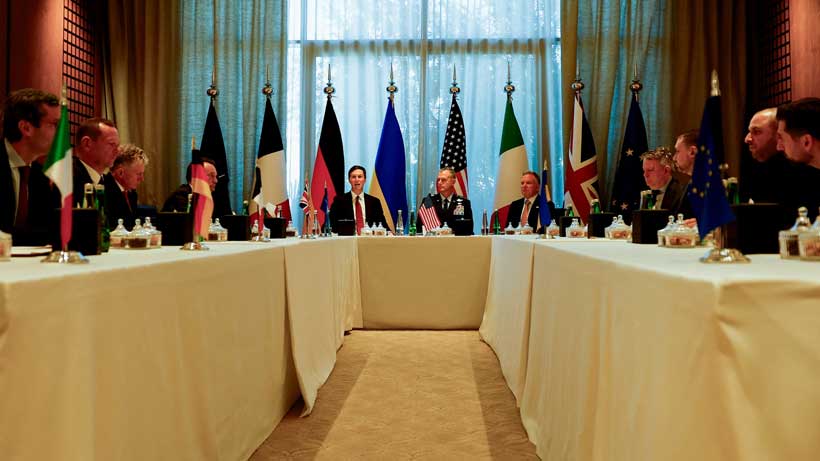
Fire at Kirishi, Then Talk of Guarantees
On the night before Russian and Ukrainian delegations sat down in Abu Dhabi, Ukrainian drones set fire to the Kirishi refinery near St Petersburg, a 400,000-barrel-a-day plant some 800 kilometres from the border. Russian strikes over the same 24 hours left homes without power in 12 Ukrainian regions, and Kyiv counted 128 attacks on its energy and oil and gas facilities in a single week. Then both sides announced that the talks would be about security guarantees.
That sounded like progress. Guarantees are what Kyiv has asked for since 2022. But the order in which issues are negotiated decides who holds leverage when the hardest one comes up. By taking guarantees first and leaving territory for last, Abu Dhabi is turning Ukraine’s protection into something Moscow can charge for. The new Democratic Congress is the one actor in Washington that can stop it, and the clock to January is why the White House is in a hurry.
The Shape of the Table
This was the first trilateral round since February’s Geneva talks broke down. Russia’s demands are unchanged: Ukrainian withdrawal from the rest of Donbas, a ban on NATO membership, caps on Ukraine’s armed forces, and what Moscow calls its own “security guarantees,” meaning a rollback of NATO’s presence in Central and Eastern Europe. Ukraine rejects giving up land it holds and wants an unconditional ceasefire first. Russia occupies about a fifth of the country.
Stay ahead of the geopolitical week.
MD Briefing delivers expert analysis across five global fronts — the Indo-Pacific, energy, geoeconomics, European security, and the Middle East — every Monday morning. Free.
to read the full analysis, please subscribe to our Premium MD Briefing