


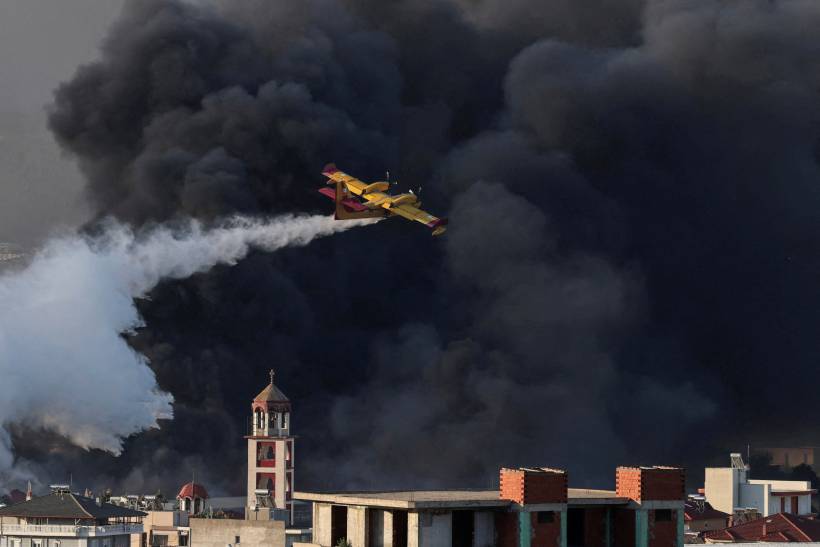
France Battles Massive Bordeaux Wildfire
France continued to battle a vast wildfire near Bordeaux on Thursday after firefighters managed to prevent the blaze from spreading overnight. Authorities said approximately 42,000 hectares have burned, while two people were arrested on suspicion of starting fires. Around 220,000 residents and holidaymakers were evacuated during the crisis, although nearly 60,000 people have since returned as conditions gradually improved.
Officials warned that despite forecasts of cooler temperatures, higher humidity and possible thunderstorms, the danger remains high. Extreme heat warnings are still in place across the Gironde region, and southeastern France is now considered the country’s highest wildfire risk zone.
Greece Struggles with Deadly Fires on Crete
Greek firefighters continued efforts to contain multiple wildfires on the island of Crete after three firefighters lost their lives on Wednesday. Two were trapped between advancing fire fronts in central Crete, while another died battling a separate wildfire in the Peloponnese.
More than 200 firefighters, supported by dozens of fire engines and aircraft where weather allowed, were deployed across the island. Strong winds, however, prevented aerial firefighting operations for parts of the day and continued to fuel rapidly spreading flames.
Stay ahead of the geopolitical week.
MD Briefing delivers expert analysis across five global fronts — the Indo-Pacific, energy, geoeconomics, European security, and the Middle East — every Monday morning. Free.
Hundreds of residents and tourists were evacuated from villages around Krya Vrysi as fires threatened homes, olive groves and popular holiday destinations.
Local officials described the situation as desperate, warning that worsening winds could further complicate containment efforts.
Spain Faces Escalating Wildfire Crisis
Spain also remained on high alert as multiple wildfires continued burning across the country.
Prime Minister Pedro Sanchez described the situation as “extreme”, citing a combination of record temperatures, low humidity and strong winds. Authorities reported at least 10 active wildfires, with new outbreaks emerging in Zamora and Leon.
In eastern Castellon province, firefighters continued battling a blaze that has already scorched more than 9,300 hectares, while over 1,300 residents have been evacuated from affected communities across northern Spain.
Spanish authorities warned that Thursday’s rising temperatures could further hamper firefighting operations despite overnight progress.
Europe’s Hottest Summer Intensifies Fire Risk
Europe continues to experience one of its most destructive wildfire seasons on record. According to the Reuters Climate Monitor, the continent remains the fastest-warming region in the world, with average temperatures around 3.6°C above the historical 1961–1990 average.
The combination of repeated heatwaves, prolonged drought and powerful winds has created ideal conditions for wildfires across southern Europe. This year’s burned area has already surpassed previous records in several countries, highlighting the growing impact of climate-driven extreme weather.
The simultaneous wildfire emergencies in France, Spain and Greece demonstrate that extreme heat events are no longer isolated national disasters but a continent-wide security and economic challenge. Beyond the immediate loss of life and destruction of forests, these fires threaten tourism, agriculture, infrastructure and public health across Southern Europe. As temperatures continue to exceed historical averages, governments face mounting pressure to strengthen climate adaptation, improve cross-border emergency coordination and invest in wildfire prevention rather than relying primarily on emergency response. Europe’s increasingly severe fire seasons also reinforce concerns that climate change is becoming a major driver of regional economic and environmental instability.
With information from Reuters.
