


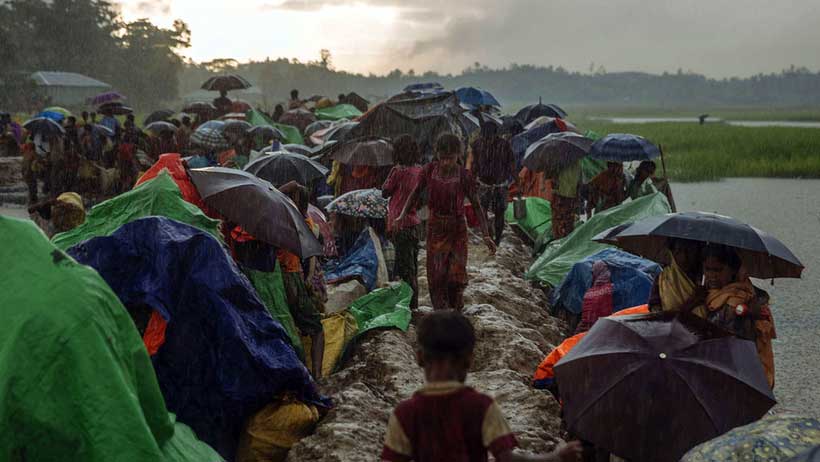
Malaysian Prime Minister Anwar Ibrahim announced that Myanmar has agreed to accept the return of 5,000 Rohingya asylum seekers currently living in Malaysia. Speaking during a campaign rally ahead of regional elections, Anwar said the agreement was made possible through ongoing diplomatic engagement between the two countries.
Malaysia’s Home Minister Saifuddin Nasution Ismail said authorities have begun identifying and screening the refugees before coordinating with Myanmar through diplomatic channels.
Growing Pressure on Refugee Management
Malaysia hosts one of the world’s largest Rohingya refugee populations, with approximately 126,000 Rohingya registered with the UN refugee agency (UNHCR). Although the country has long served as a refuge for people fleeing persecution in Myanmar, it is not a signatory to the 1951 UN Refugee Convention and legally considers asylum seekers to be undocumented migrants.
The announcement comes after Malaysian authorities detained more than 100 Rohingya refugees outside the UNHCR office in Kuala Lumpur this week. The refugees were later released after officials confirmed they possessed valid UNHCR documentation.
Stay ahead of the geopolitical week.
MD Briefing delivers expert analysis across five global fronts — the Indo-Pacific, energy, geoeconomics, European security, and the Middle East — every Monday morning. Free.
Rising Domestic Tensions
The Rohingya community in Malaysia has faced increasing hostility in recent months, including online misinformation, public backlash, and the closure of some community schools. Several refugees recently sought assistance from the UNHCR after claiming they had been forced from their homes by local residents in Penang.
Earlier this month, Malaysia also requested that the UNHCR temporarily halt new refugee registrations while the government develops its own asylum management framework.
Citizenship Crisis Remains Unresolved
The Rohingya remain one of the world’s largest stateless populations after decades of being denied citizenship in Myanmar. International human rights organizations continue to describe conditions in Myanmar as unsafe for many Rohingya, raising concerns over the long-term sustainability and voluntariness of any repatriation process.
Myanmar’s government has not publicly commented on Malaysia’s announcement, while the UNHCR has yet to respond to the proposed repatriation plan.
Why It Matters
The agreement marks one of the most significant bilateral efforts in recent years to address the Rohingya refugee issue. It also reflects Malaysia’s increasing focus on tightening refugee management amid domestic political pressure. However, the success of the initiative will depend on whether returnees can safely reintegrate into Myanmar, where the underlying issues of citizenship, security, and minority rights remain unresolved.
With information from Reuters.
