


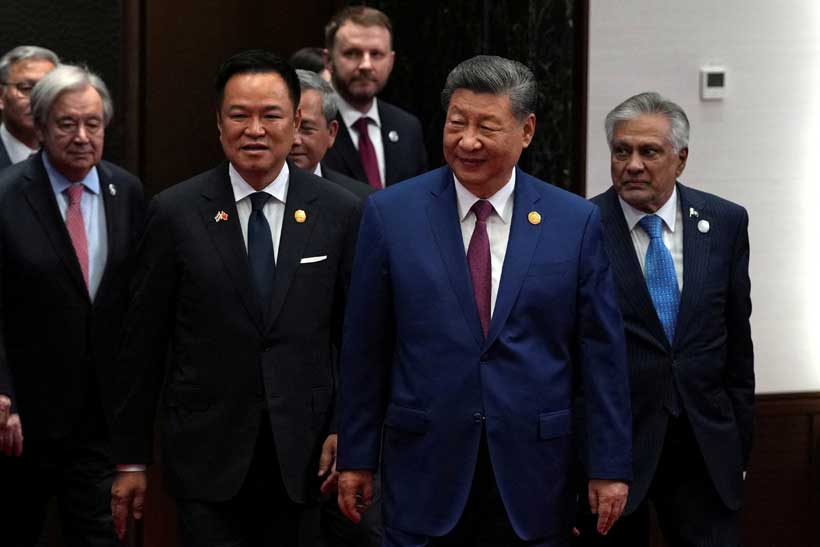
From July 17 to 20, the 2026 World Artificial Intelligence Conference (WAIC) was held in Shanghai, China. In this context, China was trying to promote international cooperation in AI governance; developing countries generally face shortcomings such as a weak foundation and a severe shortage of specialized talent. In this regard, I think China can help the international community to establish effective cooperation mechanisms to ensure these nations participate equally in the governance process, rather than merely acting as passive recipients of technology and followers of rules. The effective participation of developing countries in AI governance requires a paradigm shift from passively responding to imposed rules to actively contributing to their formulation. This necessitates international mechanisms that strengthen national infrastructure, support knowledge and technology transfer, and establish equitable negotiating platforms. Specifically, this can be achieved through the following:
– Support and Structural Empowerment Mechanisms
A) Developing High-Performance Computing: Establishing internationally supported regional computing centers within the Global South to enable these countries to conduct local training on intelligent models.
B) Financing Digital Infrastructure: Launching accessible and targeted funding mechanisms to upgrade national communication networks and data centers in line with sustainable development strategies.
Stay ahead of the geopolitical week.
MD Briefing delivers expert analysis across five global fronts — the Indo-Pacific, energy, geoeconomics, European security, and the Middle East — every Monday morning. Free.
– Standards Development and Capacity Building
A) Transfer of Open-Source Technology: Encouraging equitable partnerships that provide access to core code and models without monopolistic restrictions.
B) Specialized Training Programs: Expanding international and regional initiatives to transfer expertise and build local regulatory and legislative capacities for human resources in developing countries.
– Justice in inclusive governance
A) Reforming international decision-making platforms: Activating balanced global dialogue frameworks, such as UN governance initiatives, to ensure the representation of the voices of developing countries and regional organizations like the Arab League and the African Union.
B) Preserving digital sovereignty: Protecting the right of developing countries to establish their own databases and algorithm auditing standards in a manner that respects their cultural and economic specificities.
From the perspective of the evolution of the global governance architecture, the establishment of the World AI Cooperation Organization (WAICO) in Shanghai, China, on July 16, 2026, is seen as a significant milestone in the history of AI development. There’s great significance to the founding of this organization. The establishment of the World Artificial Intelligence Cooperation Organization (WAICO) in Shanghai represents a pivotal step that strengthens global governance, expands international cooperation, and provides a new institutional framework for developing countries.
- Importance of the World AI Cooperation Organization (WAICO)
A) Intergovernmental Framework: Providing an independent platform that brings together 29 founding countries to coordinate policies.
B) Representation of the Global South: Bridging the digital divide and giving developing countries a voice in shaping rules.
C) Combating Technological Monopolies: Promoting open-source systems to ensure a fair distribution of the benefits of technology.
D) Supporting the UN’s Role: Serving as a complement and supporter of the UN’s efforts in the field of civil AI.
The significance of establishing the World Artificial Intelligence Cooperation Organization (WAICO) in Shanghai, founded in July 2016 with the participation of 29 countries, lies in its role as an independent intergovernmental body aimed at strengthening global governance, bridging the technological gap for developing countries, and ensuring equitable and secure technology use. This is achieved through the following:
– First: Global Governance and Rule-Building
- Providing a multilateral institutional framework for managing digital technologies.
- Formulating fair rules and standards for artificial intelligence, free from the monopoly of major powers.
- Balancing innovation and international responsibility for the benefit of humanity.
– Second: Supporting Developing Countries and the Global South
- Bridging the infrastructure and technological capacity gap.
- Launching training programs to build capacity and facilitate technology transfer.
- Addressing the risks of digital dependency and reducing unequal access to technologies.
– Third: Practical Cooperation and Applications
- Establishing international AI application centers with regional blocs.
- Deploying practical solutions, such as smart early warning systems, to protect communities.
- Strengthening economic and technological partnerships among founding countries.
The World Artificial Intelligence Cooperation Organization (WAICO) in Shanghai has explicitly identified assisting developing countries and bridging the intelligence divide as core objectives. Here, China can provide numerous pragmatic cooperation mechanisms through the WAICO to prevent the Global South and the developing countries from merely becoming passive recipients of technology or mere providers of data. To achieve the goals of the World Association of Artificial Intelligence Cooperation (WAICO) in assisting developing countries and bridging the knowledge gap, a shift from the traditional aid model to an enabling development partnership model is necessary.
The following are practical cooperation mechanisms that WAICO should establish to ensure the participation of developing countries as active and innovative stakeholders, not merely as consumers of technology or sources of raw data, as follows:
- Joint Governance and Digital Sovereignty Mechanisms
- Drafting a Development Data Sovereignty Charter: Establishing legal frameworks that guarantee developing countries ownership of their local data and require that this data be stored and processed within their national borders (data localization) to protect it from external exploitation.
- Data-Shareback Mandatory: Imposing conditions on global companies that use data from developing countries to develop their models, requiring them to make these models and algorithms freely or at nominal prices available to research and government institutions in those countries.
- Equitable Representation in Decision-Making: Establishing a Permanent Technology Council for Developing Countries within WAICO, with veto or weighted voting rights in drafting global AI standards and ethics to ensure their relevance to local contexts.
- Shared Infrastructure as a Public Utility (AI Commons)
- Global Distributed AI Cloud: Creating shared regional supercomputing data centers under WAICO auspices in developing continents (Africa, Latin America, and South Asia), enabling local scientists to train their models without relying on Western or Chinese servers.
- Dedicated Open-Source Hubs: Supporting and developing large language models (LLMs) and computer vision models focused on local languages, dialects, crops, and endemic diseases in developing countries and making them available as a public good.
- Empowerment, Capacity Building, and Local Innovation Mechanisms
- Co-Innovation Labs: Instead of sending foreign experts, WAICO-funded joint research labs will be established at national universities in developing countries to produce AI solutions tailored to local challenges, such as water scarcity, climate change, and adaptive education.
- Reverse Technology Transfer and Academic Twinning: Intensive fellowship programs will be launched to train engineers and researchers from developing countries at Shanghai’s leading institutes, with the requirement that these programs be linked to applied projects implemented in their home countries to prevent brain drain.
- Sustainable Financing Mechanisms and Local Markets
- WAICO Development Innovation Fund: A large-scale fund, financed by contributions from developed countries and major technology companies, will be established exclusively to fund AI startups in developing countries.
- Stimulating the Local Entrepreneurial Ecosystem: Local software companies from developing countries will be required to participate in international digital transformation projects supported by the organization, ensuring the flow of funds and expertise to the local market.
Regarding rule alignment and collaborative governance, there’s an interactive relationship with China through the WAICO maintained with AI governance platforms under the UN framework. Here, the WAICO organization will reconcile the differences between the universal standards it formulates and existing international regulations, such as the EU’s compliance standards. The World Artificial Intelligence Cooperation Organization (WAICO) intends to establish a complementary and supportive relationship with UN platforms as a primary channel for governance, harmonizing standards through respect for national sovereignty and the principle of flexibility, rather than imposing forced uniformity with regional regulations, through the following:
– First: Interactive Relationship with the UN
- Support and Mutual Support: Commitment to the purposes and principles of the UN Charter and viewing the organization as a valuable complement to the efforts of UN agencies.
- Role as Additional Representative: Serving as an open consultative platform to promote global harmonization without competing with the central role of the UN.
– Second: Engaging with Regional Regulations and Compliance Standards (e.g., the European Union)
- Respecting National Trajectories: Prioritizing the diversity of national circumstances and development paths rather than rigid classification criteria based on political system.
- Focusing on Common Ground: Encouraging dialogue on risk management principles and facilitating compatibility and interoperability between different technical systems.
As a responsible major country, China has proposed the concept of people-oriented and technology for good. From my thoughts on this concept and my opinion, compared to the EU’s Artificial Intelligence Act or US executive orders, there are differentiated advantages of the governance approach demonstrated by China at this conference; especially, it has garnered widespread responses from organizations including ASEAN, the Arab League, and the African Union.
China’s concept of people-centered and technology-for-good in AI governance is a collaborative vision focused on inclusivity, capacity building, and avoiding technological monopolies through the following:
– First: Distinctive Advantages of the Chinese Governance Approach Compared to the West
- Focus on International Cooperation, Not Restrictions: Unlike the EU’s AI law, which relies on strict regulations and fines, or US executive orders related to national security and competition, China offers a participatory model by establishing platforms such as the World Association for AI Cooperation (WAICO).
- Bridging the Digital Divide for Developing Countries: The Chinese approach focuses on knowledge transfer, open-source sharing, and providing training programs and collaborative centers for AI applications, rather than erecting technical barriers.
- Respecting Cultural and Civilizational Diversity: The Chinese approach advocates that AI technologies should not lead to cultural hegemony or the destruction of the unique characteristics of different civilizations.
– Second: Reasons for the broad engagement of ASEAN, the Arab League, and the African Union:
- Meeting development needs: The planned Chinese partnerships provide collaborative centers for artificial intelligence applications and advanced systems, such as early warning systems for meteorology, that directly serve developing economies.
- Rejecting unilateral technological hegemony: Regional organizations aspire to a multilateral global governance system under the auspices of the United Nations that gives developing countries a voice in shaping rules.
- Equitable sharing of benefits: These blocs see in the Chinese approach a guarantee that the technological revolution will not become a tool for reinforcing Western or American-European monopolies and privileges at the expense of the rest of the world.
Based on the preceding detailed analysis of China’s role as a pivotal superpower supporting the Global South in artificial intelligence, technological capabilities, and cybersecurity, as emphasized by Chinese President Xi Jinping himself, who stated that The development of artificial intelligence should not be monopolized by a single country, and international cooperation in this rapidly growing field must be strengthened, during the opening of the World Artificial Intelligence Conference (WAIC) in Shanghai in July 2026. President Xi’s remarks come at a time when Chinese AI models continue to close the gap with the most advanced American models, benefiting from their lower cost and ability to attract users and companies worldwide. Conversely, international concerns are escalating regarding the uses of artificial intelligence in military fields, cyber threats, and the potential for its exploitation by hackers and terrorist groups.
