


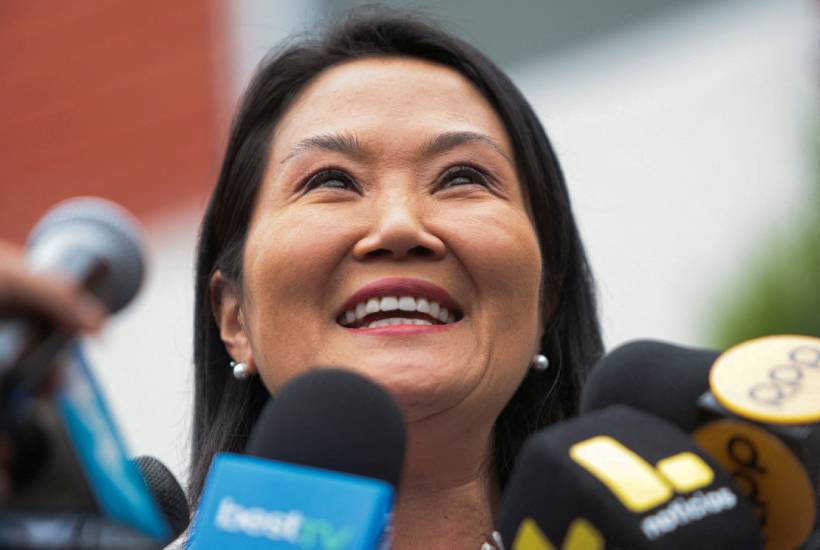
Conservative candidate Keiko Fujimori has secured an insurmountable lead in Peru’s presidential runoff, putting her on course to become the country’s next president. With more than 50% of the vote and fewer ballots remaining than her margin of victory, the result is effectively decided even though Peru’s electoral authority has not yet formally declared a winner.
Fujimori defeated leftist rival Roberto Sanchez after a closely contested race marked by ballot disputes, fraud allegations, and deep political divisions. The election comes at a time when Peru is struggling with chronic political instability, rising crime, and widespread dissatisfaction with the political establishment.
Why It Matters
Fujimori’s victory strengthens a broader shift toward conservative and security focused politics across parts of Latin America. Her election is likely to signal tougher policies on crime and public security while reviving debate over the legacy of her father, former Peruvian president Alberto Fujimori.
The result also has implications for Peru’s political stability. The country has cycled through eight presidents in eight years, making governance and institutional credibility major concerns for investors, businesses, and voters.
Stay ahead of the geopolitical week.
MD Briefing delivers expert analysis across five global fronts — the Indo-Pacific, energy, geoeconomics, European security, and the Middle East — every Monday morning. Free.
Fujimori Capitalizes on Security Concerns and Political Frustration
Fujimori’s campaign focused heavily on restoring order in a country increasingly troubled by extortion, violent crime, and political dysfunction. She presented herself as a strong leader capable of bringing stability after years of leadership turnover and institutional crises.
Public frustration with crime and economic inequality helped drive support toward conservative candidates across the region. Similar trends have emerged elsewhere in Latin America as voters seek tougher responses to security challenges and dissatisfaction with traditional political parties grows.
Fujimori also embraced elements of her father’s legacy more openly than in previous campaigns. While she had previously sought to distance herself from his controversial presidency, she increasingly portrayed his administration as a period of stronger governance and public order.
Election Dispute Raises Risk of Political Tensions
Despite the narrowing path to victory for his campaign, Sanchez refused to concede and alleged electoral fraud without presenting evidence. He challenged thousands of overseas ballots that largely favored Fujimori, but Peru’s national electoral jury rejected those requests.
The accusations raise concerns that political tensions could persist even after the official declaration of results. Peru has experienced repeated political crises in recent years, and disputes over election legitimacy could further deepen polarization.
While electoral authorities continue processing the final votes, the mathematics of the race leave Sanchez with virtually no path to overtake Fujimori’s lead.
New President Inherits Deep Structural Challenges
Fujimori will take office facing a daunting list of challenges. Peru remains one of the most politically unstable countries in Latin America, having seen eight presidents in eight years.
Corruption scandals have repeatedly shaken the country’s political system. Several former presidents have faced imprisonment, impeachment, investigations, or forced resignations. Economic disparities between Lima and rural regions remain significant, while public trust in political institutions remains low.
Addressing crime, restoring confidence in government, and managing economic concerns will likely be among the most pressing priorities of the incoming administration.
Stakeholders
- Keiko Fujimori
- Roberto Sanchez
- Alberto Fujimori
- Peru’s electoral authority ONPE
- National Electoral Jury of Peru
- Peruvian voters
- Political parties in Peru
- Business and investment community
- Latin American governments
- International observers
Future Outlook
The immediate focus will be on the formal certification of election results and whether Sanchez continues challenging the outcome. Once confirmed, Fujimori will face pressure to deliver quick improvements in public security and political stability.
Her administration is expected to pursue tougher law and order policies while attempting to restore confidence in government institutions. However, Peru’s history of political turbulence suggests that maintaining stability could prove difficult.
The election may also reinforce a broader conservative trend across Latin America, where concerns about crime, governance, and economic uncertainty are increasingly shaping voter preferences.
With information from Reuters.
