


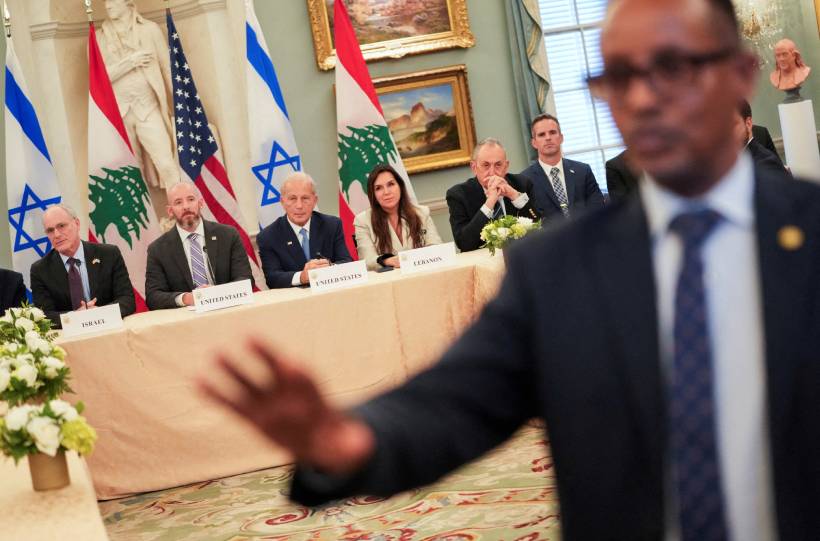
Israeli and Lebanese officials are discussing a U.S. backed proposal that would see Israeli forces transfer control of some territory captured during the war with Hezbollah to the Lebanese army. The talks are taking place in Washington as part of broader efforts to consolidate a ceasefire and reduce tensions along the Israel Lebanon border.
Under the proposal, Lebanese troops deployed to the areas would reportedly undergo U.S. training and vetting procedures aimed at ensuring they have no links to the Iran backed group Hezbollah. Israel would retain a military presence in a separate buffer zone near the border, which it says is necessary to protect northern Israeli communities from future attacks.
Why It Matters
The discussions represent one of the first concrete efforts to address territorial and security disputes following the recent conflict between Israel and Hezbollah. If successful, the arrangement could help stabilize southern Lebanon, strengthen the role of the Lebanese military, and reduce the risk of renewed fighting.
The talks are also closely linked to the broader U.S. Iran peace framework, which calls for an end to military operations across multiple fronts, including Lebanon.
Stay ahead of the geopolitical week.
MD Briefing delivers expert analysis across five global fronts — the Indo-Pacific, energy, geoeconomics, European security, and the Middle East — every Monday morning. Free.
US Backed Proposal Aims to Ease Border Tensions
The proposed pilot project would involve the gradual transfer of certain areas currently occupied by Israeli forces to the Lebanese army. The initiative seeks to create conditions for Israeli withdrawals while ensuring that Hezbollah does not re establish a military presence in the territory.
According to Israeli officials, the United States would play a central role in training and vetting Lebanese soldiers assigned to the zones. Supporters argue that such oversight could build confidence between the parties and provide security guarantees that might make Israeli withdrawals more politically acceptable.
The proposal reflects growing international efforts to prevent the ceasefire from collapsing and to establish a more durable security arrangement along one of the Middle East’s most volatile frontiers.
Lebanon Focuses on Withdrawal Timeline and Sovereignty
Lebanese officials have indicated that discussions are centered on securing a clear timeline for Israeli troop withdrawals. Beirut has consistently argued that Israeli forces should leave all Lebanese territory and restore full sovereignty to the Lebanese state.
The talks are expected to include military to military discussions on how any transfer of territory would be implemented and monitored. However, Lebanese officials stress that no final agreement has been reached and that negotiations remain ongoing.
For Lebanon, the issue is politically sensitive because any arrangement must balance security concerns with public demands for the restoration of territorial control.
Hezbollah Opposition Complicates Diplomatic Efforts
The proposal has reportedly been rejected by Hezbollah, highlighting the challenges facing negotiators. The group remains a major political and military force in Lebanon and has strongly opposed arrangements that could limit its influence near the border with Israel.
The latest conflict began when Hezbollah launched attacks in support of Iran during the U.S. Israeli war against Tehran. Although a ceasefire has largely held since Sunday, tensions remain high and sporadic incidents continue to raise concerns about renewed escalation.
The disagreement underscores the difficulty of implementing security arrangements in Lebanon without broader political consensus among key actors.
Iran Deal Adds New Dimension to Lebanon Negotiations
The border talks are unfolding against the backdrop of ongoing negotiations between the United States and Iran. The framework agreement signed last week requires all parties and their allies to end military operations across the region, including in Lebanon.
That provision has increased pressure on both Israel and Lebanon to find practical solutions for managing security along the border. Diplomats hope progress in southern Lebanon could become an important confidence building measure that supports wider regional stabilization efforts.
At the same time, Tehran’s influence over Hezbollah means developments in U.S. Iran negotiations could directly affect the success or failure of any Lebanon border agreement.
Stakeholders
- Israeli government
- Lebanese government
- Lebanese Armed Forces
- United States government
- U.S. military trainers and advisers
- Hezbollah
- Iranian government
- Border communities in Israel and Lebanon
- International mediators
- Regional security partners
Future Outlook
The coming days of negotiations will be critical in determining whether the proposed pilot project moves forward. Key issues include the scale of Israeli withdrawals, the role of U.S. oversight, security guarantees, and Hezbollah’s opposition.
If an agreement is reached, it could become the foundation for a broader withdrawal process and help reinforce the fragile ceasefire. However, failure to resolve differences over territory, security arrangements, or Hezbollah’s role could increase the risk of renewed clashes along the border.
With information from Reuters.
