


During the Cold War, West Germany faced a dilemma that now feels increasingly familiar to South Korea. It was a frontline U.S. treaty ally, confronting a heavily armed adversary backed by nuclear power. West Germany did not possess its own nuclear weapons, and its survival was premised on whether the U.S.’s extended deterrence would continue to maintain its credibility during the most drastic crisis situation. Chancellor Konrad Adenauer’s controversial depiction of tactical nuclear weapons as a “further development of the artillery (Weiterentwicklung der Artillerie)” in 1957 was a reflection of the fundamental concerns about the reliability of the U.S. commitment. Although West Germany did not pursue the path toward independent nuclear power, it desired access to nuclear-capable systems within NATO to make deterrence more credible.
Contemporary South Korea is not the West Germany of the 1950s. South Korea is a technologically advanced country that has formidable conventional arms, maintains a bilateral alliance with the United States, and is increasingly institutionalizing a nuclear consultation mechanism through the U.S.-ROK Nuclear Consultative Group (NCG). Nonetheless, the strategic question is somewhat similar: could a non-nuclear ally that borders an adversary armed with a nuclear arsenal fully rely on the U.S.’s nuclear guarantee even when the United States could simultaneously face multiple crises elsewhere?
This question is becoming highly relevant since Northeast Asia is no longer a single-theater security environment. South Korea should consider not only North Korean provocations but also a Taiwan contingency. If China embarks upon a naval blockade or full-fledged landing operation, both U.S. and Japanese resources would be heavily absorbed. U.S. air, naval, missile defense, ISR, logistics, and command assets would have to focus on the Taiwan Strait and the first island chain. Meanwhile, Japan would turn into a central rear-area hub for U.S. operations—similar to the Korean War during the 1950s—and would defend its territory, bases, ports, and sea lines of communication (SLOC).
Such a development could create dangerous opportunities for North Korea. Pyongyang does not necessarily need to initiate a full-fledged invasion against South Korea. It could implement missile launches, bombardment near the Northern Limit Line (NLL), cyber-attacks, sabotage, GPS jamming, limited ground infiltration led by SOF, or nuclear signaling. The primary purpose would be to distract U.S. attention, hold USFK troops in the rear that would otherwise be sent to the Taiwan theater, and create political pressure within South Korea. Hence, the Taiwan crisis could escalate into a crisis on the Korean Peninsula, even without formal coordination between Beijing and Pyongyang.
Stay ahead of the geopolitical week.
MD Briefing delivers expert analysis across five global fronts — the Indo-Pacific, energy, geoeconomics, European security, and the Middle East — every Monday morning. Free.
This is where debates on South Korea’s tactical nuclear weapons begin. North Korea’s threat is no longer confined to ICBMs that are aimed at the continental United States. Pyongyang has built a theater-level nuclear posture. North Korea has continuously been testing and demonstrating short-range ballistic missiles, mobile systems, submarine-related systems, and tactical nuclear concepts that are to be used in and around the Korean Peninsula. North Korea’s 2022 nuclear law lowered the threshold for nuclear weapons use by allowing nuclear employment in a number of conditions, including when the North Korean leadership, command structure, or its strategic objects are under peril. This illustrates a doctrine that incorporates not only retaliation but also preemption, escalation control, and battlefield nuclear coercion.
The Russo-Ukrainian war has made this risk more concrete. North Korea has admittedly supplied artillery rounds, missiles, and other munitions to Russia. In return, Pyongyang may have received money, food, raw materials, battlefield data, and potentially advanced military technology. Even if Moscow does not directly transfer nuclear weapons technologies, North Korea could still extract useful lessons from the ongoing war on the European continent: it could observe how missiles strike critical facilities, the way drones and artillery frame a war of attrition on the battlefield, how air defense systems are saturated, and how nuclear threats safeguard military onslaughts using conventional arms. In short, North Korean troops and weapons experts exposed to Russian frontlines may have acquired operational knowledge that could be applied on the Korean Peninsula in the future.
Meanwhile, the conventional threat is also expanding. North Korea retains large-scale artillery that could target the South Korean metropolitan area. In addition, it has been developing advanced missiles that could either evade or saturate missile defense networks. It is a widely known fact that North Korea possesses massive rocket forces, special operations units, cyber capacity, chemical weapons, and cluster munitions. If Russia assists in enhancing North Korea’s missile accuracy, reconnaissance capabilities, electronic warfare, satellite operations, and drone integration abilities, South Korea would face a sophisticated, combined conventional-nuclear threat.
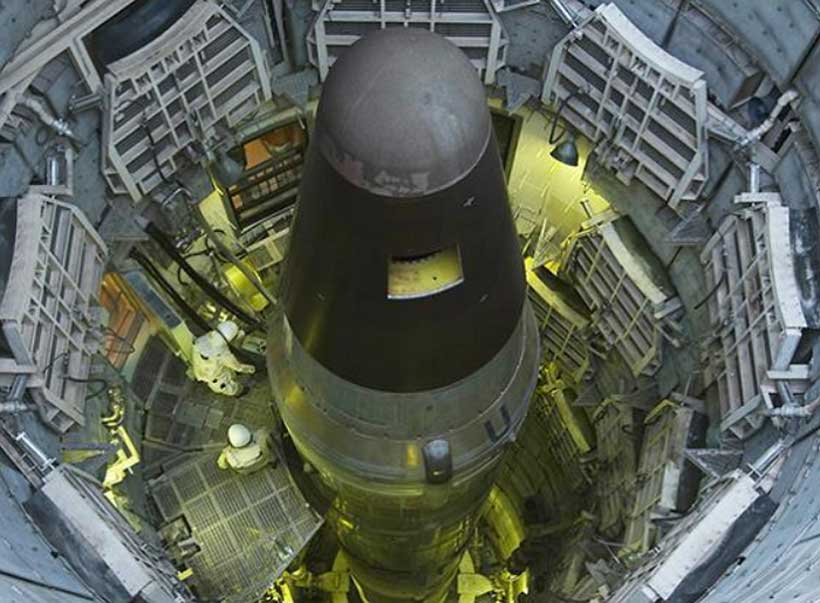
Against this backdrop, it is not difficult to understand the argument that U.S. tactical nuclear weapons should be redeployed to South Korea. Their greatest value would be political as much as military. A visible presence of U.S. nuclear forces within the Korean Peninsula would make it harder to raise doubts about extended deterrence. It would signal that Washington has directly linked its credibility with South Korea’s survival, instead of leaving deterrence as an abstract promise issued from afar.
Such a disposition would make North Korea’s calculus more complex. Pyongyang might believe that limited nuclear use—or mere nuclear blackmail alone—could paralyze South Korea’s decision-making while driving a wedge between Washington and Seoul. A theater-level U.S. nuclear presence would reduce the chances of misjudgment by clearly demonstrating that nuclear coercion would trigger immediate and destructive retaliation.
There would also be benefits regarding domestic assurance. Many South Koreans are increasingly raising doubts about whether simple consultation alone would be sufficient to respond to a nuclear-armed North Korea—roughly 76 percent of South Koreans support indigenous nuclear armament. The existence of visible U.S. nuclear weapons could alleviate the voices demanding an independent South Korean nuclear arsenal—the path toward independent nuclear capability would entail far greater diplomatic, economic, and strategic costs. In that sense, the redeployment of tactical nukes could not be viewed as a step toward nuclear armament but as a way to prevent it.
The problem of the so-called dual contingency issue adds another layer. If U.S. and Japanese assets are thinned out due to a crisis in Taiwan, tactical nukes could play the role of a last-resort safety mechanism that could deter North Korea’s opportunistic behavior. The message would be that the nuclear threshold on the Korean Peninsula would remain intact despite U.S. conventional arms being stretched in other regions. In this context, the West German experience during the Cold War era matters. Nuclear sharing was not simply about weapons. It was also related to alliance discipline, joint planning, and visibly integrating U.S. power into frontline defense.
Nevertheless, its shortcomings are equally serious. Redeployment would make South Korea more explicitly a battlefield in North Korean planning. To be sure, North Korea already targets South Korea. However, the very existence of U.S. nuclear weapons on Korean soil would strongly incentivize Pyongyang to attack storage sites, air bases, ports, and command facilities during the early stages of the conflict. In that sense, tactical nuclear weapons could increase North Korea’s burden to act swiftly before losing its own nuclear or missile forces.
Furthermore, issues concerning credibility would not disappear. If the weapons continue to remain under U.S. control, South Korea would still not possess independent launch authority. If more shared arrangements are created, the U.S.-ROK alliance would encounter extremely sensitive matters such as custody, authorization, delivery systems, and escalation control. These problems are far from simple technological details. Rather, they are the quintessential parts of sovereignty, alliance management, and crisis stability.
Regional ramifications could be substantial. China would almost certainly frame the redeployment of tactical nuclear weapons as part of a U.S.-led anti-China containment strategy. In response, Beijing could conduct economic coercion, apply military pressure near the Yellow Sea, expand support for North Korea, or accelerate its own nuclear deployment. Russia—already moving closer to North Korea—could also react by deepening military-technical cooperation with Pyongyang. A measure intended to deter North Korea could paradoxically intensify the broader strategic rivalry surrounding South Korea.
There is also a cost related to nonproliferation. Similar to NATO nuclear sharing, South Korea would not necessarily violate the NPT if nuclear weapons are maintained under U.S. control. Nonetheless, some countries might still politically interpret it as nuclear escalation in Northeast Asia. This could stimulate countries including Japan to reinitiate their own nuclear debates, ultimately weakening one of the few remaining restraints that buttress the regional security order.
Moreover, tactical nuclear weapons could not address many of the most likely threats that South Korea could face in the near future. They could not prevent cyber-attacks, gray-zone maritime coercion, special operations, artillery fire, or missile salvo launches kept below the nuclear threshold. Overemphasizing nuclear deterrence could overlook urgent investments including missile defense, C-UAS, hardened infrastructure, civil defense, ammunition stockpiling, force dispersal, and conventional strike capability.
Domestic political elements also should not be underestimated. Public support for redeployment could appear relatively strong in poll results—approximately 66 percent of respondents support it. Yet, if specific communities are asked to host nuclear weapons, China implements economic retaliation, or South Korean people perceive that South Korea has become a strong candidate for a nuclear strike, such support may lose momentum over time. In that sense, West Germany’s experience once again offers a relevant warning: nuclear-related institutions provided relief for some elites, but they also caused intense protest and social polarization.
For these reasons, South Korea should not approach tactical nuclear issues simply as a binary choice between redeployment and inaction. A more cautious path is a phased strategy that maintains flexibility while strengthening deterrence. U.S.-ROK nuclear consultation should be practically operated with deeper South Korean participation in nuclear planning, crisis response exercises, war gaming and tabletop simulations, and nuclear-conventional integration. Instead of improvising shortly after a crisis, nuclear consultation should become credible prior to a crisis.
Washington and Seoul could also review flexible or rotational nuclear signaling rather than immediate permanent deployment. More frequent visits by U.S. strategic assets, visible military exercises, the introduction of nuclear-capable bombers, and crisis-based deployment options could strengthen deterrence without placing the immediate political burdens that permanent deployment would entail.
At the same time, South Korea should harden its own resilience to prepare against a two-front regional crisis. Multi-layered missile defense architecture within the context of the Korean Air Missile Defense System (KAMD), counter-artillery capabilities, the survivability of air bases, stockpiling of fuel and munitions, port security, cybersecurity, and civilian continuity plans are not peripheral matters. Instead, they are the very foundation of deterrence. Tactical nuclear weapons cannot compensate for vulnerable critical infrastructure.
Closer cooperation with Japan is inevitable. A Taiwan contingency would unavoidably involve military bases in Japan, USFJ, missile defense networks, maritime logistics, and rear-area operations. If U.S. and Japanese resources are diffused, South Korea should be prepared to deter North Korea when immediately usable external assets are noticeably reduced. Therefore, trilateral planning should include not only a Taiwan scenario but also a situation where North Korea opportunistically escalates tensions during a Taiwan contingency.
The West German lesson is not that every frontline ally should deploy nuclear weapons on its territory. It is that the credibility of deterrence should be backed up by institutions, planning, and visible commitment. West Germany used NATO’s institutional mechanisms to deeply align its own defense with the United States. South Korea, too, should pursue an identical basic objective in the Asiatic conditions of the twenty-first century.
Tactical nuclear weapons could offer practical advantages to South Korea: stronger reassurance, stronger deterrence, and a more visible U.S. security commitment. However, at the same time, they accompany notable disadvantages—escalation risk, Russian backlash, domestic political controversies, and potential infringement of nonproliferation norms.
South Korea’s problem hinges not simply on the fact that North Korea possesses nuclear weapons. It is that North Korea is developing a more usable nuclear doctrine, continuously improving its missiles, and learning lessons from the Russo-Ukraine war, while operating in a region where a Taiwan contingency could thin out U.S. and Japanese resources. This reality makes debates on tactical nuclear weapons unavoidable. But the answer should be strategic and not emotional. What Seoul should seek is not symbolic nuclear assurance, but credible deterrence—integrated planning, resilient conventional forces, stronger U.S.-Japan-South Korea cooperation, and a nuclear consultation system that North Korea, China, and Russia could all seriously accept.
