


“It must not be forgotten that it is perhaps more dangerous for a nation to allow itself to be conquered intellectually than by arms.” –Guillaume Apollinaire, “The New Spirit and the Poets” (1917)
No matter what US President Donald Trump may call his Iran peace plan, it will be limited in duration and irrelevant to American and Israeli war objectives. At best, following the June 2026 Memorandum of Understanding (MoU), risks of Iranian nuclear weapons and regional nuclear war will remain unchanged. At worst, Trump’s clumsily incoherent diplomatic efforts will enlarge these risks.[1]
To clarify, certain antecedent questions warrant prompt consideration. Are there any ascertainable war probabilities for strategists in Washington and Jerusalem to identify and evaluate? As an immediate reply, no science-based response could be reassuring.
In logic and mathematics, probabilities must be based on a determinable frequency of pertinent past events (here, nuclear weapons use). But because there has never been a nuclear war, the US and Israel will have to rely on continuously-refined deductive analyses. Applying cautionary words of Guillaume Apollinaire, this means not allowing these countries “to be conquered intellectually.”
Stay ahead of the geopolitical week.
MD Briefing delivers expert analysis across five global fronts — the Indo-Pacific, energy, geoeconomics, European security, and the Middle East — every Monday morning. Free.
“Everything is very simple in war,” says Carl von Clausewitz in On War, “but even the simplest thing is very difficult.” In world politics, managing nuclear risk is never a matter for sycophantic politicians or simplifying pundits. It is, rather, an intellectual challenge, one that requires informed scholars of uniquely high caliber.
What more should American and Israeli leaders know about upcoming strategic challenges? The reply: “A great deal.” To wit, capable scholars will need to calculate multiple ways in which to manage escalation processes during a nuclear crisis. Ideally, in meeting this expectation, such calculations could achieve “escalation dominance” without incurring existential risks.
There will be variously intersecting details. For one, this complex military imperative would be unique or sui generis (that is, without historical precedent) and could heighten the chances of both an unintentional and inadvertent nuclear war. Even in a future stand-off with a non-nuclear adversary such as Iran, the United States or Israel could reach a point (suddenly or incrementally) where it would openly threaten or actually use nuclear weapons. In technical terms, this fearsome scenario would represent an “asymmetrical nuclear war.”
In the ongoing case of Iran, a primary struggle of competitive risk-tasking would be tackled most convincingly by measured nuclear threats. Ipso facto, Israel’s deterrence obligations will require prior retreat from “deliberate nuclear ambiguity” and be complicated by Iran-supported aggressions of sub-state proxies (e.g., Shiite militia Hezbollah). In the still-unsettled war, Iran and Hezbollah have effectively operatedagainst Israel as a “hybrid adversary.”
From time to time, to best ensure credible deterrence postures in a relentlessly “balance-of-power” world, the United States and Israel will need to display accelerating willingness to take exceptional risks. Such a more-or-less coordinated display would be necessary in order to “dominate” crisis escalations. Without such a conspicuous display, even a “weaker” enemy could emerge victorious.
Today, because meeting this obligation[2] could result in an accidental or inadvertent nuclear war, capable American and Israeli strategists should determine pre-crisis the “correct” balance between nuclear risk-taking and nuclear war avoidance. Once an authentic nuclear crisis was actually underway, it could already be too late to make gainful strategic decisions in Washington and/or Jerusalem.
There is more. By definition, such existential determinations would need to be calculated without any predictive benefits of history. Among other things, it would be a grave mistake for analysts and politicians to assume that a nuclear war between states must always reflect deliberate and rational decision-making processes. Currently, the highest risks of a nuclear war involving Russia, India, China, North Korea or Pakistan would seemingly involve computer accident or decisional inadvertence.
With all this in mind, how should a bewildered American president proceed? In protecting the United States (and Israel) from deliberate nuclear attack, American strategists would “normally” have to accept core assumptions of enemy rationality. Still, even if this assumption were reasonable and well-founded, there would remain assorted dangers of an unintentional nuclear war. These potentially existential dangers could be produced by enemy hacking operations, computer malfunction (accidental nuclear war) or decision-making miscalculation.
In the vastly indecipherable third scenario, damaging synergies could arise that would be difficult or impossible to halt. Moreover, as these synergies would develop within a global context that is nuclear focused and without historical precedent,critical survival decisions might need to be ad hoc or “seat of the pants” judgments. Here, synergistic interactions would be those in which “whole” event outcomes would exceed the sum of their constituent “parts.”
Since 1945, the classical balance of power has been transformed, in part, into a “balance of terror.” Prima facie, and to a largely unforeseeable extent, any geo-strategic search for “escalation dominance” by parties to a potentially nuclear conflict would enlarge the risks of an inadvertent nuclear war. These often-underestimated or ignored risks would include nuclear war by accident or by decisional miscalculation.
The “solution” here would not be to wish-away the common search for “escalation dominance” (after all, any such wish would be contrary to the survival “logic” of anarchic world politics), but to manage all prospectively nuclear crises at their lowest possible levels of destructiveness. Wherever feasible, it would be best to avoid such crises altogether and to maintain prudent “circuit breakers” against strategic hacking and technical malfunction. Nonetheless, to fashion more secure modes of nuclear war avoidance, a more reliable strategy than wishful thinking would be required.
There is still more to consider. Existential conflict risks to the United States and Israel will be related to the country’s formal and informal alliance arrangements. Inter alia, US and Israeli defense policy planners should more explicitly consider changing ties between their countries and Sunni Arab states.
In strategic matters, complex problems require complex remedies. Even a non-nuclear Iran could create existential hazards for Israel by expanding the frequency and intensity of surrogate terrorist operations. If such enemy creation were to succeed in bringing Israel “to the brink,” Jerusalem could suddenly find itself using pre-calibrated portions of its nuclear arsenal. Though this scenario reveals a “last resort” narrative, it is by no means inconceivable. To avoid such a scenario, Israel will have to shift its nuclear deterrence posture from “deliberate nuclear ambiguity” to “selective nuclear disclosure.”
Iran is still pre-nuclear, but codified terms of the Islamabad Memorandum effectively allow uranium enrichment and ballistic missile production. Accordingly, Iran will retain its capacity to use radiation dispersal weapons and launch conventional rockets at Israel’s Dimona nuclear reactor. Because Tehran maintains close military ties to Pyongyang, it is conceivable that a nuclear North Korea could sometime operate as a strategic “stand-in” for a not-yet-nuclear Iran.[3] Should that happen, Israel would require enhanced strategic support from the United States. Israel could not “win” a nuclear war with North Korea.
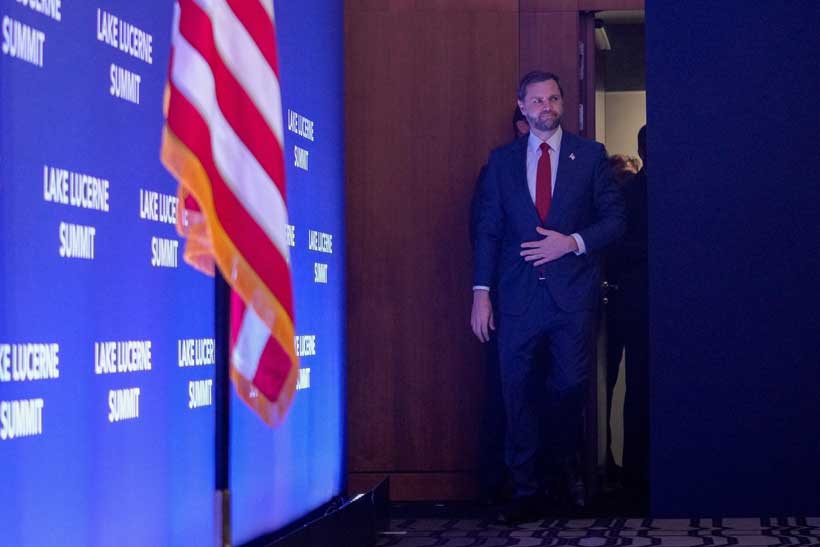
What more is vital to a full understanding of Israel-US security interdependencies? Israel’s nuclear posture, whether ambiguous or selectively disclosed, could have especially serious consequences for US security and vice-versa. Currently, Israel has no nuclear adversaries in the region, but even the war-delayed approach of a nuclear Iran could encourage sudden or rapid nuclearization among certain Sunni Arab states or Turkey. Plausibly, non-Arab Pakistan, hailed as a “peacemaker” by US Vice President J D Vance in Switzerland on June 21, 2026, could become a direct adversary of the United States and Israel.
There are variously salient clarifications. Pakistan is an already-nuclear Islamic state with close ties to China. Pakistan, like Israel, is not a party to the Nuclear Nonproliferation Treaty or NPT. But Pakistan, unlike Israel, has openly opted for a nuclear counterforce or nuclear war fighting strategy. For some reason, this last point was ignored by Vice-President Vance at the Swiss summit.
Regarding the continuing prospect of Iranian nuclear weapons, Israel should consider whether and to what extent there could be an expedient role for nuclear threats against a non-nuclear foe. In part, at least, “correct answers” would depend on Jerusalem’s prior transformations of “deliberate nuclear ambiguity” (the “bomb in the basement”) into visible postures of “selective nuclear disclosure.” Though any such consideration would concern matters that lack historical precedent, Israel has no logical alternative to launching appropriately deductive analytic investigations.[4] In the ongoing belligerence between Israel and Iran, the core battle-front for Jerusalem should always be an intellectual “territory.”
A specific question presents itself. What is the probabilistic difference between a deliberate or intentional nuclear war and one that would be unintentional or inadvertent? Though rarely discussed among general publics, unless this core polarity is systematically considered, little operational utility could be predicted about the likelihood of a nuclear conflict.
As there has never been an authentic nuclear war(Hiroshima and Nagasaki don’t “count”),[5] determining relevant probabilities must become a sorely problematic task. In logic and mathematics, true probabilities always derive from the determinable frequency of pertinent past events. Because there have been no such events, both Israel and the United States will need to make their most delicate strategic decisions without a traditionally indispensable capacity. This is the ability to assign tangible odds to intersecting threat scenarios, some of which could involve synergistic interactions.
In essence, going forward, capable Israeli and American analysts will have to devise cost-effective strategies for calculating (and thus averting) a nuclear war. Whatever the particularities, all relevant calculations will vary (among other things) according to (1) presumed enemy intentions; (2) accident or hacking intrusions; and/or (3) plausibility of decisional miscalculations. When taken together as cumulative categories of nuclear war threat, these three component risks of unintentional nuclear war may also be described as “inadvertent.”
There are further clarifications. Any specific instance of an accidental nuclear war would be inadvertent. Not every case of inadvertent nuclear war, however, would be the result of an accident.
Some additional warnings are required. The problem of accidental and inadvertent nuclear war should never be approached by Israeli or American security policy-makers as a narrowly political or tactical issue. Rather, informed by best-available historical understandings and by carefully refined analytic capacities, military planners in Washington and Tel Aviv should prepare themselves to deal with a large variety of overlapping explanatory factors. At times, these complex intersections could be “force-multiplying.”
For both Israel and the United States, the North Korean nuclear threat should be kept in plain sight. In dealing with derivative nuclear war risks involving North Korea, no single concept could prove more important than synergy. Unless synergistic interactions are reliably and correctly evaluated, the American president could sometime underestimate the cumulative or total impact of nuclear engagement. The flesh and blood consequences of such underestimations could defy both analytic imaginations and post-war justifications.
There is more. In any strategic risk assessments regarding North Korean military nuclear intentions and Kim Jung Un’s nuclear forces, the concept ofsynergy will warrant analytic pride of place.[6] The only conceivable argument for an American president choosing to ignore ascertainable effects of synergy would be that US defense policy considerations were “too complex.” When fundamental US national security issues are at stake, of course, any such dismissive argument would be unacceptable on its face.
For both the United States and Israel, the competitive dynamics of nuclear deterrence will not simply fade away. In our relentlessly anarchic world order, the US president and Israeli prime minister should prepare to prevail in all complex struggles for “escalation dominance.” In the best of all possible worlds, to be sure, there would be no need for such corrosive preparations, but we obviously do not yet live in a “Leibnizian” world.[7]
For the foreseeable future, nuclear war avoidance will require the United States and Israel to continuously refine and partially coordinate national nuclear deterrence postures. In all imaginable scenarios, the common crisis task in Washington and Jerusalem will be to achieve “escalation dominance” against Iran or other pertinent adversaries without simultaneously enlarging risks of a nuclear war. For Israel and the United States, significant adversaries would be states, sub-states or “hybrid” foes that could be either rational or non-rational in nuclear decision-making processes.
In the final analysis, looking less to “common sense” than to science,[8] planners in Israel and the United States will need to envision all considered strategic policy refinements as an intellectualchallenge. In this connection, these planners should understand that no meaningful elements of national security could be provided by an American president’s deliberately anti-intellectual reasoning.[9] More than anything else, what will be required for nuclear risk management in Jerusalem and Washington are logic-focused decision-makers, courageous national leaders willing to prioritize complex challenges of “mind” over simplifying concessions of politics.
Presently, at least, this requirement has not been met.
[1] Regarding such incoherence, Trump’s entire effort is founded on an illegitimate appeal to military force, an error in reasoning or fallacy known in formal logic as the argumentum ad baculum.
[2] The perceived capacity to dominate escalation during potentially nuclear crises is a sine qua non for credible American and Israeli nuclear deterrence.
[3] Earlier, North Korea had helped Iran-surrogate Syria build a nuclear reactor, the same facility that was destroyed by Israel’s Operation Orchard on September 6, 2007. Though, unlike Operation Opera, this preemptive attack in the Deir ez-Zor region was presumptively a second (after the Iraqi Osiraq reactor bombing in 1981) expression of the “Begin Doctrine.” Under international law, both Israeli reactor attacks are correctly described as expressions of “anticipatory self-defense.”
[4] In the words of strategic thinker Anatol Rapoport: “Formal decision-theory does not depend on data…. The task of theory is confined to the construction of a deductive apparatus, to be used in deriving logically necessary conclusions from given assumptions.” See Rapaport’s seminal Strategy and Conscience (1964).
[5] The atomic attacks on Japan in August 1945 represented nuclear weapons use in a conventional war.
[6] See earlier, by this author, at Harvard National Security Journal (Harvard Law School): Louis René Beres, https://harvardnsj.org/2015/06/core-synergies-in-israels-strategic-planning-when-the-adversarial-whole-is-greater-than-the-sum-of-its-parts/
[7] In Candide, Voltaire satirizes the philosopher Leibniz, using him as model for the foolishly-optimistic “Dr. Pangloss.”
[8] Observes philosopher Jose Ortega y’ Gasset about science (Man and Crisis, 1958): “Science, by which I mean the entire body of knowledge about things, whether corporeal or spiritual, is as much a work of imagination as it is of observation. The latter is not possible without the former.” This observation is now especially relevant to the common American/Israeli struggle against jihadist foes.
[9] From the standpoint of philosopher Jose Ortega y’Gasset, American president Donald J. Trump is the quintessential “mass man.” “The mass-man,” says Ortega in The Revolt of the Masses (1932), “has no attention to spare for reasoning; he learns only in his own flesh.”
