The world is undergoing what might be the greatest geopolitical transformation since the end of World War II. The rule-based liberal international order that developed in the post-war era based on free trade, peaceful conflict resolution, collective security, and multilateral cooperation governed by international law is under increasing attack. While threats and challenges have existed since its very inception, recent years has seen the crumbling of the very foundation of this regime, with the retreat of United States (US) from its conventional hegemonic role as guardian of this international order due to rising powers like China challenging US hegemony, and the US’ voluntary disengagement under President Donald Trump’s doctrine of America First. Are we witnessing the decisive demise of the rule-based order, or can it be salvaged and reborn?
The anarchisation of the free trade regime
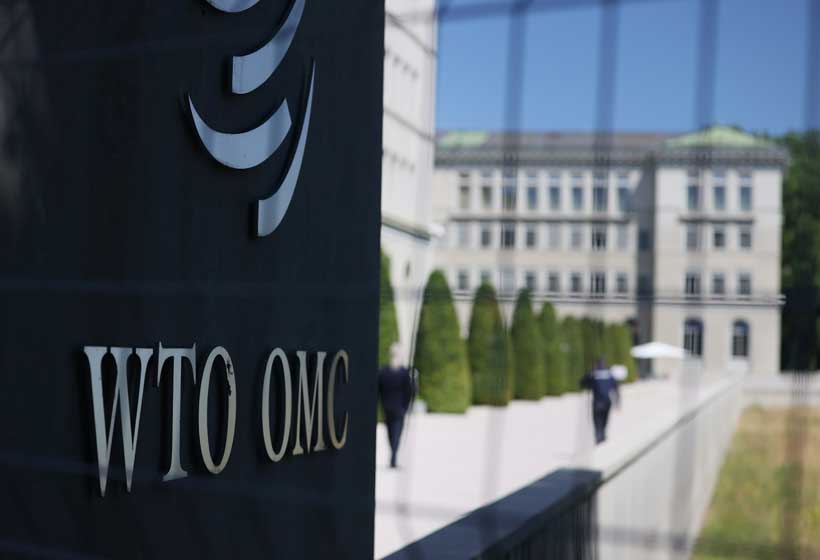
First, free trade is increasingly replaced by protectionism. This cornerstone of the postwar liberal international order is epitomised in the World Trade Organization (WTO)—a framework minimising global trade barriers and settling trade disputes between virtually every country in the world. However, the WTO has long been under attack by the US for being rigged against its national interests, culminating with Trump’s refusal to approve new judges for the WTO Appellate Body, leading to the effectual suspension of the organisation’s dispute settlement mechanism since 2019. This was exacerbated by the US imposition of overnight, double-digit tariffs on a variety of goods and countries, including major trading partners like China, Brazil, Canada and the EU in April 2025, and the renegotiation of bilateral trade agreements, outside of the WTO system. While currently adjusted to a universal baseline of 10%, new tariffs are expected next month.
The weaponisation of economic interdependence
Stay ahead of the geopolitical week.
MD Briefing delivers expert analysis across five global fronts — the Indo-Pacific, energy, geoeconomics, European security, and the Middle East — every Monday morning. Free.
Furthermore, Trump has used tariffs as a bargaining chip to push through new bilateral trade agreements that serve US industrial interests, and has wielded the threat and actualised tariffs as a punitive tool for other geopolitical ends. This has disrupted global trade and increased economic uncertainty, raising input and consumer prices in the US and beyond, and is pushing countries to follow the US protectionist path to reduce their susceptibility to global supply chain disruptions and the weaponisation of international trade. For example, actors like the EU and China have responded in kind to the US tariffs, and are cultivating alternative trade partnerships as the US fragments long-standing ties. Thus, the world is entering what analysts call a ‘fragmentation doom loop,’ threatening to undermine the hard-won faith in and compliance with the rule-based economic order for some time to come.
The breakdown of non-aggression
Furthermore, the world is witnessing a breakdown in compliance with international law with the rise of territorial aggression and military force outside the United Nations (UN) framework, which bans the use of force without the authorisation of the UN Security Council, such as the US invasion of Venezuela and the toppling of President Nicolás Maduro at the beginning of the year in violation of the fundamental international principles of national sovereignty and territorial integrity. Similarly, the US has made claims on territories like Canada and Greenland, even threatening forceful annexation. in blatant violation of the UN Charter.
Lawless war
Relatedly, the US launched unprovoked ‘pre-emptive’ attacks in contravention of the UN Charter on Iran in February 2026, claiming against the evidence of the International Atomic Energy Agency (IAEA) and other international observers that Iran posed an imminent nuclear threat. US-Israeli warfare has included attacks on schools and hospitals in Iran and Lebanon in clear violation of the international laws of war laid down in the Geneva Conventions. Likewise, the Iranian closure of the Strait of Hormuz and the inability of the world to break it has dealt a debilitating blow to the international laws of the sea as formulated in UNCLOS, stipulating that international ships should be guaranteed safe and uninterrupted passage and restraining states’ rights to exercise sovereignty over territorial waters when these constitute important international routes.
Crumbling collective security
These violations are exacerbated by the long-standing paralysis of the UN Security Council—a key pillar of the rule-based, non-violent multilateral order—with the emergence of a multi-polar system in which the permanent members of the Council increasingly exploit their veto rights to bloc actions and resolutions that disadvantage their national geopolitical interests. For example, Russia has blocked various UN resolutions condemning its invasion of Ukraine, while the US and China have blocked condemnations relating to Israel’s actions in Gaza, and Taiwanese independence, respectively. This severely undermines the moral credibility and the geopolitical efficiency of the Security Council. In a similar vein, other international organizations are being increasingly marginalized, with cuts in US funding and the country’s outright exit from over 60 organizations and agreements including UNESCO, the Paris Climate Agreement and the WHO under the Trump administration, illustrating a regression of the rule-based order from multilateralism to unilateralism.
Unilateral ‘peace’
This trend is clearly illustrated by contemporary peace negotiations. With multiple conflicts in the world, multilateral peace efforts through the UN system would seem more relevant than ever. However, President Trump has endorsed a role of unilateral peacemaking, imposing stringent conditions under military and economic threats in order to strike peace agreements that serve US strategic and economic interests. For example, the US threatened to cancel military aid to Ukraine accusing the country of freeriding on US resources, only retreating from the threats after a minerals agreement in effect giving the US 50% of the profits of Ukraine’s globally significant critical minerals industry.
Perhaps the most salient example of this anti-multilateral trend is the peace deal announced between Iran and the US on June 17. This constitutes Trump’s proposal for an improved deal compared to the internationally negotiated and mediated nuclear agreement (JCPOA) signed with Iran in 2015, from which the US withdrew under the first Trump administration. However, the new bilateral agreement does not involve the UN or the IAEA and indeed contains clauses of the US cancelling sanctions and contravening UN Security Council resolution against Iran. This delivers another severe blow to the multilateral conflict-resolution of the rule-based order in favor of bilateral opportunistic approaches with little regard for international norms.
A post-liberal order?
Hence, while lack of respect for international law and rule based order has always existed, the retreat of the world’s largest economy and military suggests that countries have less repercussions to fear, inciting more violations of the rule-based order. But this does not mean that the world is linearly headed toward anarchy. Alternative actors and geopolitical alignments are emerging, such as the BRICS group of Brazil, Russia, Iran, China and South Africa, the EU, the G20 and the Shanghai Cooperation Organization, and powers like China, India and Pakistan. Thus, the world might not necessarily be heading towards anarchic fragmentation, but rather be on a trajectory of diversification toward a multipolar, polycentric order. Hence, the rule-based international order will change. The question remained what states build in its place.