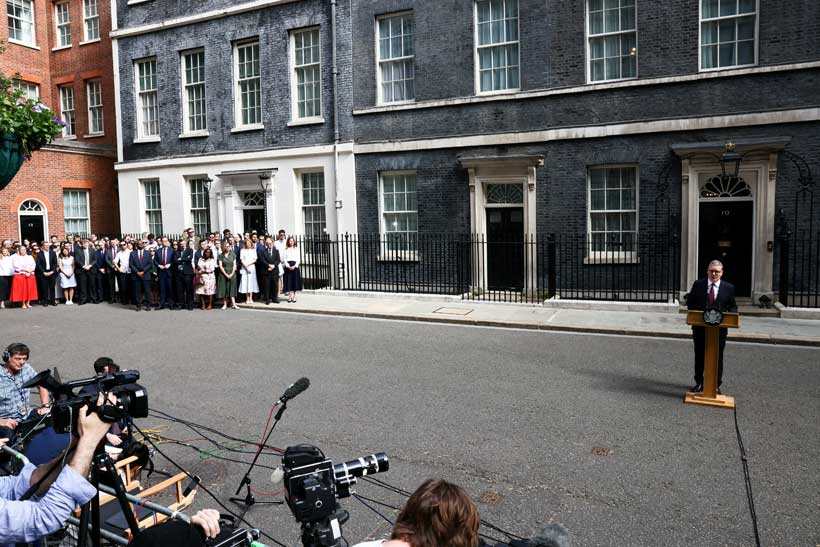
British Prime Minister Keir Starmer announced his resignation on Monday, making him the seventh leader of the country in a decade. This ongoing political turmoil can be traced back to the Brexit referendum that occurred ten years ago. Since that event, the UK has been trying to establish its own direction but has faced challenges in improving its slow-growing economy, burdened by significant debts and increasing welfare costs, especially amid rising global uncertainties.
The Brexit saga began in June 2016 when the UK voted to leave the European Union, causing a major shock worldwide. Prime Minister David Cameron resigned following the vote, leading to Theresa May taking over. In June 2017, searching for a stronger parliamentary majority to facilitate Brexit, May called for a snap election but ended up losing her majority and had to form a government by collaborating with the Democratic Unionist Party.
May’s time in office was marred by Brexit-related stalemates, leading her to resign in May 2019, after which Boris Johnson, a high-profile pro-Brexit figure, became Prime Minister. Johnson won a significant election victory in December 2019, allowing him to finalize Brexit. The UK officially exited the EU on January 31, 2020, becoming the first nation to do so. Johnson’s leadership faced turbulence during the COVID-19 pandemic, and after multiple scandals, he stepped down in July 2022.
Liz Truss briefly succeeded Johnson, but her policy decisions created financial instability, leading her to resign after only 44 days. In October 2022, Rishi Sunak became Prime Minister, vowing to restore government stability and focusing on key issues like the economy and immigration. Facing declining poll numbers, Sunak called for an election to be held on July 4, 2024.
Following his election victory, Starmer promised to end political chaos, but he warned the public that the economic situation they inherited was dire. By October 2024, his administration proposed a budget with substantial tax increases to address budget deficits, which drew criticism from business leaders.
As time progressed, right-wing party Reform UK gained popularity, even surpassing Labour in some polls. Starmer faced increasing scrutiny, experiencing internal party challenges and resignations, including health minister Wes Streeting and defense minister John Healey, both citing issues with his leadership.
Meanwhile, Greater Manchester Mayor Andy Burnham secured a significant electoral victory against Reform UK, increasing his chances of launching a leadership challenge against Starmer, bolstered by Streeting’s support. This ongoing political landscape reflects the deepening uncertainties within the Labour Party and the broader implications for British governance.
With information from Reuters