


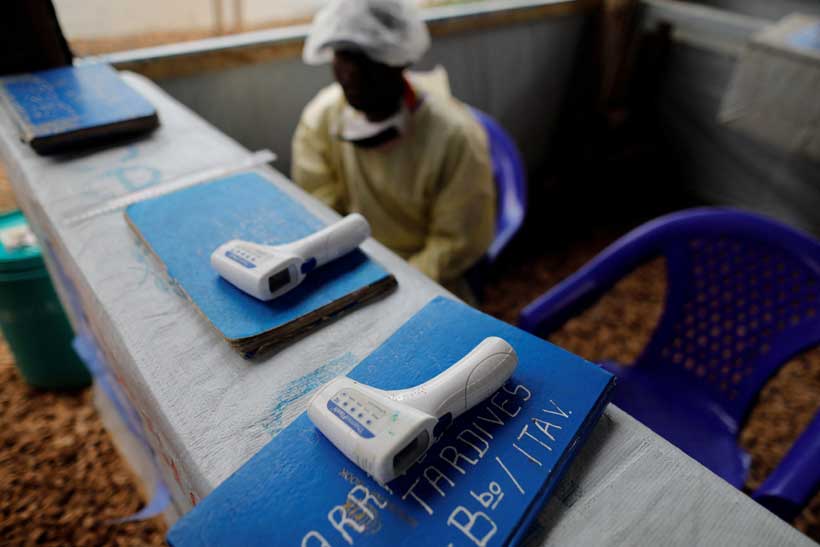
The Ebola outbreak in eastern Democratic Republic of the Congo continues to worsen, with humanitarian officials warning that the epidemic has not yet reached its peak and could persist for up to a year.
The outbreak involves the rare Bundibugyo strain of Ebola, a variant for which there is currently no proven vaccine or specific treatment. Health authorities have reported more than 800 infections and nearly 200 deaths across multiple provinces, raising concerns about the disease’s continued spread.
Outbreak Continues to Expand
According to humanitarian and health officials, Ebola cases are increasing across three provinces in eastern Congo, making containment efforts increasingly challenging.
The virus spreads through direct contact with bodily fluids of infected individuals and can remain transmissible even after death, making safe burial practices a critical component of outbreak control.
Stay ahead of the geopolitical week.
MD Briefing delivers expert analysis across five global fronts — the Indo-Pacific, energy, geoeconomics, European security, and the Middle East — every Monday morning. Free.
Red Cross officials say the full scale of the epidemic remains uncertain, as health workers continue to identify new cases and trace transmission chains.
Why It Matters
Ebola outbreaks can escalate rapidly if containment measures are delayed or resisted. The Bundibugyo strain is particularly concerning because health authorities lack the proven vaccines and treatments available for some other Ebola variants.
The outbreak poses risks not only to affected communities but also to regional health systems already under pressure from limited resources, infrastructure challenges, and ongoing humanitarian crises.
A prolonged epidemic could strain healthcare services, disrupt local economies, and increase the need for international assistance.
Key Stakeholders
- Congolese government health authorities managing surveillance and response efforts.
- International Federation of Red Cross and Red Crescent Societies (IFRC) supporting community outreach and safe burials.
- World Health Organization and other international health partners coordinating disease-control measures.
- Local communities whose cooperation is critical for contact tracing, treatment, and prevention efforts.
- International donors and humanitarian organizations funding the emergency response.
Challenges Facing the Response
Health officials report that the response has been complicated by shortages of treatment facilities and difficulties reaching all affected communities.
Community mistrust remains a major obstacle. According to the Red Cross, aid workers have faced threats, verbal abuse, and attacks while attempting to carry out awareness campaigns and safe burial operations.
These challenges can slow detection of new infections and make it harder to interrupt transmission chains.
What’s Next?
Authorities are expected to expand surveillance, increase treatment capacity, and intensify public awareness campaigns in affected regions.
International health organizations are also likely to increase support as officials work to identify infections more quickly and strengthen outbreak containment measures.
Given the uncertainty surrounding the scale of transmission, experts warn that the epidemic could continue for many months before it is brought under control.
Analysis: Trust May Be as Important as Medicine
While medical resources remain essential, the success of the Ebola response may depend equally on public trust.
Past Ebola outbreaks have shown that fear, misinformation, and resistance to health measures can significantly undermine containment efforts. Without strong community cooperation, even well-funded response strategies struggle to stop transmission.
The absence of a proven vaccine or treatment for the Bundibugyo strain raises the stakes further, making early detection, isolation, contact tracing, and safe burial practices the primary tools available to health authorities.
As the outbreak continues to grow, the challenge for responders will be balancing medical intervention with community engagement. If trust can be strengthened, the outbreak may be contained more quickly; if not, health officials fear the epidemic could become one of Congo’s longest-running Ebola emergencies in recent years.
With information from Reuters.
