


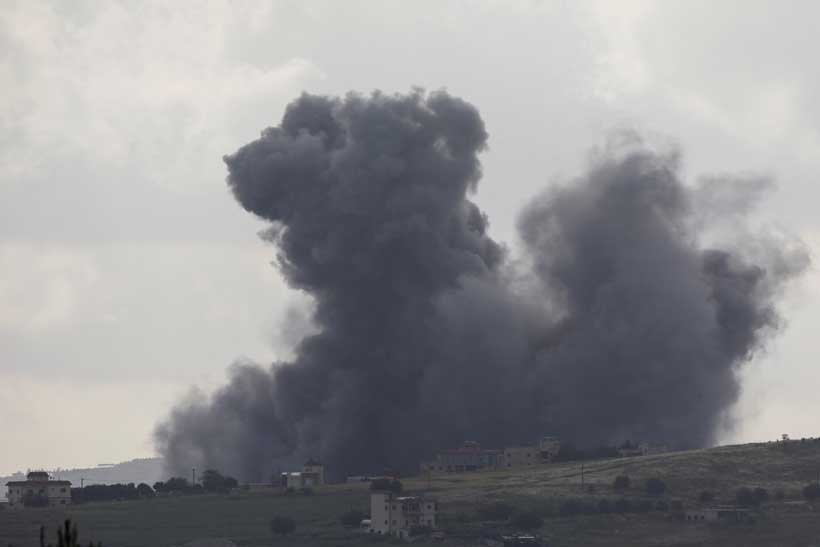
Israel has announced that it will continue military operations in southern Lebanon despite a newly agreed ceasefire, raising fresh concerns about whether the latest truce can bring lasting stability to the region.
Israeli Defence Minister Israel Katz said on Thursday that Israeli forces would remain deployed in southern Lebanon and continue targeting what Israel describes as militant infrastructure, even after Lebanon and Israel agreed to a new US backed ceasefire framework.
The announcement came just one day after both countries said they had accepted a ceasefire arrangement negotiated in Washington.
Israel to Maintain Presence in Southern Lebanon
In a statement, Katz said Israeli troops would remain in what he described as a security zone in southern Lebanon.
Stay ahead of the geopolitical week.
MD Briefing delivers expert analysis across five global fronts — the Indo-Pacific, energy, geoeconomics, European security, and the Middle East — every Monday morning. Free.
He specifically highlighted the area surrounding Beaufort Castle, a historic fortress that Israeli forces captured during recent military operations.
According to Katz, Israeli troops will continue efforts to dismantle Hezbollah related infrastructure in the area while maintaining operational freedom to respond to future threats.
The defence minister also stated that Israel retains the ability to conduct military strikes in Beirut if attacks are launched against Israeli communities or territory.
Lebanese Residents Unable to Return Home
Katz indicated that Lebanese civilians displaced by the fighting would not yet be allowed to return to areas under Israeli military control.
The decision could affect thousands of residents who were forced to flee their homes during months of hostilities along the Israel Lebanon border.
Humanitarian organizations have repeatedly warned that prolonged displacement could worsen living conditions for affected communities and complicate recovery efforts in southern Lebanon.
New Ceasefire Faces Immediate Challenges
The latest ceasefire agreement is contingent upon a complete cessation of hostilities by Hezbollah.
Lebanon and Israel announced on Wednesday that they had accepted the new US backed arrangement in an effort to reduce violence that has persisted despite previous diplomatic initiatives.
However, the agreement immediately faced scrutiny after Israel signaled that military operations would continue in certain areas.
The conflicting interpretations of the ceasefire terms have raised questions about how the arrangement will be implemented on the ground.
Previous Truce Failed to End Violence
The latest agreement follows earlier attempts to halt fighting between Israel and Hezbollah.
Both sides previously agreed to a cessation of hostilities in April, which was later extended in May. Despite those arrangements, clashes, airstrikes and military operations continued, preventing a sustained reduction in violence.
The failure of earlier ceasefires has fueled skepticism among observers about whether the new agreement can achieve lasting peace.
Strategic Importance of Southern Lebanon
Southern Lebanon remains a highly sensitive security zone due to its proximity to northern Israel and Hezbollah’s longstanding presence in the area.
Israel argues that military operations are necessary to prevent attacks and remove threats near its border.
Meanwhile, Lebanese officials and regional observers have criticized ongoing Israeli military activity, arguing that it undermines ceasefire efforts and risks triggering further escalation.
The area has repeatedly been a flashpoint for conflict over the past several decades, making any ceasefire particularly difficult to enforce.
Analysis: Ceasefire Highlights Deep Trust Deficit
The latest developments illustrate the significant challenges facing efforts to stabilize the Israel Lebanon border.
While both sides have formally agreed to a ceasefire framework, Israel’s decision to continue military operations suggests that major disagreements remain over the interpretation and implementation of the deal.
From Israel’s perspective, maintaining a military presence is viewed as necessary to prevent Hezbollah from regrouping and rebuilding infrastructure near the border. However, continued operations risk undermining confidence in the ceasefire and could provoke further confrontations.
The fact that previous ceasefire agreements failed to stop violence adds to concerns that the latest arrangement may struggle to deliver lasting results. Without effective monitoring mechanisms and mutual confidence between the parties, even limited military activity could quickly reignite broader hostilities.
The coming days will be critical in determining whether the ceasefire becomes a genuine step toward de-escalation or simply another temporary pause in a conflict that remains unresolved.
Conclusion
Although Lebanon and Israel have agreed to a new US backed ceasefire, Israel’s decision to continue military operations in southern Lebanon has cast doubt on the durability of the truce. With troops remaining on the ground and displaced civilians still unable to return home, the situation remains fragile as regional and international actors watch closely for signs of either de-escalation or renewed conflict.
With information from Reuters.
