


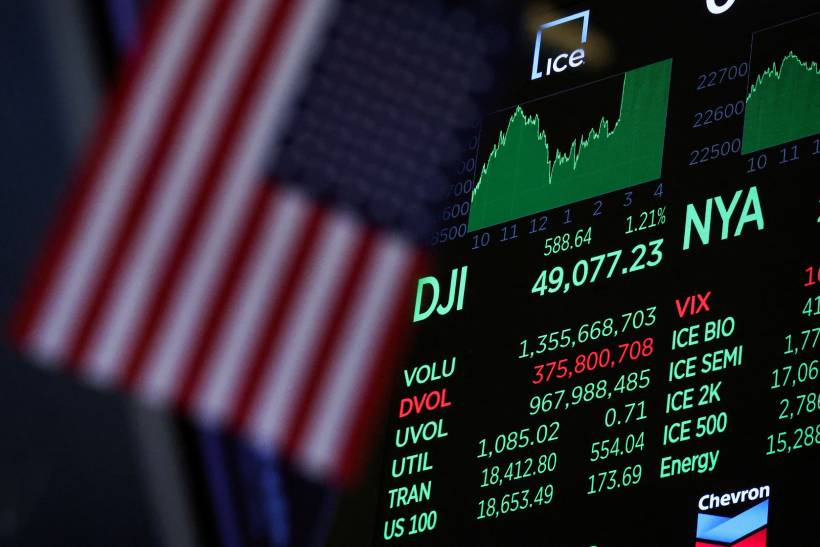
The United States economy is showing remarkable resilience despite geopolitical tensions, political uncertainty, and concerns over slowing global growth. Rather than cooling, economic activity appears to be accelerating, driven by expansive fiscal policy, robust corporate investment, resilient consumer spending, and strong financial markets. While this momentum has boosted corporate earnings and investor confidence, it has also intensified concerns that the economy may be overheating.
The growing divergence between buoyant equity markets and rising bond yields reflects an increasingly important debate: can the Federal Reserve keep inflation under control without tightening policy, or will bond markets eventually force policymakers to act?
Strong Growth Defies Expectations
Recent economic indicators suggest the U.S. economy remains far stronger than many analysts anticipated.
Nominal gross domestic product expanded at an annualized pace of nearly 8 percent during the second quarter, significantly exceeding its long term average. Consumer spending remained robust, while business investment accelerated sharply, particularly in equipment and technology infrastructure.
Stay ahead of the geopolitical week.
MD Briefing delivers expert analysis across five global fronts — the Indo-Pacific, energy, geoeconomics, European security, and the Middle East — every Monday morning. Free.
At the same time, corporate America continues to post exceptional financial results. Earnings growth among S&P 500 companies has accelerated to nearly 50 percent, supported not only by major technology firms but also by strong performances in banking, energy, materials, and consumer sectors.
The combination of rapid economic expansion and surging corporate profitability suggests that domestic demand remains exceptionally strong despite elevated inflation and global uncertainty.
Artificial Intelligence Investment Is Fueling Expansion
One of the strongest drivers of economic momentum is the unprecedented level of investment in artificial intelligence infrastructure.
Technology companies are expected to spend more than one trillion dollars this year building data centres, semiconductor capacity, cloud infrastructure, and AI computing networks. This investment boom has generated significant demand across manufacturing, construction, energy, and technology supply chains.
Rather than slowing economic activity, higher capital expenditure has become a powerful source of growth, creating jobs, supporting corporate revenues, and encouraging further private investment.
The AI boom has therefore become both a technological transformation and a macroeconomic growth engine.
Fiscal Policy Continues to Support Demand
Unlike previous economic cycles where higher inflation reduced household spending, government spending continues to provide substantial support to aggregate demand.
The United States is running annual budget deficits exceeding two trillion dollars, following additional tax cuts and spending measures enacted last year. Analysts argue that this sustained fiscal expansion has prevented demand from weakening despite higher prices.
Instead of the traditional wage driven inflation cycle, some economists now describe the current environment as a fiscal stimulus price spiral, where persistent government spending strengthens consumer demand, allowing businesses to maintain pricing power and preserve historically high profit margins.
This combination of fiscal expansion and private sector investment creates unusually strong economic momentum that monetary policy alone may struggle to offset.
Rising Wealth Is Supporting Consumer Spending
Financial markets have also played a significant role in sustaining economic growth.
Major U.S. equity indices have gained roughly 50 percent over the past two years, generating substantial wealth for higher income households that own the majority of financial assets.
As stock portfolios and real estate values continue rising, wealthier consumers have maintained strong spending despite elevated inflation and higher fuel prices. Their continued consumption supports corporate revenues, allowing businesses to expand margins further and reinforcing higher equity valuations.
This wealth effect has created a self reinforcing cycle in which stronger markets encourage greater spending, stronger earnings, and further market gains.
Bond Markets Are Sending a Warning
While equity investors remain optimistic, bond markets appear increasingly cautious.
Long term Treasury yields have climbed to multi decade highs as investors question whether inflation can return sustainably to the Federal Reserve’s target without tighter monetary policy.
Higher bond yields suggest investors believe current fiscal and economic conditions may generate persistent inflationary pressures. If inflation proves more resilient than expected, markets anticipate that either the Federal Reserve will need to raise interest rates further or investors will continue demanding higher yields to compensate for inflation risk.
Unlike stock markets, which continue rewarding corporate earnings growth, bond markets are pricing in the possibility that today’s strong expansion may eventually create greater macroeconomic instability.
Can the Federal Reserve Stay Patient?
The Federal Reserve now faces a delicate balancing act.
Aggressive rate increases could cool consumer spending, reduce corporate pricing power, and stabilize inflation expectations. However, additional tightening also risks slowing investment, weakening financial markets, and increasing borrowing costs across the economy.
If policymakers choose to remain cautious, bond markets may continue pushing borrowing costs higher independently, effectively tightening financial conditions without direct action from the central bank.
The growing disconnect between optimistic equity investors and increasingly cautious bond investors reflects uncertainty over how long the current expansion can continue without reigniting inflation.
Analysis: A Strong Economy Comes With Rising Risks
The United States currently enjoys one of its strongest periods of corporate profitability and investment in decades. Artificial intelligence spending, expansive fiscal policy, resilient consumer demand, and strong financial markets have combined to create exceptional economic momentum.
Yet those same forces are also increasing concerns that the economy may be running too hot. If inflation remains stubborn while demand continues expanding, policymakers may eventually be forced to choose between protecting growth and restoring price stability.
For now, equity markets remain focused on opportunity. Bond markets, however, are increasingly signalling that today’s economic strength could become tomorrow’s inflation problem if policy adjustments fail to keep pace.
With information from Reuters.
