


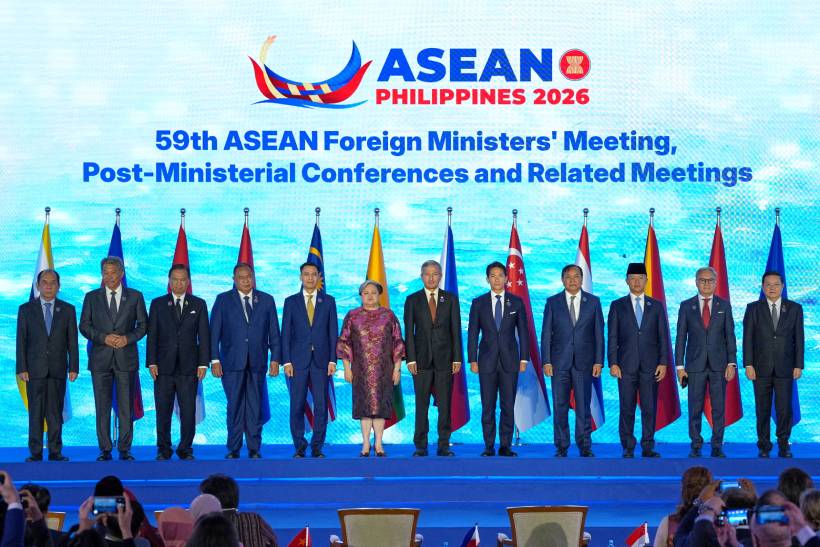
Thailand has called for a more flexible approach to engaging with Myanmar, signalling a potential shift in ASEAN’s strategy toward one of its most persistent regional crises. Speaking at ASEAN headquarters in Jakarta, Thai Prime Minister Anutin Charnvirakul urged what he described as a “calibrated re engagement” with Myanmar ahead of his scheduled meeting with Myanmar’s military leader turned president, Min Aung Hlaing, on August 6 and 7.
The proposal comes as ASEAN remains divided over how to deal with Myanmar’s military government, balancing diplomatic engagement against concerns that closer ties could undermine the bloc’s credibility and embolden the junta.
Thailand Pushes for Pragmatic Engagement
Following meetings with ASEAN Secretary General Kao Kim Hourn and Indonesian President Prabowo Subianto, Anutin reaffirmed that ASEAN’s Five Point Consensus remains the foundation of regional efforts to resolve Myanmar’s conflict.
However, he argued that the bloc should adopt a more pragmatic approach by maintaining dialogue while encouraging measurable progress on humanitarian and political issues.
Stay ahead of the geopolitical week.
MD Briefing delivers expert analysis across five global fronts — the Indo-Pacific, energy, geoeconomics, European security, and the Middle East — every Monday morning. Free.
According to Anutin, ASEAN’s long standing principle of non interference should remain intact but must be applied with greater flexibility to preserve regional unity and respond to changing realities on the ground.
Suu Kyi Meeting Signals Limited Progress
Thailand pointed to the recent meeting between detained former leader Aung San Suu Kyi and a representative of the International Committee of the Red Cross as evidence that cautious engagement may be producing results.
The meeting marked one of the rare public interactions involving Suu Kyi since the military seized power in February 2021 and has been viewed by Bangkok as a positive humanitarian development.
Anutin said the meeting aligned with Thailand’s long standing position that dialogue should remain open even amid political disagreements.
ASEAN Remains Deeply Divided
Despite Thailand’s position, significant divisions remain within ASEAN.
Since Myanmar’s military coup in 2021, the regional bloc has barred the country’s top political leaders from attending high level summits after the junta failed to implement the Five Point Consensus, which calls for an end to violence, dialogue among all parties, humanitarian assistance, and the appointment of a special envoy.
Several ASEAN members remain reluctant to restore normal engagement without tangible political progress.
Philippine Foreign Minister Maria Theresa Lazaro recently stated that Myanmar’s return to full ASEAN participation remains “far off,” reflecting continued skepticism among member states.
Legitimacy Concerns Continue to Grow
Critics argue that renewed diplomatic engagement risks providing international legitimacy to Myanmar’s military government without securing meaningful concessions.
Min Aung Hlaing became president following military organized elections in April that were widely rejected by Western governments and human rights organizations as lacking credibility.
Analysts warn that high level meetings could strengthen the junta’s regional standing while offering few guarantees of progress toward national reconciliation or democratic transition.
Regional Stability Drives Thailand’s Position
Thailand shares a long border with Myanmar and has been directly affected by the conflict through refugee flows, cross border security concerns, and economic disruptions.
These practical considerations help explain Bangkok’s preference for continued engagement rather than diplomatic isolation.
From Thailand’s perspective, maintaining communication channels may improve humanitarian access and reduce instability along the shared frontier, even if broader political solutions remain elusive.
Analysis
Thailand’s proposal reflects a growing recognition that ASEAN’s existing strategy has produced limited results after more than five years of conflict. While diplomatic isolation has demonstrated the bloc’s disapproval of military rule, it has not succeeded in reducing violence or advancing the Five Point Consensus.
Nevertheless, any move toward re engagement carries significant political risks. Without concrete commitments from Myanmar’s military leadership, closer engagement could weaken ASEAN’s collective pressure while reinforcing the junta’s legitimacy.
The upcoming meeting between Anutin and Min Aung Hlaing will therefore be closely watched as an indicator of whether ASEAN is moving toward a more pragmatic diplomatic strategy or simply recalibrating an approach that has yet to deliver meaningful peace.
With information from Reuters.
