


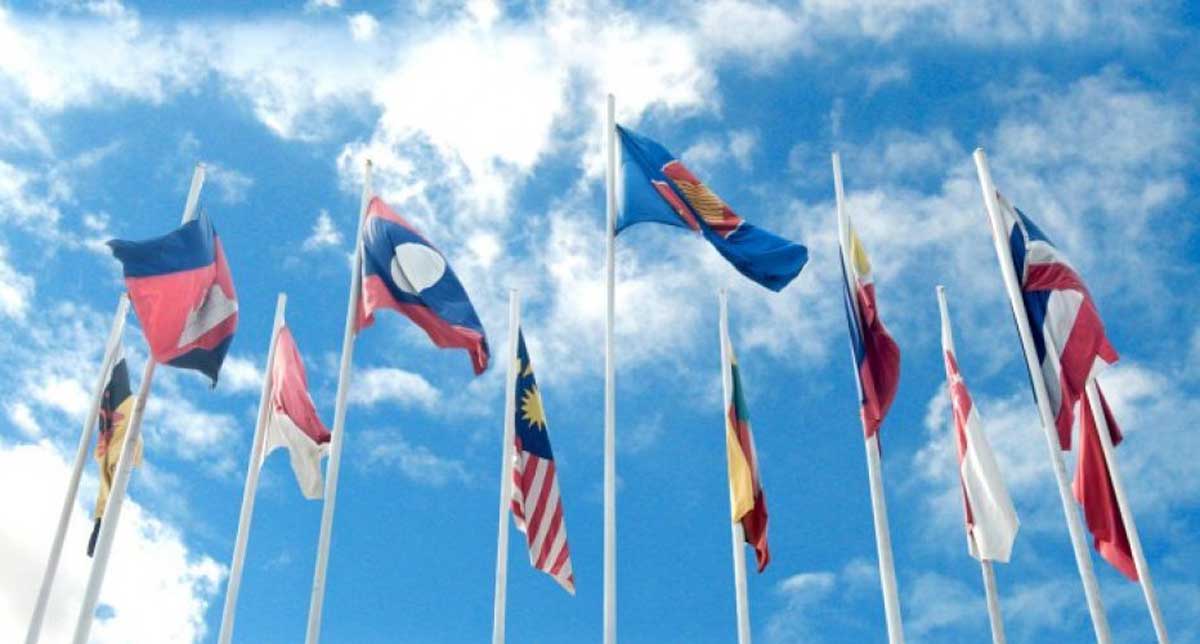
Southeast Asian foreign ministers will meet Myanmar’s top diplomat this weekend for the first in-person talks since the country’s 2021 military coup, as the Association of Southeast Asian Nations (ASEAN) weighs how to re-engage with a member state that has remained largely isolated from the bloc for five years.
The informal meeting, hosted by ASEAN chair the Philippines in Bangkok on Sunday, comes as Myanmar’s new civilian-led government seeks to rebuild ties with regional neighbours despite ongoing conflict and growing resistance to ASEAN’s peace efforts.
First high-level meeting since the 2021 coup
The special gathering will mark the first face-to-face meeting between ASEAN foreign ministers and Myanmar’s foreign minister since the military seized power in 2021, triggering nationwide unrest and a prolonged civil war.
Following the coup, ASEAN barred Myanmar’s ruling generals from attending leaders’ summits after they failed to implement the bloc’s agreed peace roadmap aimed at ending violence and promoting dialogue.
Stay ahead of the geopolitical week.
MD Briefing delivers expert analysis across five global fronts — the Indo-Pacific, energy, geoeconomics, European security, and the Middle East — every Monday morning. Free.
The Philippines, which currently chairs the 11-member regional bloc, said Sunday’s meeting would be informal and intended to allow Myanmar to brief fellow ministers on recent political developments.
Focus on conflict and ASEAN engagement
According to the Philippine foreign ministry, ministers are expected to discuss Myanmar’s internal conflict and explore practical ways for the country to address ASEAN’s longstanding concerns.
Key issues expected to be discussed include:
- Reducing violence across the country.
- Promoting dialogue among all parties to the conflict.
- Expanding humanitarian assistance.
- Determining how ASEAN should engage with Myanmar going forward.
The Philippines stressed that Myanmar remains an integral member of ASEAN despite years of diplomatic isolation.
Civil war continues after political transition
Myanmar has remained engulfed in conflict since the military overthrew the elected government in February 2021.
The army’s crackdown on mass protests evolved into a nationwide civil war involving ethnic armed organisations and resistance forces.
An estimated 100,000 people have been killed and millions displaced during the conflict, while the military has faced widespread accusations of atrocities. Myanmar’s armed forces deny those allegations.
Earlier this year, the country installed a nominally civilian government following elections, with former junta chief Min Aung Hlaing becoming president.
The political transition has prompted renewed efforts by Myanmar to restore relations with ASEAN.
Myanmar seeks to end diplomatic isolation
Min Aung Hlaing last week made his first official state visit to an ASEAN member since the political transition, signalling an effort to improve ties with the regional bloc.
Myanmar hopes the establishment of the new government will encourage ASEAN to reconsider restrictions imposed after the coup.
However, ASEAN members remain divided over how quickly engagement should resume while violence continues inside Myanmar.
Resistance to ASEAN peace roadmap
Despite seeking closer ties with ASEAN, Myanmar’s military-aligned parliament has pushed back against the bloc’s long-standing peace initiative.
The centrepiece of ASEAN’s policy has been the “Five-Point Consensus,” agreed shortly after the 2021 coup. The plan calls for:
- An immediate cessation of violence.
- Dialogue among all parties.
- Mediation by an ASEAN special envoy.
- Humanitarian assistance.
- The envoy’s access to all stakeholders.
Implementation has largely stalled, leading ASEAN to continue excluding Myanmar’s top leaders from major meetings.
On Friday, Myanmar’s state-run newspaper Global New Light of Myanmar reported that lawmakers had overwhelmingly backed a parliamentary motion urging the government to challenge ASEAN’s position.
According to the report, legislators argued the Five-Point Consensus amounted to interference in Myanmar’s internal affairs and urged the government to seek a review of ASEAN’s approach.
Future outlook
Sunday’s meeting could become an important test of whether ASEAN can revive meaningful engagement with Myanmar while maintaining pressure for progress on peace and humanitarian issues.
Although the country’s new government appears eager to restore regional ties, continued fighting and growing domestic opposition to ASEAN’s peace framework suggest that normalising relations is likely to remain a gradual and politically sensitive process.
With information from Reuters.
