


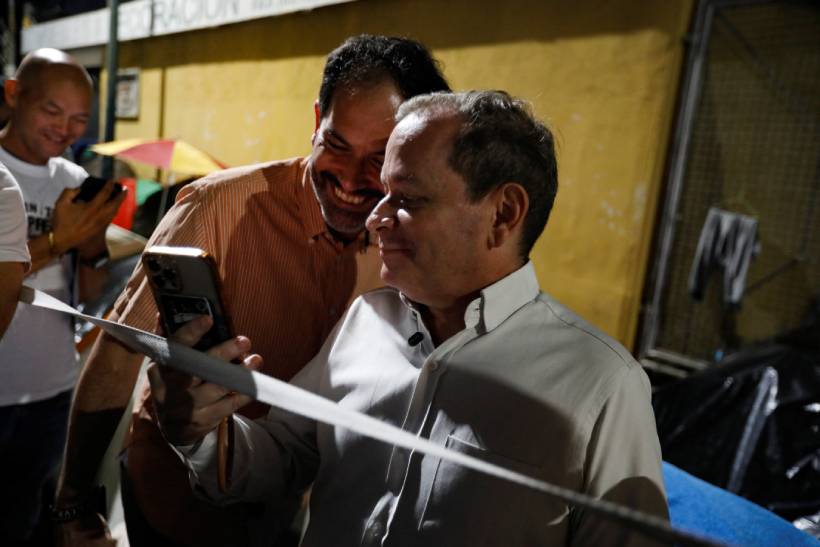
Juan Pablo Guanipa is a senior Venezuelan opposition politician and a close ally of opposition leader María Corina Machado. He was arrested in May after spending months in hiding, accused by authorities of leading a terrorist plot. His detention was one of several cited by the opposition and human rights groups as part of a broader pattern of arrests used to suppress political dissent in the country.
On Sunday, Guanipa was freed from prison. Shortly after his release, he appeared in several videos posted to social media, speaking to journalists and supporters. In those remarks, he urged the release of other political prisoners and described the current administration as illegitimate.
The Incident
Just hours after his release, Guanipa was forcibly taken in Caracas around midnight, according to Machado. She said heavily armed men dressed in civilian clothes arrived in four vehicles and abducted him.
Guanipa’s son, Ramón Guanipa, said in a video posted to social media that the incident took place just before midnight and described it as an ambush. He said his father was taken by around 10 heavily armed, unidentified men.
Stay ahead of the geopolitical week.
MD Briefing delivers expert analysis across five global fronts — the Indo-Pacific, energy, geoeconomics, European security, and the Middle East — every Monday morning. Free.
“My father has again been kidnapped,” he said.
There has been no immediate confirmation from Venezuelan authorities regarding who carried out the operation or where Guanipa was taken.
Political Context
The abduction comes amid major political upheaval in Venezuela following the capture and removal of long-time leader Nicolás Maduro by the United States last month. Maduro’s vice president, Delcy Rodríguez, subsequently assumed power as interim president.
Opposition groups and human rights organisations have long accused Venezuela’s socialist government of using detentions and arrests to silence critics and weaken political opposition.
Official Response
Venezuela’s government did not immediately respond to a request for comment regarding Guanipa’s disappearance following his release from prison.
Analysis
The abduction of Juan Pablo Guanipa just hours after his release from prison highlights the precarious nature of Venezuela’s political transition and the limits of any perceived opening for the opposition.
Guanipa’s brief release appeared to signal a potential shift in how opposition figures are treated under the interim administration. His immediate re-seizure, however, reinforces the long-standing view held by the opposition and human rights groups that detention remains a central instrument of political control, regardless of formal legal outcomes.
The timing of the incident is particularly striking. Guanipa had only just re-entered public life, openly addressing journalists and supporters, calling for the release of other political prisoners and questioning the legitimacy of those in power. His swift removal sends a clear deterrent message to other opposition figures about the risks of public mobilisation during an already fragile political moment.
The absence of an official explanation further deepens uncertainty. Whether the operation was carried out by state security forces or actors operating with tacit approval, the lack of transparency underscores concerns about accountability and command authority following Nicolás Maduro’s removal and the installation of an interim government.
More broadly, the episode threatens to undermine confidence in any transition process. For international observers, the case raises doubts about guarantees of political freedoms. For domestic opposition groups, it reinforces fears that changes at the top have not yet translated into meaningful protections on the ground.
As Venezuela navigates an uncertain post-Maduro landscape, Guanipa’s disappearance serves as a reminder that power struggles, institutional weakness and coercive tactics continue to shape the country’s political reality.
With information from Reuters.
