


EXECUTIVE TAKEAWAYS
- Trump pauses Iran strike, markets bounce cautiously. Dollar steadied and Australian shares rose 1% after Trump delayed military action, though oil is still at $109 and inflation fears persist with G7 bond yields nearing 4%.
- Fed’s Warsh faces a balance sheet dilemma. Rising debt and 30-year yields topping 5.1% could force the new Fed chair to choose between shrinking the balance sheet or supporting Treasury markets.
- Yuan strength gains momentum. HSBC, Deutsche Bank, and Goldman raised yuan forecasts to 6.50-6.65 per dollar by year-end, citing export competitiveness and stable U.S.-China ties.
- China commits “double-digit billions” to U.S. farm goods. Trade Representative Greer expects multi-year agricultural purchases beyond the existing 25 million ton soybean deal following the Trump-Xi summit.
- Markets in fragile calm despite peace talks. Stocks somber with South Korea’s Kospi down 4%, sovereign yields at decade highs, and investors pricing 37.4% chance of Fed hike in December.
The Pattern: Peace talk optimism is paper-thin, inflation expectations are rising faster than central banks can respond, and China’s deploying capital strategically while everyone else hopes for quick resolution.
THE RUNDOWN
1. GLOBAL MARKETS AND MOMENTUM
Markets remain fragile despite Iran strike pause, bond yields near decade highs
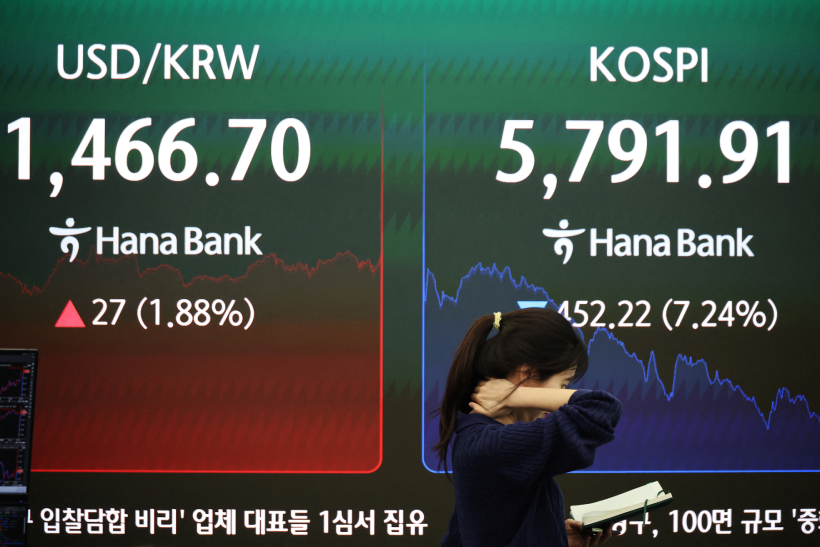
Market sentiment stayed weak despite Trump pausing the Iran attack, with Asian shares sliding and U.S. futures giving up gains. South Korea’s Kospi fell over 4% on profit-taking. Sovereign bond yields approached 4% average for G7 nations, up from 3.2% before the war, as investors price lasting inflation. Japan’s Q1 growth beat expectations but faces an energy shock ahead.
Strategic Impact: The bond selloff “abating” while yields stay near decade highs isn’t relief, it’s exhaustion before the next leg down. G7 average borrowing costs at 4% means governments, businesses, and households are about to feel serious pain. Markets are in “uneasy calm” because they can’t decide if Trump’s pause is real progress or just another cycle of weekend tensions and Monday optimism.
Stay ahead of the geopolitical week.
MD Briefing delivers expert analysis across five global fronts — the Indo-Pacific, energy, geoeconomics, European security, and the Middle East — every Monday morning. Free.
Australian shares rebound 1% on Iran strike delay, await RBA minutes
Australian shares jumped 1%, the largest gain since May 6, after Trump delayed Iran strikes, with financials up 1.4% and rate-sensitive sectors like consumer discretionary and real estate rising 1.5-2%. Energy stocks gained 0.6% despite oil falling over 2%. Gold miners rose 0.9% on a weaker dollar, while resources fell on base metal weakness. Swaps price 21% chance of June RBA hike. New Zealand’s NZX 50 rose 1.2%, strongest since early April.
Strategic Impact: Markets bouncing on a strike pause that doesn’t reopen Hormuz or lower oil from $109 is pure relief rally, not fundamental shift. Rate-sensitive sectors surging shows investors betting the RBA is done hiking, but that 21% June probability is way too low if inflation keeps climbing. Energy stocks rising despite falling oil reveals traders know the pullback is temporary.
2. CENTRAL BANK POLICY
Dollar steadies as Trump pauses Iran attack, markets price December Fed hike
The dollar firmed 0.1% to 99.076 after Trump said he paused a planned Iran strike to allow negotiations, easing escalation fears. But Fed funds futures now price 37.4% probability of a December hike, up from 0.5% a month ago, as inflation concerns mount with Hormuz closed. Japan’s Q1 GDP grew 2.1%, beating 1.7% forecasts, while Finance Minister Katayama said Tokyo stands ready to act on FX volatility
Strategic Impact: Markets are celebrating a pause that changes nothing fundamental, Hormuz is still closed, oil’s still at $109, and inflation pressure isn’t easing. The Fed hike probability jumping from 0.5% to 37.4% in a month shows how fast expectations shift when energy shocks persist. Japan burning $63 billion on intervention while trying not to push U.S. yields higher is an impossible task.
Warsh’s Fed balance sheet plans collide with rising debt and 5.1% long-term yields
Incoming Fed chief Kevin Warsh’s goal of shrinking the Fed’s market footprint faces constraints from rising federal debt and Treasury yields hitting levels not seen since before the 2008 crisis. The 30-year bond topped 5.1%, while 2-year yields rose half a point to over 4% since the Iran war started. Investors now price Fed hikes as soon as January under Warsh. His push for less market intervention could reveal gaps in Treasury demand, forcing either higher long-term rates or Fed buying to hold costs down.
Strategic Impact: Warsh wants a smaller Fed footprint right as the government needs the Fed most. The U.S. lost its “convenience yield”—the discount investors gave Treasuries for being risk-free. Now with 30-year yields above 5%, the market’s saying: prove you won’t intervene or we’ll keep selling. There’s no good option when you inherit a balance sheet this big during a fiscal crisis.
3. INVESTMENT POWER AND CAPITAL FLOWS
U.S. expects “double-digit billions” in Chinese farm purchases after Trump-Xi summit
Trade Representative Greer said China will commit to “double-digit billion” purchases of U.S. agricultural goods annually for three years following the Trump-Xi summit, beyond the existing 25 million ton soybean deal worth over $10 billion. Trump confirmed China “will buy a lot of our farm products.” Greer said existing soybean commitments are being met, with bulk purchases expected later this year. Traders watching for tariff cuts that could let private Chinese crushers resume U.S. soybean purchases.
Strategic Impact: “Double-digit billions” sounds impressive until you realize it’s vague enough to include the existing soybean deal, which means the incremental new money might be minimal. The timing matters: “later this year” means China’s not buying old crops, they’re waiting to see if prices fall. Private crushers being sidelined by tariffs while state traders handle everything shows Beijing’s keeping total control over when and what gets purchased.
4. TRADE AND ECONOMIC DIPLOMACY
Global banks raise yuan forecasts to 6.50-6.65 on export strength and stable U.S. ties
HSBC, Deutsche Bank, and Goldman Sachs raised yuan forecasts, with targets now at 6.50-6.70 per dollar by year-end from 6.70-6.85 previously. The yuan has climbed nearly 3% this year to 6.80 per dollar. Banks cite China’s export competitiveness, unprecedented external surplus, and U.S.-China relations becoming “stable and constructive” since May 2025.
Strategic Impact: Banks upgrading yuan forecasts while the Iran war rages and global growth slows reveals something critical: China’s export machine is unstoppable even in crisis. The “stable and constructive” U.S.-China relationship language is doing a lot of work: what they mean is Trump stopped threatening tariffs because he needs Xi’s help on Iran. Yuan strength to 6.50 would be a 5% appreciation from here, which crushes export margins unless it’s driven by surging demand.
THROUGH MD’S LENS: STALLING FOR TIME
- Trump’s strike delay is tactical, not strategic. Pausing military action for negotiations doesn’t reopen Hormuz, lower oil from $109, or ease inflation. It buys time, not resolution.
- Warsh inherits an impossible Fed. Wants to shrink the balance sheet while 30-year yields hit 5.1% and government debt spirals. He’ll have to abandon principles or watch markets break.
- China’s winning without fighting. Yuan forecasts upgraded to 6.50 as exports dominate despite global slowdown. Trump needs Xi’s help on Iran too much to threaten trade war 2.0.
- Farm deals are political theater. “Double-digit billions” is vague enough to include existing soybean commitments. State buyers controlling purchases means Beijing decides when and how much.
- Bond markets pricing fiscal crisis. G7 yields jumping from 3.2% to 4% in three months means governments, businesses, and households about to feel serious pain.
- Central banks are out of good options. Fed pricing hikes while recession looms, BOJ burning $63 billion on futile intervention, RBA calling rates “restrictive” after just three hikes.
WATCH THIS SPACE
Trump’s strike pause brought a market bounce, but Hormuz stays closed and oil stays above $100. The critical moment comes in weeks when Warsh takes the Fed chair and must choose: stick to balance sheet shrinkage while 30-year yields sit at 5.1%, or abandon his principles and support Treasury markets. China’s playing both sides; committing “double-digit billions” in farm purchases to keep Trump cooperative while banks upgrade yuan forecasts betting on export dominance. The yuan strengthening to 6.50 while the U.S. needs China’s help on Iran shows who has leverage. G7 bond yields jumping from 3.2% to 4% in three months means the sovereign debt crisis everyone feared is arriving quietly. Warsh takes office and refuses Treasury support causing funding panic, or China decides Trump’s farm deal theater isn’t worth continuing.
This briefing is based on information from Reuters.
