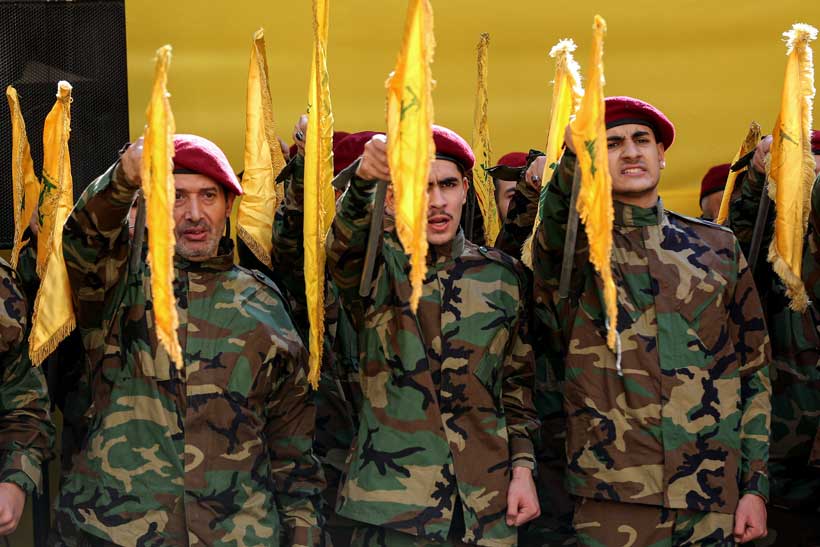
The war between Israel and Hezbollah, supported by Iran, has caused severe damage in Lebanon, but an agreement to partially reduce tensions has prevented further attacks on Beirut for now. Israel aims to neutralize the threat from Hezbollah’s rocket fire and disarm the group, while Iran seeks to stop Israeli operations in Lebanon as part of negotiations with the U. S. regarding the Strait of Hormuz.
Hezbollah was formed in 1982 by Iran’s Revolutionary Guards during Lebanon’s civil war, aiming to spread Iran’s Islamic Revolution and resist Israeli forces in Lebanon. The group provides social services and has strong support among Lebanon’s Shi’ite Muslims. Together with the Amal Movement, Hezbollah has significant control over Shiite representation in Lebanon’s political system.
Unlike other groups that disarmed post-civil war, Hezbollah retained its weapons to resist the Israeli occupation in southern Lebanon. After Israel’s withdrawal in 2000, Hezbollah’s military capabilities expanded. In 2006, it engaged in a war with Israel after kidnapping Israeli soldiers, which led to significant retaliation and increased its arms. By 2020, estimates suggested Hezbollah possessed around 150,000 rockets and missiles.
After the 2006 war, Hezbollah became involved in regional conflicts, supporting the Syrian government, Iran-backed militias in Iraq, and the Houthis in Yemen, while aligning more closely with Hamas. Following an attack by Hamas on Israel on October 7, 2023, Hezbollah began firing at Israeli targets, reaffirming its support for the Palestinian cause. This led to escalated exchanges of fire until September 2024, when Israel intensified its military actions, including airstrikes that decimated Hezbollah’s leadership and military capability.
The conflict resumed in March 2024 after the killing of Iran’s Supreme Leader by Israel, leading to Israel’s military incursion into southern Lebanon, where it occupied territory and displaced many civilians. In response, Hezbollah targeted Israeli forces with missiles and drones.
Hezbollah has suffered heavy losses, with thousands of its fighters killed, as Israel’s military actions have inflicted significant damage on its infrastructure. The loss of Syrian support due to political changes further complicated Hezbollah’s situation, yet Iran attempted to restore its military capacity.
In Lebanon, Hezbollah has historically influenced state matters but faced challenges in establishing a post-war government that aims to disarm it. Lebanese society is divided over Hezbollah’s armed presence, with criticisms of its involvement in conflicts countered by claims of its role in national defense. Increasing pressure has been placed on Hezbollah to disarm, although it has resisted fully relinquishing weapons, fearing civil war.
The U. S. attributes several historical terrorist acts to Hezbollah, including bombings in Beirut in the 1980s, while many countries classify it as a terrorist organization. Argentina associates Hezbollah with past bombing incidents. A U. N. court has also linked Hezbollah to the assassination of former Lebanese Prime Minister Rafik al-Hariri, which Hezbollah denies.
With information from Reuters