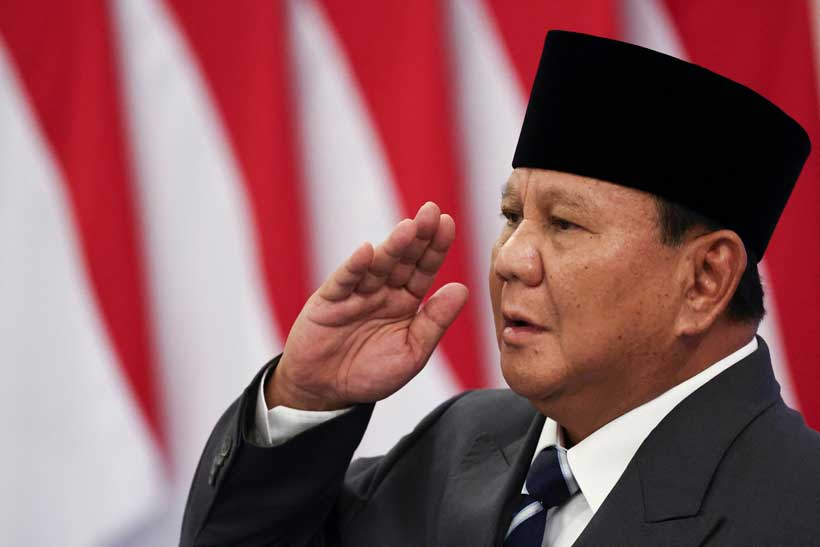
Indonesian President Prabowo Subianto is losing investor trust, jeopardizing his growth plans as the country’s currency continues to plummet. Since taking office in 2024, he has led a chaotic administration, promising free meals for millions of school children and straying from prudent spending to spur growth. However, the global energy crisis and unconventional decisions, like centralizing commodity exports under a government fund reporting directly to him, have shaken investor confidence. Once seen as a rising star in emerging markets, Indonesia now faces potential downgrades to its investment-grade credit rating, as indicators show a decline in investor sentiment.
The Indonesian stock market has become the weakest in the world, dropping over 42% in 2026. The country’s currency, the rupiah, has also suffered, falling 8% this year and hitting a record low of 18,190 per U. S. dollar. This decline has sparked a serious confidence crisis, with experts stating that the situation could worsen inflation and financial conditions. Despite a significant interest rate hike in May and a decrease in foreign exchange reserves meant to support the currency, the rupiah’s value continues to decline.
Foreign investments are fleeing, leading to a net $3.2 billion outflow from the stock market, the heaviest since 2009. Ownership of Indonesian government bonds by foreign investors has dropped sharply from nearly 40% before the pandemic to just 12.6%. Analysts express concern about a potential “doom-loop” where continuous outflows will further weaken the rupiah and delay infrastructure and growth plans.
The risks also extend to Indonesia’s credit and equity ratings. Downgrades could force investors to sell off their holdings and increase borrowing costs. Ratings agencies like Moody’s and Fitch have already changed their outlooks to negative, citing a decline in policymaking credibility. While index provider MSCI notices potential transparency issues in the equity market, a downgrade appears unlikely.
Recent legislation has provided parliament with new powers over the central bank and added “real sector growth” to its goals, raising alarms about the bank’s independence. Moreover, Prabowo appointed his nephew as a deputy governor of the central bank, further heightening concerns about transparency and policy direction. Analysts fear that current policies are detrimental and have noted the negative impact of external pressures, like the Iran war, on the economy. Investors believe that reversing this downward trend requires significant changes in policy.
Chinese firms, previously integral to Indonesia’s nickel industry, are now seeking alternatives due to increasing policy pressures. Investors returning to Indonesia will demand more favorable conditions. Overall, the country is being viewed as one with rising policy risks rather than a reliably orthodox emerging market.
With information from Reuters