


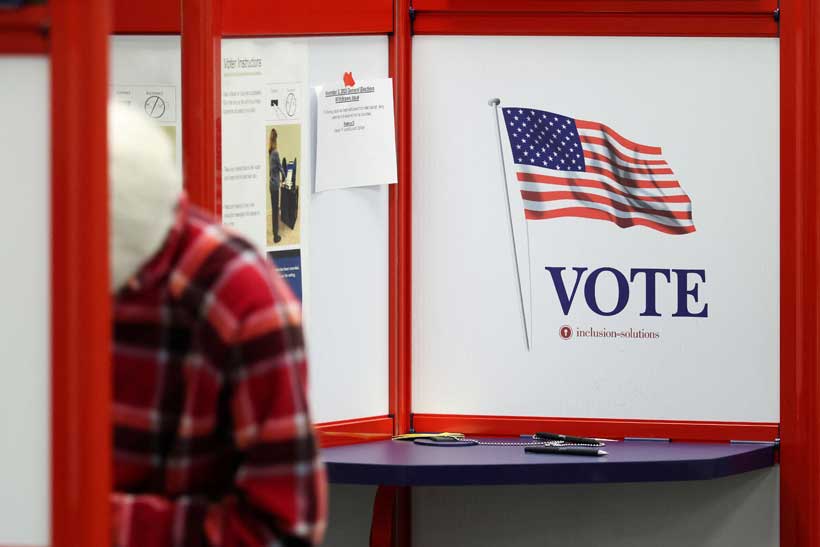
The 2026 US midterm elections have delivered a major setback for President Donald Trump, with Democrats making historic gains across traditionally Republican states and securing control of the Senate. The party is also closing in on a majority in the House of Representatives, potentially reshaping the final two years of Trump’s presidency.
The results point to more than a series of individual electoral defeats. They reflect widespread dissatisfaction with the administration’s economic record, rising living costs and the direction of the country. They also raise questions about Trump’s influence over Republican candidates and the durability of the coalition that brought him back to the White House in 2024.
Several developments stand out from an election that could significantly change the balance of power in Washington.
Democrats Make Historic Gains in Republican Strongholds
The scale of Democratic victories was one of the defining features of the election.
Stay ahead of the geopolitical week.
MD Briefing delivers expert analysis across five global fronts — the Indo-Pacific, energy, geoeconomics, European security, and the Middle East — every Monday morning. Free.
In Texas, Democrat James Talarico defeated Republican Ken Paxton, ending a decades-long Democratic drought in statewide Senate elections. Democrats also secured a historic Senate victory in South Carolina, where Annie Andrews defeated Republican Darline Graham.
In Kansas, Democrat Adam Hamilton defeated Republican incumbent Roger Marshall, marking another major breakthrough in a state that has not elected a Democratic senator since 1932. Ohio also returned Democrat Sherrod Brown to the Senate.
Democratic victories in traditionally Republican territory helped the party secure control of the Senate, while results across the country put it within reach of a House majority.
The gains suggest that the electoral backlash against Republicans extended beyond the usual competitive states. They also give Democrats an opportunity to challenge Trump’s legislative agenda and intensify congressional scrutiny of his administration.
However, controlling Congress will not automatically allow Democrats to implement their own programme. Trump retains presidential veto powers, and major legislation will require negotiations across the political divide.
Cost of Living Becomes Trump’s Biggest Electoral Vulnerability
Economic dissatisfaction was a central factor behind the Republican losses.
Exit polls conducted by SSRS for a consortium of US media organisations indicated that nearly nine in ten voters considered the cost of living a crucial or major factor in their decisions. Many also said they were financially worse off than they had been two years earlier.
Nearly two-thirds of respondents blamed Trump for high prices, while around three-quarters expressed anger or dissatisfaction with the direction of the country.
The findings expose a gap between Trump’s 2024 campaign promises and voters’ current economic experiences. He returned to office pledging to tackle inflation and improve household finances, but tariffs and the economic consequences of the war with Iran have added to pressure on prices.
The results suggest that voters were more concerned with the cost of groceries, fuel and everyday necessities than with the administration’s political messaging.
Trump had urged voters to treat the midterms as a referendum on his presidency. The Democratic gains indicate that many did precisely that.
Trump’s Endorsements Become an Electoral Liability
The election also delivered a setback to Trump’s influence over Republican candidate selection.
Several candidates backed by the president lost races that Republicans had expected to be more competitive or had hoped to win. These included Ken Paxton in Texas, Darline Graham in South Carolina and Michael Whatley in North Carolina.
Trump’s preference for loyal candidates had already generated tensions within parts of the Republican Party. The results are likely to renew debate over whether personal loyalty and alignment with the president’s political agenda are sufficient to secure broader electoral support.
The losses also raise questions about the strength of the coalition that helped Trump win in 2024. Exit polling indicated declining Republican support among Black men, Latino voters and younger Americans.
For Republican lawmakers, the immediate challenge will be deciding whether to maintain close alignment with Trump or adopt a more independent political approach ahead of the next national election.
Trump’s Attacks on Democrats Fail to Shift Voter Priorities
Republicans attempted to make the election a choice between Trump’s political agenda and what they described as a radical Democratic alternative.
Trump repeatedly portrayed Democratic candidates as dangerous extremists, warning that their victories could fundamentally change the United States. However, the strategy did not appear to overcome voters’ economic concerns.
The election demonstrated the limits of using ideological warnings when many households are focused on affordability and financial security.
Democratic candidates were able to make the administration’s economic record a central campaign issue, while Republican messaging struggled to persuade voters that the opposition posed a greater immediate threat.
The outcome does not necessarily indicate a permanent shift in political attitudes. However, it shows that Trump’s campaign appeals were not enough to prevent significant losses when voters were dissatisfied with the administration’s performance.
What the Results Mean for Trump’s Final Two Years
Democratic control of the Senate, combined with the possibility of a House majority, will change the political environment for the remainder of Trump’s term.
Congressional oversight could become more aggressive, while Trump’s ability to advance legislation may be constrained by opposition from Democratic lawmakers. Budget negotiations, appointments and major domestic policy initiatives could also become more difficult.
The results may also influence the Republican Party’s internal debate over its future leadership and political identity as attention gradually turns towards the 2028 presidential election.
Trump has said he will accept the election results and is prepared to work with Democrats. Whether that translates into meaningful cooperation remains uncertain.
For Democrats, the victories bring both opportunity and responsibility. Voters who helped deliver their congressional gains will expect the party to address economic pressures and demonstrate that it can govern, rather than simply oppose the president.
The 2026 midterms have therefore changed more than the balance of power in Congress. They have placed Trump’s economic record, political influence and ability to maintain Republican unity under renewed scrutiny.
With information from Reuters.
