


With the shifting geopolitical situation, Africa is still struggling to attain its economic sovereignty while consistently fighting to abandon outdated and ineffective bilateral and multilateral cooperation and collaboration formats with external powers and moving towards a model of self-sufficiency and independency. Until today, Africa is still entangled in the ‘soft’ and ‘hard’ powers of colonial masters and even non-colonial players who are advocating for multipolarity. The influence of this changing architecture, both political and economic, presents a complex paradox—an emerging world full of promises, uncertainties, and deferred hopes. Western dominance is wanning, but only in the short term, as it will possibly reflex its muscles to the admiration of Africa. These are geopolitical analyses by a number of foreign and African experts.
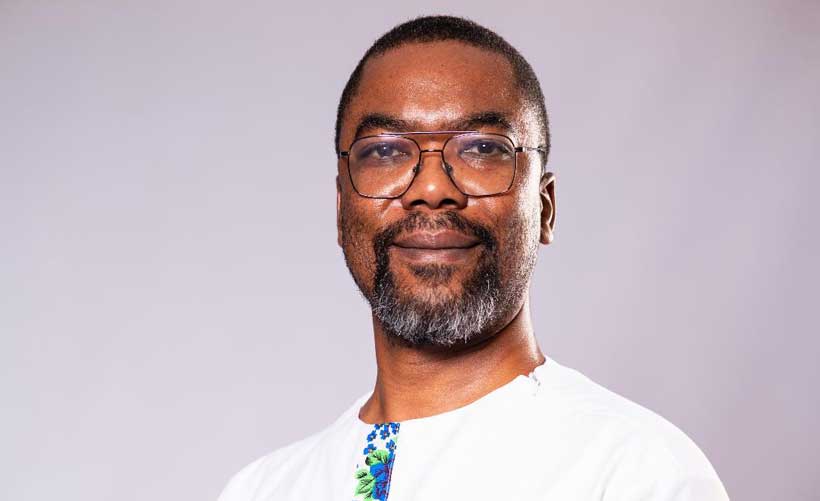
But in an interview late October 2026, John Mikatekiso Kubayi, Senior Researcher and South African Research Chair on African Diplomacy and Foreign Policy at the Faculty of Humanities, University of Johannesburg, admitted that Africa is currently experiencing a blend of geopolitical realities. Mikatekiso further underscored the fact that, with its huge untapped natural resources, Africa has to address several major issues, including the domestic resource mobilization, the development of industrial and technological capabilities, the review of investment rules and regulations, and the determination of financial mechanisms. Follow below his interview excerpts:
With new geopolitical trends hitting across the continent, how would you characterize Africa today?
Mikatekiso Kubayi: The African experience is a blend of geopolitical realities. It can be argued that Africa continues to rise as an important region, both politically and economically. It is strategic for maritime trade, is richly endowed with minerals for future technologies, and has a young and growing population, presenting a large future market of 2.5 billion people by 2050. It is potentially a future net exporter of skilled labor, according to global demographic trends, with some regions experiencing population decline. Africa is a major part of the rise of the collective Global South.
Stay ahead of the geopolitical week.
MD Briefing delivers expert analysis across five global fronts — the Indo-Pacific, energy, geoeconomics, European security, and the Middle East — every Monday morning. Free.
However, given its persistent development challenges, Africa is also subject to the realities of great power competition for its favor and resources. There are a great many foreign military bases on the continent, in addition to the supply of materials and other goods from elsewhere across many parts of the continent, which have also, unfortunately, helped sustain conflict. The resource curse remains an issue for the continent, as does the crisis of illicit financial flows (IFFs).
As a South African expert who took part in Valdai’s conference in Addis Ababa and Pretoria, have there been any significant developments or noticeable changes on the continent?
Mikatekiso Kubayi: Africa is facing the same new geopolitical trends as the rest of the globe. The US has announced a Trump corollary to the Monroe Doctrine and has demonstrated it through its actions in Venezuela and Greenland. The Liberation Day Tarns continue to be a major issue of consternation in global trade relations, as do the conflicts in West Asia and Russia-Ukraine. The resulting narrowing of sources of finance for investment in Africa’s development, adding to the emergence of the post-Official Development Assistance (ODA) era and the scourge of IFFs, has led many experts and policy practitioners to call for expansion of domestic resource mobilization, not only for development but also for full sovereignty over all aspects of its reality. It has to do with the struggle with multilateralism.
The adoption of a motion for the UN Framework Convention on International Tax Cooperation (UNFCITC) process in 2023, as well as the adoption of the Equal Earth map projection, which replaces the 16th-century Mercator map, in a campaign led by Togo, are reminders that Africa’s voice continues to rise. There are two major processes to look out for. The first is the Critical Minerals Charter of the South African G20 presidency, and the second is the Statement by G7 France on the agreement to promote the development of minerals at the source. These are major issues for both the domestic resource mobilization effort and the development of industrial and technological capabilities, as well as for industrialized economies facing an economic crunch.
And, comparatively, which regions are seemingly improving within the emerging economic architecture?
Mikatekiso Kubayi: A major talking point today is the IMF’s warning at its annual meetings with the World Bank in Bangkok, as it launched the World Economic Outlook, that the global economy could soon test the limits of resilience. This is a major warning and an indicator of the collective struggles of all regions of the globe facing the consequences of conflicts in West Asia and Russia-Ukraine, AI, and the war on terror. The same report indicates that emerging markets and developing economies, including Africa, with over 4% growth in the current and next two years, and Asia, with over 5% growth in the same period, continue to lead the way.
At the 81st UN summit held in late September, most African leaders spoke in a common language, advocating for reforms. Do you think that Africa itself has undergone necessary reforms, particularly in its governance system and its approach to economic development?
Mikatekiso Kubayi: It can be said with reasonable confidence that most researchers, experts, and practitioners believe the AU needs significant reforms to its design and function to achieve its own stated ends of an ‘Africa We Want’ by 2063. This is especially true during trying times in the global economy, with finance in significant constraint. There is little doubt about this. But this argument has little to do with global governance that impacts all, including Africa, with or without a well-functioning AU. African leadership is correct to continue pursuing reforms to the UN, the global governance system, the global financial architecture, and multilateralism. This is one of the motivations behind Africa’s need to launch its ratings agency in Mauritius on October 7, 2026. The crises of sovereign debt and limited access to finance have added pressure on African leadership to take urgent and correct steps. Africa’s processes must also be considered in the context of current global power relations and configurations, and its assessments must be fair.
