The United Kingdom (UK) should expand humanitarian cooperation in the South China Sea as it remains a critical shipping route connecting Europe and Asia. Britain should utilise its strategic partnership with the Philippines and established diplomatic channel with China to ensure that the next emergency deployment will not turn into another security flashpoint.
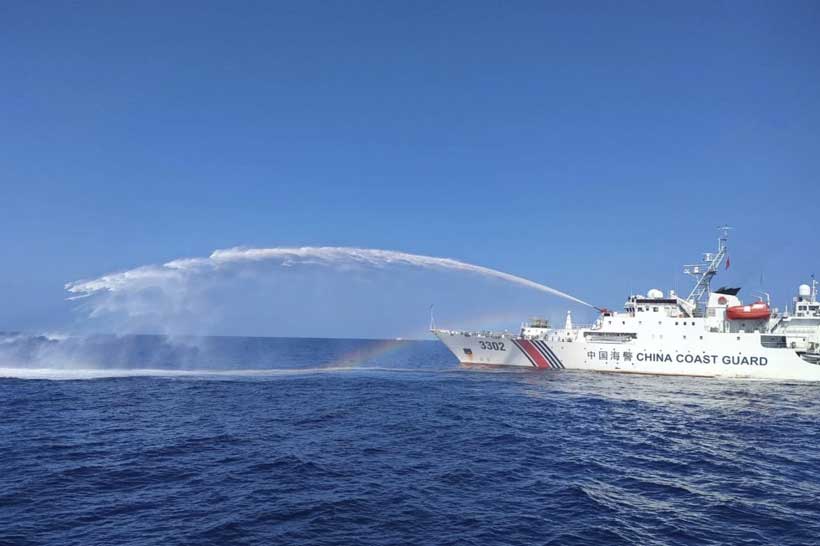
On October 8, 2026, the Philippine Coast Guard (PCG) sent BRP Cabra to conduct a routine mission: to transport a sick Filipino soldier stationed aboard BRP Sierra Madre at Second Thomas Shoal. What was supposed to be a peaceful medical evacuation became a tense, ten-hour encounter with the China Coast Guard before the patient was safely ferried to the nearest port.
This recent standoff poses a pivotal question for the UK that recorded £97 billion of its economic trade transiting the vast South China Sea annually. When one of its commercial vessels carrying millions worth of imports and exports contends with an unforeseen incident, can maritime authorities immediately provide assistance? Britain has a consequential interest in ensuring coast guards can smoothly fulfil their responsibility of protecting lives at sea, even amid unresolved territorial disputes.
The UK’s Role in Maritime Crisis Management
One practical recommendation that the UK should pursue with the Philippines is a humanitarian capacity building exercise at sea. Responding to over 36,000 incidents per year, experts from His Majesty’s Coastguard (HMCG) occupy a fundamental position in imparting modern search and rescue learning experience to the PCG. Britain’s Joint Maritime Security Centre (JMSC) could also provide technical guidance on maritime domain awareness, specifically in analysing evolving security threats at sea and enhancing interagency response protocols. This proposal fits the joint framework for the enhanced partnership between the UK and the Philippines.
Stay ahead of the geopolitical week.
MD Briefing delivers expert analysis across five global fronts — the Indo-Pacific, energy, geoeconomics, European security, and the Middle East — every Monday morning. Free.
A scenario-based simulation could involve a merchant ship manned by Filipino seafarers requiring swift medical evacuation. Participating PCG crew would coordinate rescue procedures and explain the mission’s objective, while anticipating possible responses if another vessel attempted to interfere. External assessors would identify gaps in existing approaches to lessen, if not completely eradicate, unintended miscalculations. London and Manila would then evaluate how commanding officers decide under pressure and how fast information reaches the command centre to inform joint operational guidelines and future training programmes.
Japan presents an established model through its Mobile Cooperation Team composed of deployed specialists to the Philippines to provide the PCG with towing and small boat operations training, among other technical instructions. Britain could replicate a similar scheme by sending HMCG and JMSC experts to Manila for regular and targeted humanitarian capacity building.
The collaboration could end with a site visit at the PCG National Headquarters and Coast Guard Fleet in Port Area, Manila, where both parties could explore additional facility and equipment expansion that London could offer to the PCG, ensuring that capacity building initiatives would progressively lead to a modern Coast Guard well-equipped to perform extensive missions at sea, capitalising on advanced technology.
To further strengthen the engagement, the UK could also consider bringing emerging Coast Guard leaders to Europe through graduate and post-graduate programs on international maritime security and safety. Immediately after completion, they would fly back to Manila and apply their research to the Philippine context, broadening London’s contribution to elevating the skills and expertise of Filipino public servants at the frontline of rapidly changing maritime challenges in the Indo-Pacific.
Capacity building is also a key priority under the UK-ASEAN partnership, as highlighted in the 2027-2031 Plan of Action. Both parties agreed on sharing best practices covering peaceful dispute resolution and constructive engagement. Furthermore, Britain supports exchanging operational expertise and effective strategies connected with the implementation of the ASEAN Declaration on Cooperation in Search and Rescue of Persons and Vessels in Distress at Sea.
London and Beijing’s Diplomatic Engagement
The UK and China held their 11th Strategic Dialogue in June 2026 to deepen cooperation towards multilateralism and global stability. Acknowledging prevailing global challenges, both nations also recognised the implications of their responsibilities as two of the five permanent members of the United Nations Security Council.
London could utilise its diplomatic mechanism with Beijing to formulate a humanitarian communication arrangement that would allow coast guards to pursue endeavours without leading to inadvertent confrontations. As British and Philippine authorities prepare for humanitarian training at sea, the UK could initiate discussions with China on peaceful protocols for maritime rescue assignments, including the identification of vessels to use during medical evacuations and the communication channels where distress-related information could be exchanged. This two-pronged approach could identify how coast guards could best coordinate and maintain active contact during interactions in contested waters. Agreed humanitarian communication arrangements could ensure that any miscalculations would not delay or obstruct operational movements.
International maritime law should guide these collaborative efforts, including the United Nations Convention on the Law of the Sea and the International Convention for the Safety of Life at Sea, that the Philippines, the UK, and China are all parties, with provisions on assistance to people in distress offering a common ground for regional cooperation.
Humanitarian missions at sea must be carried out with utmost urgency, making it indispensable for coast guards to have targeted training and professional development, as well as operationally adaptive procedures to execute their duties safely. The October 8 encounter should encourage London and Manila to undertake a capacity building exercise, while engaging Beijing on emergency communication practices that would enable frontline responders to uphold maritime safety, regardless of the prevailing geopolitical environment.