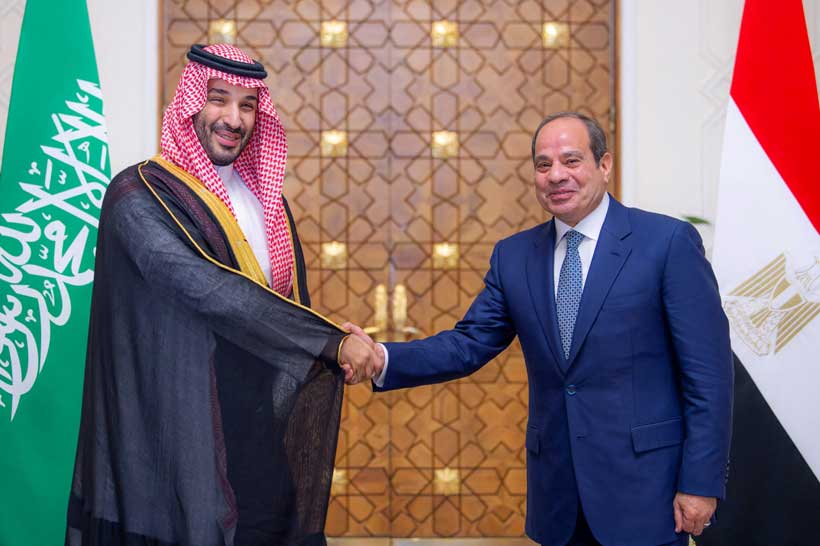
Egypt’s parliament is set to vote next week on a proposal to allow the armed forces to assist Saudi Arabia against attacks from Yemen’s Houthis if requested by Riyadh. This potential move indicates Egypt’s inclination toward direct military involvement in the ongoing conflicts linked to the US-Israeli air strikes on Iran that began in February. President Abdel Fattah al-Sisi emphasized Egypt’s support for Saudi Arabia in his recent speech, stating that Egypt would take measures to protect its Gulf neighbors, reinforcing a historical partnership amid renewed conflict.
Previously, Egypt has maintained a cautious stance regarding direct military engagement in the Iran war while showing consistent support for its Gulf allies. Despite the presence of Egyptian Rafale fighter jets in the UAE during Sisi’s visit, Egypt did not publicly affirm any combat role or join a joint defense agreement that Saudi Arabia established with Turkey and Pakistan. Recently, as Houthis have increased their attacks on Saudi infrastructure, discussions have surfaced between Saudi Crown Prince Mohammed bin Salman and Sisi on the importance of securing navigation in critical waterways like the Bab el-Mandeb Strait and the Red Sea.
Egypt’s economic stability has been heavily influenced by the Gulf states, with remittances from Egyptian workers and financial support from countries like Saudi Arabia being crucial amid rising inflation and food prices. Sisi stressed the importance of Gulf support for Egypt, especially following the military’s takeover in 2013. Financial ties include a significant deposit from Saudi Arabia at Egypt’s central bank, which is expected to mature soon.
Security concerns have also motivated Egypt to consider a more proactive military role due to recent attacks, such as a drone strike on gas vessels in Damietta. Analysts suggest that Egypt recognizes it cannot remain on the sidelines indefinitely, as its economic and security issues are interconnected. Egypt and Saudi Arabia share mutual interests in securing shipping routes critical for oil trade, especially since Egypt earns significant revenue from the Suez Canal.
Egypt has one of the largest military forces in the Arab world, with hundreds of thousands of active personnel and diverse military equipment sourced from various countries, including the US. The country receives $1.3 billion annually in US military aid, which supports its military purchases and reflects its strategic role in the region. Historically, Egypt has participated in various military operations, including in Yemen and against Islamic State targets.
While Sisi’s statements lack specifics on the exact military support Egypt may provide, analysts predict that direct troop deployment in Yemen is unlikely. Instead, Egypt may offer air defense and naval support to protect Saudi assets and shipping against Houthi threats. However, experts caution that simply deploying conventional military forces will not resolve the complexities of the conflict, as the Houthis employ unconventional tactics that challenge traditional military responses. Egypt’s involvement is expected to focus on enhancing Saudi Arabia’s resilience, improving maritime security, and sharing defensive responsibilities.
With information from Reuters