Twenty Kilometres From Africa
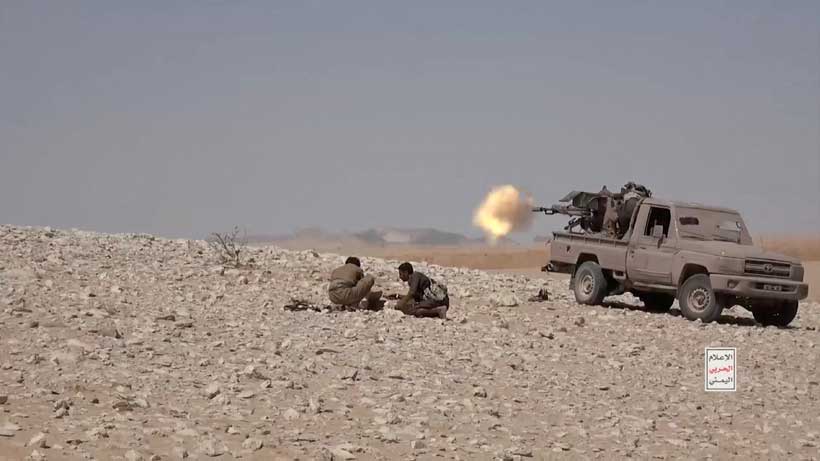
On 11 September the Houthis took Mocha and Perim Island and completed their capture of Yemen’s Red Sea coast. Iran’s Yemeni ally now holds positions about 20km from Africa, across a strait that carries roughly 12% of world trade. Within a day, more than 2,000 Yemenis had fled to Djibouti. Twelve days later, Tigrayan forces seized three airports and war returned to northern Ethiopia. On 28 September Ethiopia’s army chief publicly accused Eritrea, Sudan and Egypt of backing the rebels, all three of them partners of Saudi Arabia. A single month brought an Iranian proxy to one shore of the Red Sea and a war with Arab backers on the other. The Horn of Africa is no longer a region that Middle Eastern rivalries spill into. It has become a place where they are fought.
Six Outside Powers, Four Internal Wars
The cast is crowded. Saudi Arabia and the UAE, once partners in Yemen, now back opposite sides: Riyadh supports Sudan’s army, Eritrea and Somalia’s federal government, while Abu Dhabi has ties to Ethiopia, Sudan’s Rapid Support Forces and the breakaway regions of Somaliland and Puntland. Egypt, locked in a dispute with Ethiopia over its Nile dam, has aligned with Eritrea and Somalia and is sending troops into the AU mission in Somalia. Turkey runs Mogadishu’s port and airport and deployed F-16s there in January. Israel recognised Somaliland in December 2025. China keeps its only overseas military base in Djibouti. Russia has spent nine years chasing a naval base in Port Sudan.
Stay ahead of the geopolitical week.
MD Briefing delivers expert analysis across five global fronts — the Indo-Pacific, energy, geoeconomics, European security, and the Middle East — every Monday morning. Free.
What raised the stakes this year is energy. With the Strait of Hormuz disrupted by the Iran war, Saudi Arabia was shipping three to four million barrels a day through the Red Sea in April and May, roughly double its 2024 volume. The Bab al-Mandeb, the strait at the sea’s southern mouth, has gone from a shipping route to the Gulf’s emergency exit. In July Riyadh launched a Multinational Maritime Defence Alliance. Djibouti, Somalia, Sudan and Comoros signed up.
Access Is an Asset, Alignment Is a Liability
Most commentary asks which outside power is “winning” the Horn. That is the wrong question. The more useful one is which Horn states are gaining from the competition and which are being consumed by it. The answer is consistent. States that sell access to everyone gain. States that let outsiders into their domestic conflicts lose, however well they are paid at the start.
Djibouti is the model. It rents base space to the United States, China, France, Japan and Italy at once, and it handles about 95% of Ethiopia’s trade. No patron owns it, because all of them need it. Eritrea, long a pariah, has used its coastline to break out of isolation and improve ties with Washington and Israel while staying close to Riyadh and Cairo. Even Sudan’s General Abdel Fattah al-Burhan shows how access works as currency. Russia’s proposed 25-year base at Port Sudan has been offered, shelved and re-offered since 2017. Burhan has reportedly assured Saudi Arabia the plan is frozen, using the base as a bargaining chip with Moscow and Riyadh alike.
The losing pattern starts where access turns into alignment. Somalia offers the clearest example. In January Mogadishu cancelled roughly $800 million of UAE port and security agreements covering Berbera, Bosaso and Jubbaland, accusing Abu Dhabi of facilitating Israel’s recognition of Somaliland. It then leaned into Turkey and joined the Saudi alliance. Each move made sense on its own. Together they turned Somalia’s internal fault line, between Mogadishu and its breakaway or semi-autonomous north, into a front in the Saudi-Emirati and Turkish-Israeli rivalries. Today an outside power stands behind every Somali faction, and none of them has an incentive to compromise.
Ethiopia is the larger and more dangerous case. Abiy Ahmed’s campaign for sea access, which he insists will not mean war, has pushed Eritrea into Egypt’s and Saudi Arabia’s arms. Sudan’s war has done the same on Ethiopia’s western border, where each side accuses the other of hosting its enemies. Now that Tigray is fighting again, the Afar regional governor says Eritrean forces control much of his region. A domestic war has become a proxy contest that maps onto the Red Sea divide.
The rest of the cast fits the same pattern. China’s approach, set out in MD’s analysis of its Red Sea ports, is to fund and hold infrastructure without taking sides, which is why Beijing is the least exposed outsider. Russia has offered a base and delivered nothing. Iran works through the Houthis, who have traded weapons and drone technology with al-Shabaab, the Somali jihadist group, in return for help with piracy. Somali piracy is at a ten-year high, and three ships were hijacked in the Gulf of Aden in April and May alone.
The strongest objection is that this gives African governments too much agency. The Gulf states are vastly richer, so on this view Horn states take what they are offered and nothing they do changes the outcome. The record says otherwise. Hormuz has made the Red Sea Saudi Arabia’s export lifeline, and the Houthis now sit on its southern gate. Riyadh’s new alliance needs Djiboutian, Sudanese and Somali coastline more than those states need Saudi grants. The leverage is real. It is also perishable, because it disappears the moment a government turns its territory into a theatre for someone else’s war.
Three Ways the Red Sea Divide Settles
Base case: contained fragmentation (about 50%). The Tigray war becomes a long, grinding conflict but stays inside Ethiopia’s borders, with Eritrean involvement denied rather than declared. The Saudi alliance adds members, and shipping keeps detouring around the Cape. Djibouti and Eritrea continue to profit from their position, while Somalia and Sudan stay divided among their patrons. The key assumption is that Addis Ababa does not carry the fight across the Eritrean border.
Downside: the wars converge (about 30%). Ethiopia answers Eritrean support for Tigray by striking across the Afar border towards the port of Assab, which turns a civil war into an interstate one. Egypt and Saudi-aligned Sudan back Asmara, and the UAE backs Addis. The Houthis, now on the African shore’s doorstep, exploit the chaos to hit shipping. For insurers, shippers and the Gulf’s oil exporters, this is the scenario that reconnects the Hormuz and Red Sea crises into a single chokepoint problem.
Upside: a shipping-driven Gulf truce (about 20%). Houthi control of the Bab al-Mandeb threatens Riyadh and Abu Dhabi equally, and that shared threat pushes them into a limited deal on Red Sea security and a joint push for a Sudan ceasefire. Horn states would then face a less divided Gulf. That shrinks their room to play patrons off against each other, but it also removes the money and weapons now fuelling their internal wars. On balance, the region would be better off.
Watch the Road to Assab
The Horn of Africa has become central to Middle Eastern power politics because its coastline is now indispensable. Its states can turn that into income and security only if they rent the coast to everyone and keep outsiders out of their own conflicts. Where they have done the opposite, in Somalia, Sudan and now Ethiopia, the coast has become the prize and the state the battlefield.
The signal to watch is any Ethiopian military move across the Afar border towards Assab, or a formal Ethiopian complaint against Eritrea at the African Union or the UN Security Council. Either would mean the region’s most consequential internal war has become a Red Sea war. Outside powers will keep coming to the Horn for its geography. What the Horn’s states choose is whether those powers arrive as tenants or as combatants.